Private Praise vs. Public Jokes: Spotting Social Sabotage
How alone do you feel right now?
🌱 Before reading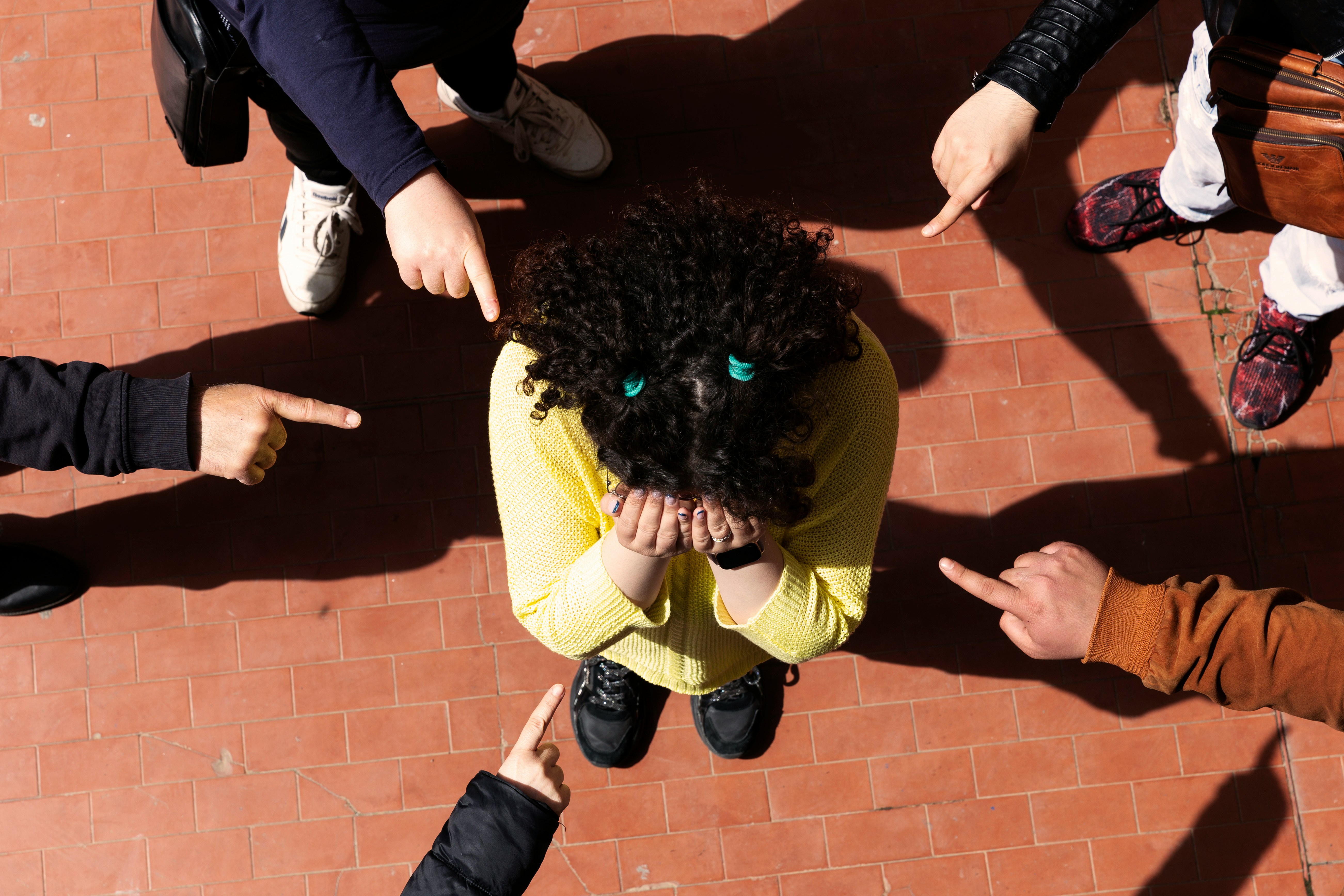
As you're reading, what's true for you?
Anonymous · real-time counts
You know that person. In private, they hype you up. "You're so smart." "I love working with you." "You're one of my favorite people." But add an audience? Suddenly you're the joke. The punchline. The recurring bit in their comedy routine.
That's not banter. That's not friendly teasing. That's social sabotage and it's more common than you think. Research in behavioral science suggests that this kind of public humiliation can be a form of social aggression used to manage group dynamics and elevate the perpetrator's status [1]. Let me walk you through exactly what's happening, why it hurts so much, and what to say right now to stop it.
Think of that one person. The one who feels different in groups than they do alone. What's the last thing they said about you in front of others? (Just notice it. No need to fix anything yet.)
🚩 5 Clear Signs You're Being Used as a Punchline (Not a Friend)
1. The personality flip
One-on-one = kind, warm, supportive. In a group = sarcastic, cold, or dismissive. That's not a mood swing. That's a choice they're making. And you're not imagining it. Studies on workplace behavior show that individuals who publicly undermine colleagues while maintaining private relationships often do so to manage their own social standing [2].
2. "Just joking!" after every sting
You feel the jab. They see your face fall. Then comes the escape line: "Relax, it's a joke." "You're too sensitive." If it hurts repeatedly, it's not humor, it's armor they hide behind. According to psychological research on emotional invalidation, dismissing someone's hurt feelings with "you're too sensitive" is a form of gaslighting that shifts blame from the perpetrator's behavior to the victim's reaction [3].
3. You're the only target
Watch them in the same group. They don't tease everyone equally. You're the recurring bit. Real humor lifts everyone. This? This isolates. Research on social dynamics indicates that singling out one person for public ridicule is often a strategy to strengthen the perpetrator's position within the group hierarchy [4].
4. They watch the room, not you
After the joke, their eyes scan for laughs. Your discomfort? Completely ignored. Their goal isn't connection, it's approval from others, at your expense. Studies show that when people use others as tools for social approval, they're often driven by underlying insecurity and a need to feel more powerful [5].
5. You feel small afterward not seen
You laughed along in the moment. But later, replaying it in your head feels awful. That knot in your stomach? Trust it. Your body knows disrespect before your brain admits it. As researcher Brené Brown writes in her work on vulnerability, our bodies often register emotional threats before our conscious minds can process them [6].
Here's the truth: That feeling isn't "too sensitive." It's data. And it's telling you something important about how you're being treated.
🧠 Why Do They Do It? (Simple Truths, No Psychobabble)
To look cooler
You're their stepstool for social status. Shrinking you makes them feel taller in front of others. Research suggests that people who engage in this behavior are often compensating for their own feelings of inadequacy [7].
Hidden insecurity
People who feel small inside often try to make others feel smaller too. It's not about you, it's about their own wounds. Psychological studies have found that individuals with low self-esteem are more likely to engage in social undermining [8].
Testing your limits
"How much can I get away with?" They're probing to see if you'll push back or just take it. This is a common tactic in what researchers call "boundary testing" behavior [9].
Controlling perception
This isn't friendship. That's quiet competition and they're trying to win by making you look smaller. Social psychology research indicates that some individuals use public humiliation as a strategy to control how others perceive their targets [10].
⚠️ The Hidden Cost Most People Ignore
This isn't "just words."
Over weeks and months, this behavior can:
- Chip away at your confidence until you doubt yourself
- Make you over-explain and over-justify everything you do
- Train the whole group to see you as the "safe target" for jokes
- Leave you feeling anxious before every meetup or gathering
👉 What you tolerate once, you teach others they can repeat.
Has this happened to you more than twice with the same person? If yes, it's not a coincidence, it's a pattern. And patterns deserve your attention.
🛑 How to Respond Instantly (Without Starting a Fight)
You don't need a long speech. You need 5-10 seconds of calm. Here's exactly what to say:
The calm mirror
Look at them, neutral face, say:
Most people can't explain a cruel joke without looking bad. The silence that follows? That's a win.
The soft boundary
Clear, fair, hard to argue with:
Short. Direct. Leaves no room for debate.
The light redirect
Smile slightly and say:
Then turn and talk to someone else. No drama. Just redirection.
The silent signal
Don't laugh. Don't react. Just pause, then:
Silence cuts off their supply: your reaction.
The private reset
Later, one-on-one, say:
If they apologize and change? Good. If they blame you? Now you know who they really are.
🧭 When to Walk Away (Yes, Really)
Not everyone deserves access to your energy and presence. Walk away if they:
- Keep doing it after you spoke up
- Say "you're too sensitive" to dismiss your feelings
- Turn others against you when you set a boundary
- Make your stomach knot up before seeing them
👉 That's not friendship. That's erosion. And you don't have to stay.
"The quality of your relationships is not measured by how much you can tolerate, but by how safe you feel to be yourself." [6]
Setting boundaries is essential for protecting your peace. For more guidance, check out How to Stop Ruminating and Overthinking and understanding people-pleasing patterns to reclaim your voice.
💡 A Rule to Remember Forever
If someone respects you in private but not in public… they don't respect you. They manage you.
Respect isn't a private performance. It's the same with or without an audience.
🧠 3 Questions to Ask Yourself Tonight
Question 1
Do I feel safe being myself around them? Or am I constantly editing, shrinking, or performing?
Question 2
Do I leave our hangouts lighter or drained? Pay attention to how your energy feels afterward.
Question 3
Am I laughing because it's funny… or to avoid tension? That distinction matters more than you think.
Your answers are your truth. No one else gets to argue with them.
🛠️ Everyday Habits That Build Social Self-Respect
- Stop explaining your discomfort over and over. Once is enough.
- Respond the first time it happens, not the fifth. Early boundaries work best.
- Spend more time with people who don't need to shrink you to shine.
- Trust your "off" feeling it's not weakness. It's wisdom.
What's one relationship in your life where you've felt this tension between private kindness and public dismissal? (Just notice it. No action needed yet.)
Dear one,
I'm writing to you from a place you can't yet see a year from now, on the other side of all this. I remember the knot in your stomach before every gathering. The way you replayed their words in the shower the next morning. The way you wondered, "Is it me? Am I too sensitive?"
It wasn't you. It was never you.
I want you to know that the person you're protecting yourself from today the one who makes you feel small in front of others they're not in your life anymore. Not because you were cruel. Because you finally believed you deserved better.
You learned that respect isn't something you ask for. It's something you choose to walk toward. And the people who couldn't give it? They simply couldn't come with you.
I'm so proud of you. Not because you handled it perfectly but because you stayed in the room with your own heart. You didn't abandon yourself to keep the peace.
Keep going. The version of you that reads this letter is already closer than you think.
Your future self
What's been weighing on you?
Anonymous · held with care
Before you go...
How did this article make you feel? Your small reaction helps this space grow with more meaningful stories. 💛
Educational Disclaimer: This article is written by Shobini Padmanapan, a wellness and personal growth writer at SoulSpace, for educational and self-reflection purposes only. It explores social sabotage, frenemy dynamics, public humiliation, emotional invalidation, and boundary-setting using accessible psychology concepts and reflective frameworks.
Scope & Boundaries: This content does not constitute clinical mental health advice, psychological diagnosis, or medical treatment. If you are experiencing distress, please consult a qualified healthcare or mental health professional.
Author Profile: soulspaceguide.com/author-shobini.html
Answers to questions you might carry
This behavior often stems from insecurity, a need for social status, or testing boundaries. In private they feel safe being kind, but in groups they use you as a tool to gain approval from others. It's not about you. It's about their need to look good at your expense. Psychological research on social dynamics confirms that this pattern is often driven by the perpetrator's own feelings of inadequacy [8].
Yes. Dismissing your feelings with "you're too sensitive" is a form of emotional invalidation. It shifts blame from their behavior to your reaction. Studies show that this tactic is a common form of psychological manipulation [3]. Healthy relationships take your feelings seriously, even if the joke wasn't intended to hurt.
Trust the pattern, not just one incident. If it happens repeatedly, if you feel anxious before seeing them, or if you replay their comments in your head afterward that's not overreacting. That's your intuition telling you something is off. Research on social anxiety and interpersonal dynamics shows that these feelings are valid signals worth paying attention to [11].
✨ A Grounding Truth (Save This)
You don't have to be the "cool one" who tolerates everything.
You get to be the one who:
✨ Knows their worth
🛡️ Protects their peace
💛 And quietly teaches people how to treat them
🔑 Final Thought
Some people don't show you who they are when you're alone.
They show you when they have an audience.
Pay attention to that version. And believe it the first time.
⚡ 3-Minute Essentials
Quick truths about social sabotage:
🚩 5 Signs You're the Punchline
- Personality flip — Kind alone, cold in groups
- "Just joking!" — The escape line after every jab
- You're the only target — Nobody else gets teased like this
- They watch the room — Looking for laughs, not checking on you
- You feel small — That knot in your stomach is telling you something
🛑 5 Instant Responses
- "Hey… what did you mean by that?" — Calm mirror
- "I'm fine with jokes. Just not when it's always about me." — Soft boundary
- "Wow, you're obsessed with me today 😄" — Light redirect
- Don't react. Pause. Then: "Anyway, back to what we were saying…" — Silent signal
- Later, one-on-one: "You're great with me privately. I just don't like being the joke in groups." — Private reset
💡 The Rule: If someone respects you in private but not in public… they don't respect you. They manage you.
Switch to "Full Depth" for the complete article with research, examples, and gentle guidance.
How alone do you feel now?
🌙 After readingReferences
- Aquino, K., & Douglas, S. (2003). Identity threat and antisocial behavior in organizations: The moderating effects of individual differences, aggressive modeling, and hierarchical status. Organizational Behavior and Human Decision Processes, 90(1), 195–208. doi.org/10.1016/S0749-5978(02)00517-4
- Blaze, J. T. (2012). Public Versus Private Praise: A Direct Behavioral Comparison in Secondary Classrooms [Doctoral dissertation, The University of Southern Mississippi]. aquila.usm.edu
- Stern, R. (2018). The Gaslight Effect: How to Spot and Survive the Hidden Manipulation Others Use to Control Your Life. Harmony Books.
- Duffy, M. K., Scott, K. L., Shaw, J. D., Tepper, B. J., & Aquino, K. (2012). A social context model of envy and social undermining. Academy of Management Journal, 55(3), 643–666. doi.org/10.5465/amj.2009.0804
- Twenge, J. M., & Campbell, W. K. (2009). The Narcissism Epidemic: Living in the Age of Entitlement. Free Press.
- Brown, B. (2012). Daring Greatly: How the Courage to Be Vulnerable Transforms the Way We Live, Love, Parent, and Lead. Gotham Books.
- Feinstein, B. A., & Vujeva, H. M. (2017). The role of social undermining in predicting depression and anxiety symptoms in college students. Journal of American College Health, 65(4), 273–281. doi.org/10.1080/07448481.2017.1285773
- Clarke, D. (2009). Assertiveness: A Practical Guide to Standing Up for Yourself. HarperCollins.
- Goffman, E. (1959). The Presentation of Self in Everyday Life. Anchor Books.
- Hochschild, A. R. (1983). The Managed Heart: Commercialization of Human Feeling. University of California Press.
- Neff, K. D. (2011). Self-Compassion: The Proven Power of Being Kind to Yourself. William Morrow.
Citations are for educational and commentary purposes under fair use. All referenced works remain the property of their respective copyright holders.
Printable Summary Card
Keep these key takeaways with you. Print or save as PDF for quick reference.
Personality flip • "Just joking!" • You're the only target • They watch the room • You feel small
To look cooler • Hidden insecurity • Testing limits • Controlling perception
Calm mirror • Soft boundary • Light redirect • Silent signal • Private reset
If someone respects you in private but not in public… they don't respect you. They manage you.
Perfect for sharing on Pinterest or WhatsApp
Found this helpful? Share it with someone who needs it.
Written by Shobini Padmanapan · SoulSpace
Be the first to share your thoughts anonymously or with a name.