🌙 Before you begin, how do you feel about your mornings right now?
0 = peaceful · 10 = dread or guilt
5/10Research-backed · Fact-checked against published sources · Last updated May 7, 2026
The Power of Waking Up Before Sunrise: What Science, Spirituality and Psychology Reveal About Your Life
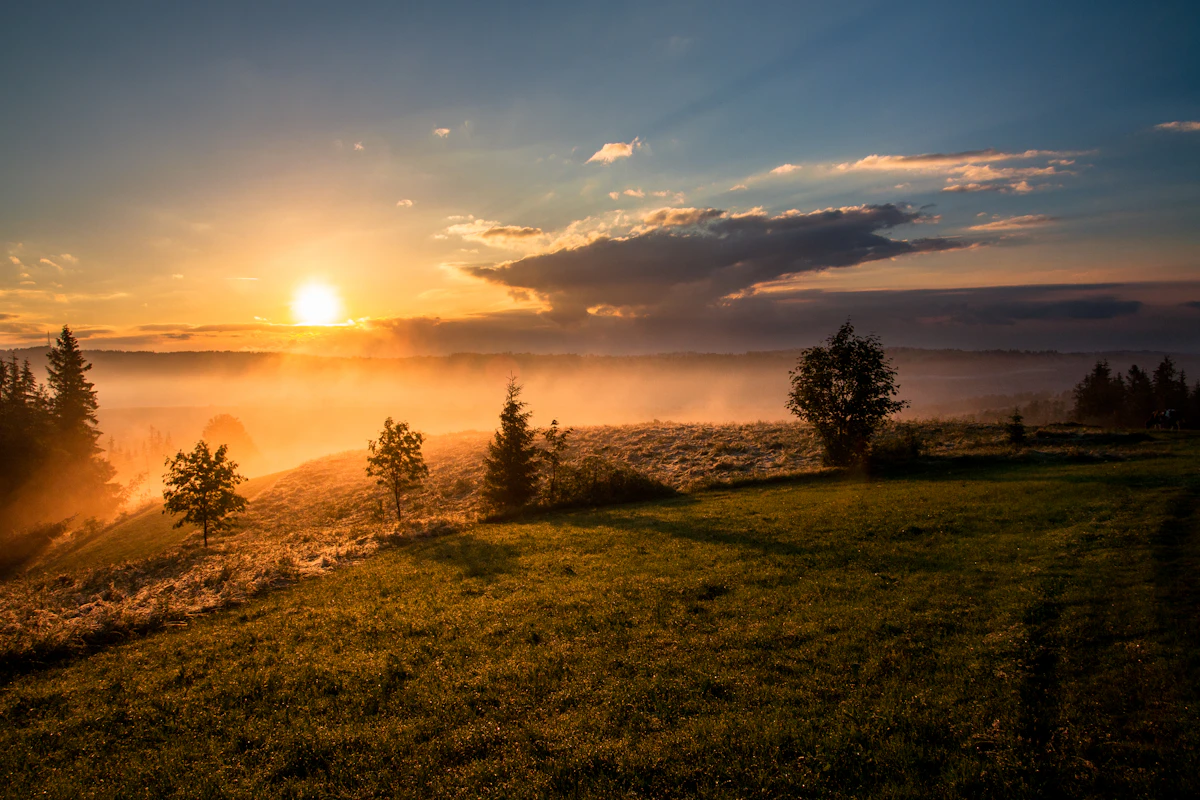
Photo by Dino Reichmuth on Unsplash
Which ego pattern do you recognise most in yourself?
Anonymous · real-time counts
Most people do not hate mornings. They hate what the morning means.
The alarm goes off and before your eyes are even open, your mind is already calculating: the emails, the meetings, the unfinished tasks, the conversation you have been avoiding, the version of yourself you have to perform today.
The bed feels warm. The world outside feels heavy. And somewhere between those two facts, a small voice says: just five more minutes.
If you have ever set an early alarm with genuine hope and then hit snooze with genuine guilt, this article is not going to tell you to try harder. It is going to help you understand why the struggle is real, what is actually happening in your body and mind, and how to build a morning that belongs to you.
Because waking up before sunrise is not about proving you are more disciplined than everyone else. It is about learning to stop abandoning your own needs before the day has even begun.
1. The Hour Before the World Asks Anything From You
There is a difference between waking up and actually beginning your day. Most people wake up and immediately hand their attention to someone else. The phone. The inbox. The news. The group chat. The demands of people who have not earned the first ten minutes of your consciousness.
The early morning when it works creates a gap. A small window where you are awake but the world is not yet asking. You can think without interruption. You can notice what you feel before you have to perform a feeling. You can decide what matters before someone else decides for you.
You can spend your entire day responding to life and never spend a single minute deciding what you actually want from it.
But here is the honest part: the early morning is not automatically peaceful for everyone. A parent caring for a baby, a healthcare worker finishing a night shift, someone living in a stressful household their morning may be the hardest hour of the day, not the calmest. The point is not that sunrise is magic. The point is that a protected period for your own priorities is worth building, whatever that looks like for you.
2. Your Body Has a Clock And It Does Not Read Your Alarm
Your circadian rhythm is an approximately 24-hour internal cycle that regulates sleepiness, alertness, hormone release, body temperature, and metabolism. The master clock sits in a tiny region of the brain called the suprachiasmatic nucleus (SCN), which receives light information from your eyes and coordinates the timing of the rest of your body.
Light is the strongest signal. Morning light tells your brain: the biological night is ending. Evening darkness tells it: prepare for rest. When those signals are consistent, your body learns when to feel alert and when to feel sleepy.
But here is what most productivity articles skip: clock time and biological time are not the same thing.
Two people can wake at 5 AM. One feels sharp. The other feels like they have been hit by a truck. Their internal clocks are at different phases. Their chronotypes their natural tendency toward earlier or later sleep are different. Forcing a night owl into a 5 AM schedule without adjusting their whole rhythm is not discipline. It is jet lag without the flight.
| Biological process | What it does |
|---|---|
| Circadian rhythm | Times sleepiness, alertness, hormones, and body temperature across ~24 hours |
| Suprachiasmatic nucleus (SCN) | Master clock; receives light input and coordinates body rhythms |
| Melatonin | Signals biological night; rises in darkness |
| Cortisol | Follows a daily rhythm; helps mobilise energy for activity |
| Sleep pressure | Builds during wakefulness; dissipates during sleep |
| Adenosine | Accumulates during wakefulness; contributes to sleepiness |
Waking is not a switch. It is a coordinated transition involving the brain, hormones, body temperature, metabolism, and the nervous system. Understanding that transition is the first step to working with your body instead of against it.
3. What Morning Light Actually Does (And What It Does Not)
Light-sensitive cells in your retina particularly those containing a photopigment called melanopsin send signals to the SCN. Depending on when that light reaches your eyes relative to your internal clock, it can shift your circadian timing earlier or later.
Morning light, when timed appropriately for your biological clock, can help move your sleep-wake schedule earlier over time. It also influences melatonin timing and alertness. Outdoor daylight is generally more effective than indoor lighting because it is far brighter.
But morning light does not make waking effortless. It is a signal, not a solution. If you are sleep-deprived, no amount of sunlight will replace the sleep your body needs.
The other half of the equation is evening darkness. Bright light at night delays melatonin release and pushes your clock later. Morning light and evening darkness work together. One without the other is a half-finished sentence.
4. The Cortisol Awakening Response: What It Is (And What It Is Not)
Cortisol is not a villain. It is a hormone that helps mobilise energy, regulate metabolism, and respond to challenges. It follows a daily rhythm, generally peaking in the morning and declining across the day.
The cortisol awakening response (CAR) is a distinct phenomenon: a rapid rise in cortisol across the first 30 to 45 minutes after waking. Research proposes that the CAR helps prepare the organism for the demands of the day and may also help counterregulate adverse emotional experiences from the previous day.[1]
What the CAR is not: It is not proof that everyone should wake at sunrise. It is not a simple sunrise-dependent pulse. Research continues to examine exactly how awakening, circadian phase, light exposure, and individual differences contribute to it.[1]
5. Why Your Brain Can Feel Clearer in the Morning (Sometimes)
Many people report better focus in the morning. There are practical reasons for this: fewer interruptions, lower social demands, and a fresh cognitive start. But it is not a universal law.
Executive functions attention, working memory, decision-making, planning, emotional regulation are sensitive to sleep quality, circadian phase, chronotype, age, and the task itself. Sleep deprivation impairs them. Sleep inertia (the grogginess right after waking) can make the first minutes feel heavy even when you are well-rested.[3]
Some people genuinely think more clearly in the evening. That is not a moral failing. It is a chronotype difference.
The practical takeaway: If mornings feel clearer for you, protect them. If they do not, find your own window of clarity and protect that instead. The principle is the same a protected period for what matters even if the clock time is different.
6. Emotional Control: Space Between Stimulus and Response
Waking early does not automatically make you calm. A person who wakes at 5 AM and immediately opens their inbox has not gained emotional peace. They have just moved their anxiety earlier.
What the morning can offer is a buffer. A period before the day's stressors begin. Time to notice what you are feeling before you have to react to anything. Time to identify what is actually within your control and what is not.
The goal is not to eliminate difficult feelings. It is to create enough space to respond to them thoughtfully rather than react on autopilot.
This is not a productivity technique. It is a nervous system practice. And it requires that you do not immediately fill the silence with someone else's voice.
7. What Spiritual Traditions Have Understood About the Early Morning
Across cultures and centuries, the hour before sunrise has been treated as something more than a time slot. It has been treated as a doorway.
I am not presenting these traditions as scientific evidence. I am presenting them as different frameworks that have asked the same question: What deserves your attention before the world starts asking for it?
What these traditions share, despite their differences: the early morning is a time to give your attention to something before the world takes it. Prayer, meditation, study, reflection the form varies. The principle is the same.
8. Why Successful People Protect Their Mornings (And What They Actually Gain)
You have seen the lists. Tim Cook wakes around 4 AM. Indra Nooyi rose early to manage an unusually full schedule. Haruki Murakami writes in the early hours before the noise begins. Dwayne Johnson trains before dawn.
Do not mistake correlation for causation. These people did not become successful because they woke early. They use early mornings as a tool to protect something they value: focus, exercise, preparation, creative work, or simply a few minutes of control before the day's demands begin.
There are also successful people who wake later. Chronotypes differ. Responsibilities differ. What works for a CEO with a flexible schedule may not work for a nurse on rotating shifts or a parent of young children.
The practical benefits of a protected morning are real: fewer interruptions, a predictable routine, time for preparation, and consistency for activities that might otherwise be pushed aside. But those benefits come from the protection, not the clock.
9. Why the Bed Feels More Attractive Than Your Goals
Here is where most articles lose people. They say "just get up" and move on. That is not helpful. The reasons people struggle to wake early are real, and they are not all about discipline.
Tap each reason to see a matching remedy:
The method of overcoming each problem must match its cause. If you are sleep-deprived, the answer is not an earlier alarm. It is more sleep. If you are dreading the day, the answer is not discipline. It is examining what needs to change.
10. The Ego and the Uncomfortable Truth About Discipline
I am using "ego" here in the everyday sense: the part of you that protects comfort, image, and self-story. It is not a diagnosis. It is a useful way to understand why we sabotage the things we say we want.
11. Revenge Bedtime Procrastination: Why You Steal Time From Your Sleep
You have spent the whole day working, caring for others, meeting responsibilities, responding to messages. When night finally arrives, you refuse to sleep. Not because you are not tired but because this feels like the only time that belongs to you.
This is sometimes called revenge bedtime procrastination. Research has found associations between bedtime procrastination and poorer perceived sleep restoration, shorter sleep duration, and less efficient sleep, even after accounting for chronotype.[4] A systematic review and meta-analysis also linked it to lower self-control, evening preference, and poorer sleep outcomes.
The solution is not simply "put your phone down." That treats the symptom, not the cause.
The deeper question: Are you staying awake because you love the night, or because you did not feel that you had enough of your own life during the day?
If it is the latter, the fix involves creating more autonomy earlier a real break after work, a hobby that has nothing to do with productivity, a protected hour that is genuinely yours. Then bedtime becomes rest, not rebellion.
12. Night Owls: Not Everyone Is Designed for 5 AM
Chronotype describes your natural tendency toward earlier or later sleep and waking. It is influenced by genetics, age, light exposure, and lifestyle. Teenagers often shift later. It can change across the lifespan.
A natural evening preference is not a character flaw. If you are a night owl forced into an early schedule without adjusting your whole rhythm, you may be living in a state of chronic social jet lag a mismatch between your biological timing and the schedule imposed by work or school.
| Sign | Natural evening preference | Bedtime procrastination |
|---|---|---|
| Alertness | Naturally better later | Tired but keeps delaying sleep |
| Free days | Sleeps and wakes later naturally | Sleeps later after postponing bedtime |
| Sleep quality | Can sleep well on a suitable schedule | Often insufficient or irregular |
| Night activities | Genuinely enjoys productive evening work | Continues low-value activities despite wanting sleep |
| Morning difficulty | Reflects biological timing | Reflects insufficient sleep or irregular habits |
Some evening-oriented people can shift earlier with gradual changes, consistent morning light, dimmer evenings, and regular sleep timing. But being able to force yourself awake at 5 AM is not the same as successfully adapting to a 5 AM routine. If you are constantly exhausted, the routine is not working.
You do not have to become a morning person to become a disciplined person.
13. Who Should Not Force Themselves to Wake Before Sunrise
This is not a cop-out. It is honesty.
14. How to Wake Up Earlier Without Hating Your Life
This is the practical part. But it is not a list of tricks. It is a system built on the understanding that your body and mind have reasons for resisting and those reasons deserve respect.
A lapse is one disrupted morning. Abandonment is deciding that one disrupted morning means the entire effort is pointless. You do not need a perfect record. You need a reliable way to return.
Before you go…
How did this article make you feel? Your small reaction helps this space grow with more meaningful stories. 💛
15. Waking Up Before You Lose Yourself in the Day
You can wake up at 5 AM and still live without direction. You can spend your early morning worrying, comparing, scrolling, and rushing. The clock alone does not create a meaningful life.
What matters is what you do with the time and more importantly, what you are protecting.
You cannot create more hours. But you can become more deliberate about the hours you have.
A morning routine cannot fix an unhappy life. But it can give you space to examine what needs to change. It can give you a few minutes where you are not solving someone else's problem, meeting someone else's expectation, or performing a version of yourself you did not choose.
And here is the part that matters most: you do not need to win the morning.
Some mornings will be unproductive. Some mornings you will be tired. Some mornings your child will wake up early, it will rain, you will have a headache, or something unexpected will happen. A healthy routine needs room for ordinary life.
16. The Final Truth: Discipline Is Not Self-Punishment
The sun will rise whether you are ready or not. People will need things from you. Responsibilities will wait. Messages will arrive. Problems will appear. Some days will be difficult before they have properly begun.
But there is something worth protecting: the relationship you have with yourself.
Waking up before sunrise will not magically solve your problems. It will not erase your past, guarantee success, or make every day peaceful. And if your body needs more sleep, staying in bed is not a failure.
But if you have been wanting more time to think, learn, pray, exercise, create, or simply breathe you can start building that space.
You do not have to wake up at 4 AM tomorrow. You do not have to copy somebody else's routine. You do not have to turn your life into a competition.
Start by making one promise you can realistically keep.
Go to bed when you said you would. Get up when your body has had enough rest. Give yourself a few minutes without the noise. Do something that matters to you.
And when you fail, return without turning the mistake into an identity.
Because the real victory is not that you managed to wake up before everybody else. It is that you stopped treating your own needs as the least important thing on your schedule.
Do not wake up early just to have more time to work for the world. Wake up with enough intention to build a life that also belongs to you.
Anonymous · your response is stored only on your device
Educational Disclaimer: This article is written by Shobini Padmanapan, a wellness and personal growth writer at SoulSpace, for educational and self-reflection purposes only. It explores circadian biology, sleep psychology, spiritual traditions, and habit formation using accessible concepts and reflective frameworks.
Scope & Boundaries: This content does not constitute clinical medical advice, sleep disorder diagnosis, or treatment. If you are experiencing persistent sleep difficulties or daytime sleepiness, please consult a qualified healthcare professional.
Author Profile: soulspaceguide.com/authors/shobini-padmanapan
Answers to Questions You Might Hold
Benefits include protected personal time before external demands begin, consistent light exposure that helps regulate circadian timing, opportunities for reflection or exercise, and a sense of agency over your schedule. However, these benefits depend on adequate sleep and consistency not on the clock time alone.
No. Research does not support one universal "best" wake time. Chronotype, sleep need, work schedule, and health all vary. A person who wakes at 8 AM after eight hours of quality sleep may be healthier than someone who wakes at 4 AM after four hours.
The CAR is a rapid rise in cortisol across the first 30 to 45 minutes after waking. It is proposed to help mobilize resources for the day ahead and may also help counterregulate prior-day emotional experiences.[1] It is not proof that everyone should wake at sunrise.
This is often called revenge bedtime procrastination staying awake to reclaim personal time that felt unavailable during the day. Research associates it with poorer sleep restoration and shorter sleep duration.[4] The solution involves creating more autonomy earlier in the day, not just forcing an earlier bedtime.
No. Chronotype is influenced by genetics, age, and light exposure. A natural evening preference is not a character flaw. Forcing a night owl into an early schedule without adequate sleep can harm health and performance.
Your Morning Reset Cheat Sheet
- Sleep first: An early wake-up is never worth sacrificing adequate sleep (7+ hours for most adults).
- Adjust gradually: 15 minutes every few days, not 3 hours overnight.
- Have a reason: An alarm tells you when. A meaningful first activity tells you why.
- Protect the buffer: No phone for the first 10 minutes. Notice how you feel before the world asks.
- Light and darkness: Morning daylight helps. Evening brightness delays.
- When you fail: Return without punishment. A lapse is not abandonment.
- Remember: The goal is not to win the morning. It is to stop abandoning your own needs.
✨ After reading how do you feel about your mornings now?
5/10References
[1] Stalder, T., et al. (2025). The Cortisol Awakening Response: Regulation and Functional Significance. Endocrine Reviews, 46(1), 43–59. doi.org/10.1210/endrev/bnae024
[2] Brown, T. M., et al. (2022). Recommendations for daytime, evening, and nighttime indoor light exposure to best support physiology, sleep, and wakefulness in healthy adults. PLOS Biology, 20(3), e3001571. doi.org/10.1371/journal.pbio.3001571
[3] Hilditch, C. J., & McHill, A. W. (2019). Sleep inertia: current insights. Nature and Science of Sleep, 11, 155–165. doi.org/10.2147/NSS.S188911
[4] Carlson, S. E., Baron, K. G., Johnson, K. T., & Williams, P. G. (2023). The thief of (bed)time: Examination of the daily associations between bedtime procrastination and multidimensional sleep health. Sleep Health, 9(6), 903–909. doi.org/10.1016/j.sleh.2023.08.002
[5] Watson, N. F., et al. (2015). Recommended Amount of Sleep for a Healthy Adult: A Joint Consensus Statement of the American Academy of Sleep Medicine and Sleep Research Society. Sleep, 38(6), 843–844. doi.org/10.5665/sleep.4716
[6] Isha Foundation. (2020). Brahma Muhurta – The Time to Create Yourself. isha.sadhguru.org
[7] Iftaa' Department, Jordan. (2013). Ruling on performing Fajr prayer at the time of Isfar. aliftaa.jo
[8] JMdictDB. (n.d.). 朝活 (Asakatsu). Electronic Dictionary Research and Development Group. edrdg.org
[9] National Institutes of Health. (n.d.). Healthy Sleep. nhlbi.nih.gov
[10] Walker, M. (2017). Why We Sleep: Unlocking the Power of Sleep and Dreams. Scribner. ISBN: 978-1501144318.
[11] Panda, S. (2018). The Circadian Code. Rodale Books. ISBN: 978-1635652433.
Citations are for educational and commentary purposes under fair use. All referenced works remain the intellectual property of their respective authors and publishers.
Be the first to share your thoughts anonymously or with a name.