How alone do you feel right now?
Slide to tell us this is completely private.
When Someone Acts Like You Don't Exist
As you're reading, what's true for you?
Anonymous · real-time counts
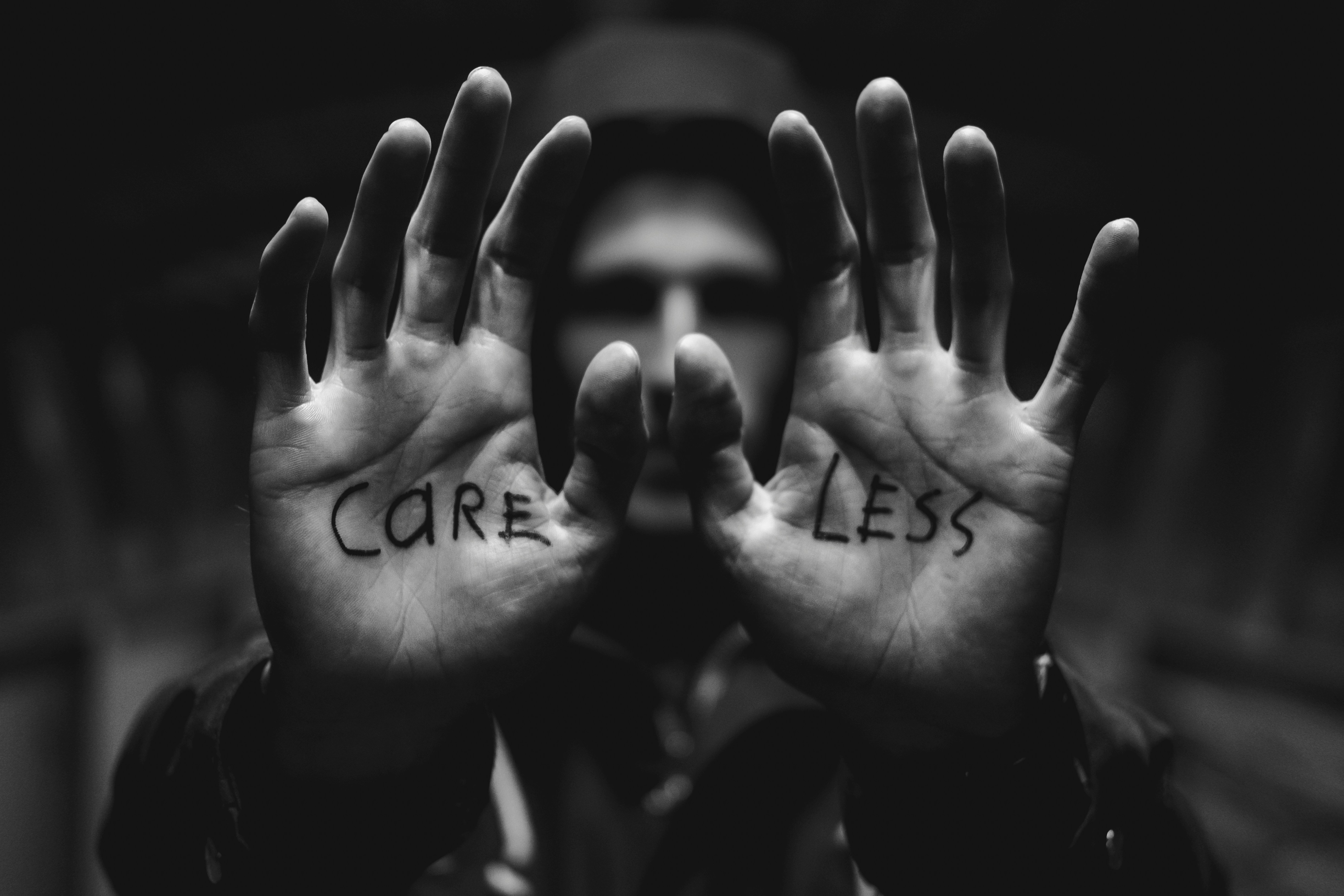
Let's paint a picture. You walk into a room. Maybe it's a team meeting, a family barbecue, or a small gathering of friends. You see someone you know. They make eye contact with the person to your left, smile at the person to your right, and then... their gaze just slides right past you. It's like you're made of glass.
They start a conversation with everyone around you, but you aren't included. No "Hi," no nod, nothing.
If you've ever stood there feeling your cheeks get hot, wondering, "Did I do something wrong? Am I invisible?" you are not alone. That moment stings. It's a unique kind of social rejection that can leave you questioning your place in the room.
The moment it happens
Their attention flows around you. You become the empty space in the conversation.
Why It Feels Like a Punch in the Gut
The psychology of being ignored
Before we figure out how to react, we have to acknowledge why it hurts so much. It's not just "bad manners."
We are wired for connection. Thousands of years ago, being ignored by the tribe meant death. Literally.
While we aren't facing saber-toothed tigers anymore, our brains haven't fully caught up. Research shows that social exclusion and being made to feel invisible activates the same neural pathways as physical pain [1]. Your brain literally cannot tell the difference between a broken bone and a broken social moment.
If this feeling of being overlooked happens often, you might also struggle with setting healthy boundaries without guilt because when people ignore us repeatedly, we often start doubting our right to take up space.
When being ignored triggers:
- Old wounds: It might bring back memories of being the last kid picked in gym class
- Reality doubts: "Am I being too sensitive?" "Is there something on my face?"
- Identity questions: If they look through you, do you even matter?
This is your survival brain doing its job trying to figure out if you're safe in the group. The problem is, it's working too well.
As one writer describes it, you might initially rationalize their behavior. Maybe they're busy. Maybe they didn't notice you. But when it happens repeatedly, the painful reality begins to settle in: they have, for reasons you may never fully understand, chosen to act as if you don't exist [2].
The Real Reasons People Make You Feel Invisible
Here's the most important thing to remember: It is rarely about you.
We are all the main characters of our own movies, and sometimes, we forget that other people are the stars of theirs. Social psychology research suggests that the way we perceive and respond to others is often filtered through our own internal states and insecurities [3]. Let's look at why someone might act this way.
It's Their Own Insecurity
- Social Anxiety: They might be so nervous themselves that they literally can't handle one more interaction. You aren't being excluded; you're being "survived."
- Jealousy or Insecurity: Sometimes, people ignore those who intimidate them. If they feel you are more successful, more confident, or better looking, ignoring you is a weird, unconscious way to level the playing field [4].
- The Power Play: Unfortunately, some people use the "cold shoulder" or "silent treatment" as a tool to assert dominance.

What Not To Do in the Moment
When you're repeatedly ignored, it's easy to fall into the trap of thinking you must have done something wrong. That inner critic often links to overcoming the fear of disappointing others a pattern that makes social slights feel personal even when they aren't.
How to Respond: From Feeling Invisible to Standing Your Ground
When someone repeatedly ignores you, the most powerful stance you can take is one of calm stability. You don't need to prove anything to them. Through your actions, you show that you are not chasing, not desperate, and not trying to force anything. That quiet confidence is often what shifts the dynamic [7].
"Sometimes the most powerful thing you can do is to simply stand in your truth and refuse to shrink."
 — Brené Brown, researcher on vulnerability and courage
[8]
Research suggests that even small acts of kindness can increase your own sense of well-being [9]. Even when someone doesn't seem to like you, continuing to be courteous small gestures like holding a door or offering help can diffuse tension and protect your own emotional balance. You don't have to change their opinion of you, but you can hold onto your own integrity.
If you are able, try to understand their perspective. Perhaps they had a difficult past experience with someone like you, or they're struggling with their own personal challenges. This doesn't excuse their behavior, but understanding where someone might be coming from can help you approach the situation with more compassion for yourself and, if you choose, for them [10].
Choose a situation below and practice your response:
"Your colleague greets everyone in the team meeting except you, then directs all conversation to others."
Try saying: "Hey Marcus, before we move on, I'd love to hear your thoughts on the project too."
"At a family dinner, your in-law talks to everyone around you but doesn't acknowledge you."
Try saying: "Hi Linda, that's a beautiful dish how did you make it?" (Warm, direct, hard to ignore)
"In a group of friends, one person consistently talks over you or looks away when you speak."
Try saying: Continue speaking calmly. Don't stop. Your voice matters.
"Your partner ignores you in front of their friends, making you feel like an outsider."
This requires a private conversation later: "When you didn't include me tonight, I felt alone. Can we talk about that?"
Protecting Your Inner Peace
Staying Centered
Separate behavior from identity. Someone else's bad manners are not a reflection of your worth. Repeat that.
Journal prompt:
"When [Person] did [Action], I felt
[Feeling]. But I know that I am still..."
Practice grounding. If you feel yourself getting hot and flustered:
- Feel your feet on the floor
- Take one deep breath (inhale 4, exhale 6)
- Focus on the weight of your body in the chair
Red Flags: When It's a Pattern of Disrespect
If a colleague consistently excludes you from meetings, lunches, or conversations, it could be social bullying.
Repeated ignoring by an in-law or family member is often passive-aggressive rejection.
If your partner ignores you in front of others, it's a major red flag. A partner should be your advocate.
"The curious paradox is that when I accept myself just as I am, then I can change."
A quiet moment for you
Think of a specific time you felt ignored.
- What story did your brain tell you? ("They hate me," "I'm boring")
- Was that story a fact, or was it a fear?
- How would you have responded if you fully believed you were worthy of respect?
What's your story?
Share anonymously... when did you feel invisible?
Anonymous · Only you and the universe know
About this article: This educational guide was written by Shobini Padmanapan, an independent wellness writer and editorial researcher at SoulSpace. It synthesizes publicly available research on social exclusion, rejection sensitivity, and interpersonal dynamics.
Scope: Educational and informational only. Not clinical advice, diagnosis, or treatment.
Author profile: soulspaceguide.com/authors/shobini-padmanapan
Answers to Questions You Might Hold
Found this helpful? Share it with someone who needs it.
Written by Shobini Padmanapan · SoulSpace
References
- Eisenberger, N. I., Lieberman, M. D., & Williams, K. D. (2003). Does rejection hurt? An fMRI study of social exclusion. Science, 302(5643), 290–292. doi.org/10.1126/science.1089134
- zeya. (2025, March 25). You act like I don't exist now I'm not sure why I do. Medium. https://medium.com/@aiiswriting/you-act-like-i-dont-exist-now-i-m-not-sure-why-i-do-9c81ae8b6122
- Leary, M. R., & Baumeister, R. F. (2000). The nature and function of self-esteem: Sociometer theory. In M. P. Zanna (Ed.), Advances in experimental social psychology, Vol. 32 (pp. 1–62). Academic Press. doi.org/10.1016/S0065-2601(00)80003-9
- Smith, R. H., & Kim, S. H. (2007). Comprehending envy. Psychological Bulletin, 133(1), 46–64. doi.org/10.1037/0033-2909.133.1.46
- Nowicki, S., & Duke, M. P. (1992). The association of children's nonverbal decoding abilities with their popularity and locus of control. Journal of Nonverbal Behavior, 16(3), 153–175. doi.org/10.1007/BF00989965
- Gottman, J. M., & Silver, N. (2015). The seven principles for making marriage work. Harmony Books.
- Coach Lee. (2026, March 21). Ex is acting like you don't exist? Focus on stability, not reaction. My Ex Back Coach. https://myexbackcoach.com/ex-is-acting-like-you-dont-exist/
- Brown, B. (2012). Daring greatly: How the courage to be vulnerable transforms the way we live, love, parent, and lead. Gotham Books.
- Lyubomirsky, S., Sheldon, K. M., & Schkade, D. (2005). Pursuing happiness: The architecture of sustainable change. Review of General Psychology, 9(2), 111–131. doi.org/10.1037/1089-2680.9.2.111
- Neff, K. D. (2003). The development and validation of a scale to measure self-compassion. Self and Identity, 2(3), 223–250. doi.org/10.1080/15298860309027
- Evans, P. (2009). The verbally abusive relationship: How to recognize it and how to respond. Adams Media.
- Rogers, C. R. (1961). On becoming a person: A therapist's view of psychotherapy. Houghton Mifflin.
Citations are provided for educational and commentary purposes under fair use. All original content remains the property of their respective authors. These references are offered as further reading, not as reproduced content.
You are not invisible.
Someone's inability or refusal to acknowledge you does not erase your existence. It doesn't make you less interesting, less valuable, or less worthy of love and attention.
Take a breath. Stand up straight. And remember that the right people the ones who matter will never make you feel like you have to fight to be seen.
✧
How alone do you feel now?
Compare with where you started this is completely private.
Before you go...
How did this article make you feel? Your small reaction helps this space grow with more meaningful stories. 💛
Join the Conversation
Moderated by Shobini Padmanapan · SoulSpace
Be the first to share your thoughts anonymously or with a name.