How overwhelmed or alone do you feel right now?
The Truth About the "Terrible Twos"

As you're reading, what's true for you?
🌱 anonymous · tap to vote
Let's be honest: if you have a toddler, you've probably hidden in the pantry for five seconds of peace. You've faced the meltdown because you cut the sandwich into triangles instead of squares. You've heard the word "No!" echo through your house so many times you wonder if your child knows any other words.
If you're in the thick of it right now coffee cold, patience thin, heart full you might be scrolling for advice on how to survive the terrible twos.
But what if I told you that you don't need to survive them?
A note before we begin: I'm a researcher, not a pediatrician and I don't have children of my own. What I do have is years spent reading the developmental science behind toddler behavior, and a deep frustration that the most reassuring parts of it rarely reach parents in the middle of a meltdown. This guide exists to close that gap. It's educational, not clinical just what the research actually says, in language you can use at 7 a.m.
1. The "Terrible Twos" Are Misnamed
They are actually the "Independence Initiative"
The phrase "terrible twos" makes it sound like your child has transformed into a tiny monster. But here's the truth: they haven't changed; they have evolved. Between 18 months and 3 years, a massive cognitive leap happens this is when children begin to understand they are separate individuals with their own will, not merely extensions of their parents [1]. Your baby who once thought they were literally a part of you suddenly realizes:
"Wait, I have my own arms. I have my own voice.
I can make
things happen!"
This isn't a stage of defiance. It's a stage of self-discovery. When toddlers test boundaries dropping food, throwing objects, or observing your reactions they aren't trying to ruin your day. They are exploring cause-and-effect relationships and learning how their actions influence the world around them [2]. They're conducting a science experiment: "What happens to gravity? What happens to Mom's face when I do this?"
According to renowned developmental psychologist Erik Erikson, the period between 18 months and 3 years represents a psychosocial crisis of "autonomy versus shame and doubt." When children successfully navigate this stage by asserting their will and making choices, they develop a lasting sense of independence and self-confidence [3].
Magda Gerber's guiding principle was to observe more and do less — to treat a toddler's struggle for independence not as something to be managed, but as something to be honored.
2. Why "No!" Is Your Toddler's Favorite Word
(And why that's actually good news)
"Why does my toddler say 'no' to a cookie? They love cookies!"
This is the paradox of the toddler brain. Saying "no" isn't always about the cookie. It's about control. Children in this developmental phase use refusal as a way to establish boundaries and assert their emerging sense of self. Their opposition serves an essential purpose: it helps them practice saying "I matter, and my choice matters" [1].
Research published in the journal Infancy found that toddlers who frequently say "no" are actually demonstrating healthy cognitive development they are actively constructing their understanding of agency and personal power [5].
Imagine living in a world where everyone tells you where to go, what to eat, and when to sleep. The only power you have is the power of refusal. When they say "no" to something they actually want, they are practicing something profound: boundaries.
👇 Which response feels more like you? (Tap one)
You're not alone. Most parents react this way it feels personal. But here's a reframe: when you hear "no," try whispering to yourself, "My child is learning to have boundaries. That's a good thing." Then offer two choices (both acceptable to you) so they can say "yes" to something.
You're onto something beautiful. Validating their "no" while holding your boundary teaches them: "Your voice matters, and so does mine." Try saying: "I hear you don't want your coat. The coat stays on because it's cold, but you can choose hat or hood?"
Ignoring can feel strategic, but toddlers often escalate to be heard. Instead of ignoring the "no," acknowledge it briefly, then redirect. "You said no. I heard you. Now let's put our shoes on race you to the door!"
3. Inside the Brain of a Meltdown
It's not pretty, but it's perfectly normal
Have you ever seen your toddler collapse in the cereal aisle because you wouldn't buy the sugary one? It feels embarrassing. It feels manipulative. But let's look under the hood.
The Engine
Amygdala: The emotional center. It's firing on all cylinders. They feel anger, frustration, and joy more intensely than adults do [6].
The Brakes
Prefrontal Cortex: Logic and impulse control. In toddlers, this part is undeveloped and won't be fully developed until their mid-20s [7]!
A toddler's brain is like a high-performance sports car with bicycle brakes. When they have a tantrum, they aren't being dramatic. During a meltdown, the limbic system (the emotional center) takes complete control, while the prefrontal cortex responsible for reasoning and impulse control remains too underdeveloped to regulate those intense feelings [8]. They are experiencing a brain flood. They're drowning in an emotion they don't have the tools to name or stop.
They need you to be their anchor, not their judge.
In fact, neuroscientific research shows that the typical toddler brain forms up to 700 new neural connections every second making this period one of the most critical windows of developmental growth in the entire human lifespan [9]. Tantrums are not a sign of a "bad" child; they are the visible evidence of a brain under construction.
Siegel's core message is to connect before you correct to treat a tantrum not as a test of your parenting, but as a wave of emotion your child cannot ride alone.
4. The Hidden Message in Every Tantrum
When your toddler is screaming on the floor, it's easy to feel like you have a "bad" kid. But tantrums are a language. If we translate toddler-speak, a tantrum usually means one of these five things:
Too much noise, light, stimulation
Body can't do what mind wants
Need to know you're there
The classic "hungeover"
Boundaries create safety [11]
Once you realize a tantrum isn't an attack on you, but a cry for help, you can stop trying to fix the situation and start trying to connect with the child.
Pause & reflect
- Think back to your toddler's last meltdown. What might they have been trying to say?
- If tantrums are a language, what have you learned about your child's dialect?
- What would it feel like to see the next tantrum as a connection opportunity, not a discipline moment?
5. "Me Do It!" The Two Most Important Words
"Here, let me help you with your shoes."
"NO! ME DO IT!"
Twenty minutes later, the shoes are on the wrong feet, and you're late for daycare. It is maddening. But stop and look at what just happened.
Developmental psychologist Jean Piaget called this stage "autonomous functioning" the child's growing awareness that they can act independently on their environment [12]. When your toddler insists on doing things themselves, they are not being difficult; they are building what psychologist Albert Bandura called "self-efficacy" the belief that they are capable of influencing their world [13].
Your toddler just displayed:
- Grit: They refused to give up
- Determination: They kept trying even when it was hard
- Self-efficacy: They believe "I can do this"
The "Me Do It" phase is the training ground for adulthood. It's where they learn that they are capable. If we step in and do everything for them, we accidentally teach them: "You are not capable. You need me."
Instead: Build in an extra ten minutes for everything. Let them struggle. Let them try. That persistence they're building right now? That's the same muscle they'll use to solve math problems in high school and negotiate salaries as adults.
This need for autonomy continues to evolve. If you're curious how this plays out in older children, you might find Developmental benefits of terrible twos behavior phases helpful.
6. How to Stop Power Struggles Before They Start
The secret weapon: the "Illusion of Choice"
Toddlers crave power. Instead of fighting them for it, give them small, controlled doses. This isn't manipulation research shows that when parents offer limited choices within acceptable boundaries, children feel a sense of agency while still following necessary routines [14]. It's giving them a safe space to exercise their independence.
🚫 Instead of commands, try choices:
"Put on your coat."
✅ "Do you want to put your arms in first like a rocket ship, or like a butterfly?"
"Eat your peas."
✅ "Should the peas go on the blue plate or the red plate?"
The choice isn't about if something happens; it's about how. When toddlers feel like they have a say in their world, the need to fight for control drops dramatically.
Try it now:
Think of something you need your toddler to do today (get in the car, brush teeth, take a bath). Write down two choices you could offer that both lead to the same outcome:
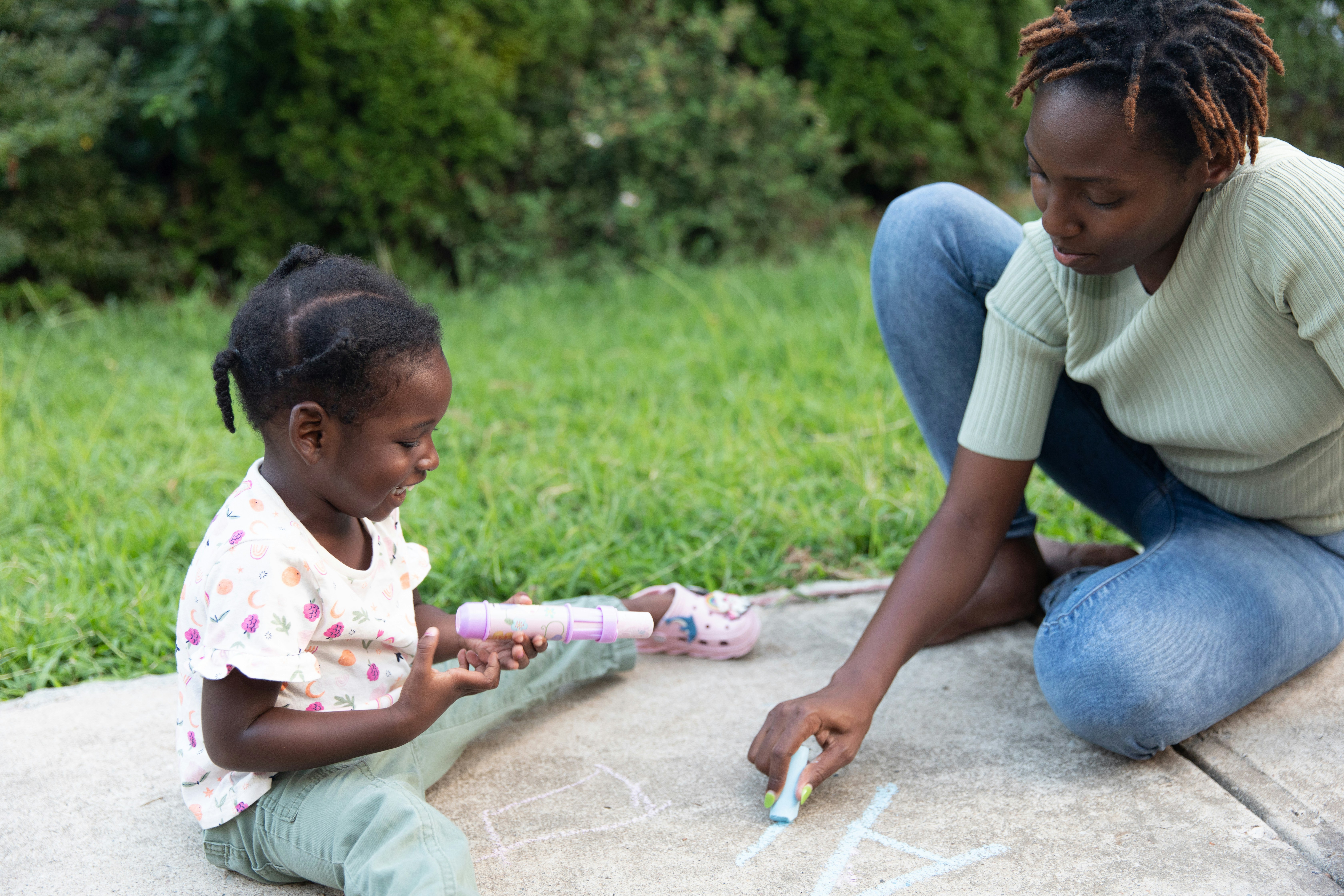
"Red cup or blue cup?" The illusion of choice in action

Connection before correction the gentle art of being present during the storm
7. Why Structure Is the Secret to Freedom
It sounds contradictory: "My toddler wants independence, so I should give them structure?"
Toddlers are like tiny scientists exploring a jungle. If the jungle has no fences, they get scared it's too wild. If the jungle has safe, clear paths, they explore confidently.
Boundaries = Safety. When a toddler knows that we always read two books before bed, they stop fighting the routine. It becomes a fact of life. Consistent routines especially around naps and bedtime significantly reduce behavior issues because toddlers feel secure knowing what comes next [15]. This structure frees them from having to negotiate everything, which reduces anxiety and tantrums.
Research from the National Association for the Education of Young Children (NAEYC) confirms that predictable routines help toddlers develop a sense of security and trust, which in turn supports healthy emotional development [16].
8. A Quick Guide to Surviving (and Thriving) Through the Meltdown
When the screaming starts, here's a quick, human guide to staying sane:
Your calm is contagious. Your panic is too. Research consistently finds that when parents remain calm and respond with empathy rather than control, toddlers develop better emotional regulation and experience fewer meltdowns over time [17].
Physically get down to their eye level. It changes everything.
"You're so mad the banana broke!" This teaches emotional vocabulary [18].
Wait until the tears stop to talk about it. During a tantrum, your child's emotional brain is in control and they cannot process logical explanations [8].
If you said "no," keep it "no." Giving in teaches that tantrums work. Instead, validate the feeling while holding the boundary [19].
Before you go...
How did this article stay with you? Your small reaction helps this space grow with more meaningful stories.
Before you go...
How did this article make you feel? Your small reaction helps this space grow with more meaningful stories. 💛
9. The Light at the End of the Tunnel
If you're exhausted, I see you. The days are long, and the laundry is piled high. But here's the hope: This stage is intense, but it is short. Research indicates that while the "terrible twos" can begin as early as 18 months, the most intense phase typically resolves between ages 3 and 3.5, though every child's timeline varies based on temperament and environment [20] [21].
The same toddler who screamed because you peeled their banana incorrectly will, in just a few short years, be asking you, "Mom, how was your day?" They'll be able to tell you why they're sad instead of throwing a block.
You are not raising a "difficult toddler." You are raising a future adult who knows what they want and isn't afraid to ask for it.
📜 A letter from your future self
One year from now, you'll sit on the couch after bedtime and realize: the screaming didn't break you. It shaped you. You'll remember how you knelt on the kitchen floor, held space for tiny hurricanes, and whispered "I'm here." That version of you the calmer, wiser one wants you to know: every 'no' is building their voice, every tear is teaching them trust, and you are exactly the parent they need. Keep going. The miracle is already unfolding.
Fred Rogers understood that challenging behavior is always communication that when a young child hits or screams, it is usually because they don't yet have the words to say "I'm frightened" or "I'm overwhelmed." Our job is to decode the message, not just react to the action.
10. Welcome to the "Transformational Twos"
Let's stop calling them the "terrible twos." Let's call them what they really are: the Transformational Twos. According to developmental psychologist Erik Erikson, toddlers around age 2 face a psychosocial crisis of autonomy versus shame. When they successfully develop a sense of personal control and independence even through defiance and tantrums they build healthy self-confidence. If this need is suppressed, children may develop doubt in their own abilities [3] [22].
It is transformational for them, as they go from babies to individuals.
It is transformational for you, as you shift from caring for a helpless infant to guiding a spirited child.
Behind every "No!" is a child learning to speak their mind.
Behind every tantrum is a child feeling too deeply.
Behind every "Me do it!" is a future leader learning to take the
wheel.
So the next time your toddler drives you to the edge, take a deep breath. Look at them not as a problem to be managed, but as a person being born. During the "terrible twos," a child's brain forms up to 700 new neural connections every second making this one of the most critical periods of developmental growth in the entire human lifespan [9].
To deepen your understanding of toddler autonomy, explore Erikson's autonomy vs. shame stage toddler development it beautifully complements the "Transformational Twos" framework.
And if meltdowns feel overwhelming, the neuroscience-based strategies in Neuroscience of toddler tantrums & co-regulation tips offer gentle, evidence-backed support.
What's your toddler teaching you?
Anonymous · Only you and the universe know
About this article: This educational guide was written by Shobini Padmanapan, an independent wellness writer and editorial researcher at SoulSpace. It synthesizes publicly available research on toddler development, the autonomy vs. shame stage, and the developmental benefits of the "terrible twos."
Scope: Educational and informational only. Not clinical advice, diagnosis, or treatment.
Author profile: soulspaceguide.com/authors/shobini-padmanapan
Answers to Questions You're Too Tired to Google
Found this helpful? Share it with someone who needs it.
Written by Shobini Padmanapan · SoulSpace
You are not failing.
You are raising.
The days are long, but the years are short. Tonight, when you finally collapse into bed, know that every "No!" and every tear and every messy shoe-tying attempt is building something beautiful.
A person. A whole, strong, independent person.
—
Based on your reading: Psychology of toddler defiance why saying no is healthy
After reading, how do you feel now?
The Transformational Twos Cheat Sheet
- ✨ "No" = asserting boundaries, not defiance [1]
- 🧠 Tantrum = flooded amygdala + immature prefrontal cortex [8]
- 🎯 Illusion of choice: "Rocket arms or butterfly arms?" [14]
- 💡 Connection before correction: name the feeling first [10]
- 🌱 Every meltdown is a chance to teach emotional regulation [18]
- 🛡️ Structure creates safety predictable routines reduce meltdowns [15]
📌 Print or save this card keep nearby for tough moments. Right-click → Print (or Cmd/Ctrl+P)
Continue Your Developmental Journey
✨ The Transformational Twos: Quick Guide
Everything you need to know in 3 minutes
📅 What's Really Happening?
🧪 The Science of "No!"
🫂 The 5 Hidden Messages in Tantrums
🎯 The Illusion of Choice
💝 Quick Meltdown Survival Guide
💫 You are not failing. You are raising.
Every "No!" is building their voice. Every tear is teaching them trust. Every "Me do it!" is creating a future leader.
The days are long, but the years are short. You are exactly the parent they need.
The Transformational Twos Cheat Sheet
- ✨ "No" = asserting boundaries, not defiance [1]
- 🧠 Tantrum = flooded amygdala + immature prefrontal cortex [8]
- 🎯 Illusion of choice: "Rocket arms or butterfly arms?" [14]
- 💡 Connection before correction: name the feeling first [10]
- 🌱 Every meltdown is a chance to teach emotional regulation [18]
- 🛡️ Structure creates safety predictable routines reduce meltdowns [15]
📌 Print or save this card keep nearby for tough moments. Right-click → Print (or Cmd/Ctrl+P)
Be the first to share your thoughts anonymously or with a name.