How alone do you feel right now?
Slide to tell us no judgment, just honesty.
Why Substance Use Risk Peaks at 15–17
As you're reading, what's true for you?
Anonymous · real-time counts
Let's be honest: If you're a parent of a teenager, you might feel like you're living with a stranger who slams doors and speaks in monosyllables. [1]
If you're a teen, you might feel like no one absolutely no one understands the pressure you're under. The grades. The friends. The future. The noise inside your own head.
And then there's this: At ages 15 to 17, the risk of trying substances doesn't just "go up" due to rebellion or bad kids or bad parenting. It peaks because of a perfect storm brain science, social survival, and silent struggles colliding at once. [2]
This article is for both of you. Let's walk through what's really happening because understanding the "why" is the first step to staying connected, and staying safe.
I've spent years studying adolescent brain development and the research on substance use risk, and I've written this to sit at the intersection of the science and the lived reality families face. Below is what actually helps.
If you're reading this, you're probably worried. Maybe you've noticed changes the withdrawal, the secrecy, the new friends you haven't met. Or maybe you're just trying to get ahead of it, hoping that if you do everything right, your child will be safe.
Here's what I need you to know: Your worry is love in disguise. And love connected, curious, non-judgmental love is the strongest protective factor there is. [3]
1. The Brain's Gas Pedal vs. The Brakes
Imagine a car where the gas pedal is floored, but the brakes haven't been installed yet.
That's the adolescent brain. [5]
The Science: The prefrontal cortex the "rational brain" responsible for decision-making, impulse control, and thinking about consequences isn't fully developed until your mid-20s. Meanwhile, the limbic system (the emotional and reward center) is in overdrive during adolescence. [5]
What This Feels Like
For teens: You feel happiness, stress, and sadness more intensely than adults do. When something feels good a laugh with friends, a risk, a substance it feels really good. When something hurts, it hurts deep. You act on feelings because, in the moment, the feeling is everything. [5]
For parents: When your teen seems to "not think" about consequences, it's not defiance. Their brain's logic center is literally offline during emotional moments. They're not ignoring the future; they genuinely can't access it. [5]
Why It Matters for Substance Use: Substances hijack this system. They offer a shortcut to feeling good or feeling numb. And because the "brakes" are weak, it's exponentially harder to stop and think, "Wait what's the consequence tomorrow?" [6]
"The adolescent brain is like a car with a powerful engine and untrained driver. The passion is there, but the steering is wobbly." [5]
🦋 What teens commonly report:
These are illustrative patterns drawn from adolescent research, not live results. You're not alone in how you feel.
2. The "Who Am I?" Experiment
Middle adolescence is like trying on different masks to see which one fits. One day it's the athlete. The next it's the artist. Then the rebel. Then the perfectionist. Then back again. [7]
"I didn't even like vaping. But everyone at the party was doing it, and for that one night, I felt like I belonged. Like I was finally the version of me that people wanted to be around."
— A composite drawn from common teen experiences
The Search: Teens are desperate to find an identity separate from their parents. Trying a substance can feel like an adult decision, a rite of passage, or a way to signal to the world: "I'm my own person. I make my own choices." [7]
Related: Helping Teens Navigate Identity Crisis and Future Anxiety Learn how to support your teen through the turbulent journey of self-discovery.
Pause & reflect (for teens)
- Think about the image you want your friends to see. Is it the "chill" kid? The "carefree" one? The one who's "down for anything"?
- Ask yourself quietly: Am I choosing this substance, or is the substance choosing this identity for me?
- If you didn't care what anyone thought just for a moment who would you actually want to be?
3. Peer Pressure: It's Actually About Survival
We often tell teens, "Just say no," as if it's that easy. But here's what the science says: for a 16-year-old brain, social rejection triggers the same brain regions as physical pain. [9]
The Dynamic
When a friend offers a vape or a drink, saying "no" isn't just declining a puff. To a teen brain, it can feel like you're pushing yourself out of the tribe. Out of safety. Out of belonging. [9]
The Reality: Belonging feels like survival. Teens aren't weak for wanting to fit in they are hardwired for connection. The task isn't to stop wanting to belong. It's to find connections that don't require a substance to maintain. [9]
Explore further: How Teens Develop Deep Peer Relationships and Intimacy Understanding the science behind teen friendships and belonging.
"Adolescents are not indifferent to what their parents think. It's just that what their friends think is more salient, more immediate, more real." [9]
Try this script (for teens)
When someone offers and you're not sure:
"Nah, I'm good right now." "Got practice early tomorrow." "My parents would actually kill me." "Honestly, I'm just here to hang with you."You don't need a big speech. A small boundary is still a boundary. [10]
4. Big Feelings, Small Toolbox
Have you ever been so angry you couldn't see straight? Or so sad you felt hollow? Now imagine feeling that way every day, with no idea how to turn it off. [11]
The Pressure Cooker: School stress, social media comparison, anxiety about college or the future, friendship drama, family expectations, global uncertainty it piles up. Adults have decades of practice coping; teens are facing adult-sized problems with child-sized experience. [12]
The Trap: Substances become a quick-release valve. They don't solve the problem; they just pause the pain. And when the pause ends, the pain is still there often with new problems attached. [11]
👪 Common patterns parents report:
These are illustrative patterns drawn from parenting research, not live results. Most parents are trying to listen. That's a beautiful start.
A question to carry: Before you respond, ask: "Do they want me to fix it, or do they just want me to hear it?" Often, they just need the tools to process the emotion, not a lecture about it. [8]
5. The "Forbidden Fruit" Myth
When something is taboo, it becomes magnetic. Social media, movies, music they glorify substance use. It looks glamorous. Fun. Consequence-free. [13]
"My Instagram feed is full of parties where everyone looks happy and free. My reality is a vape that made me cough, a hangover that lasted all day, and anxiety that got worse, not better."
— A composite drawn from common teen experiences
The Illusion: A post shows the highlight reel the laugh, the bond, the escape. It never shows the shame the next morning, the money wasted, the thing you did that you can't undo. [13]
6. The Superhero Complex: "It Won't Happen to Me"
This is one of the most frustrating and completely normal parts of adolescence. Psychologists call it the personal fable: the belief that bad things happen to other people, but you are somehow invincible. [14]
The Risk: Teens see addiction as something that happens to "old people" or "losers" or "kids with worse lives." They believe they can dabble and walk away. But here's the part that's not fair: because their brains are still wiring themselves, early exposure actually creates stronger pathways for addiction. The first few times matter more than they will at 25. [15]
"The question is not 'why the addiction?' but 'why the pain?'" [16]
7. The Quiet Ones Are at Risk, Too
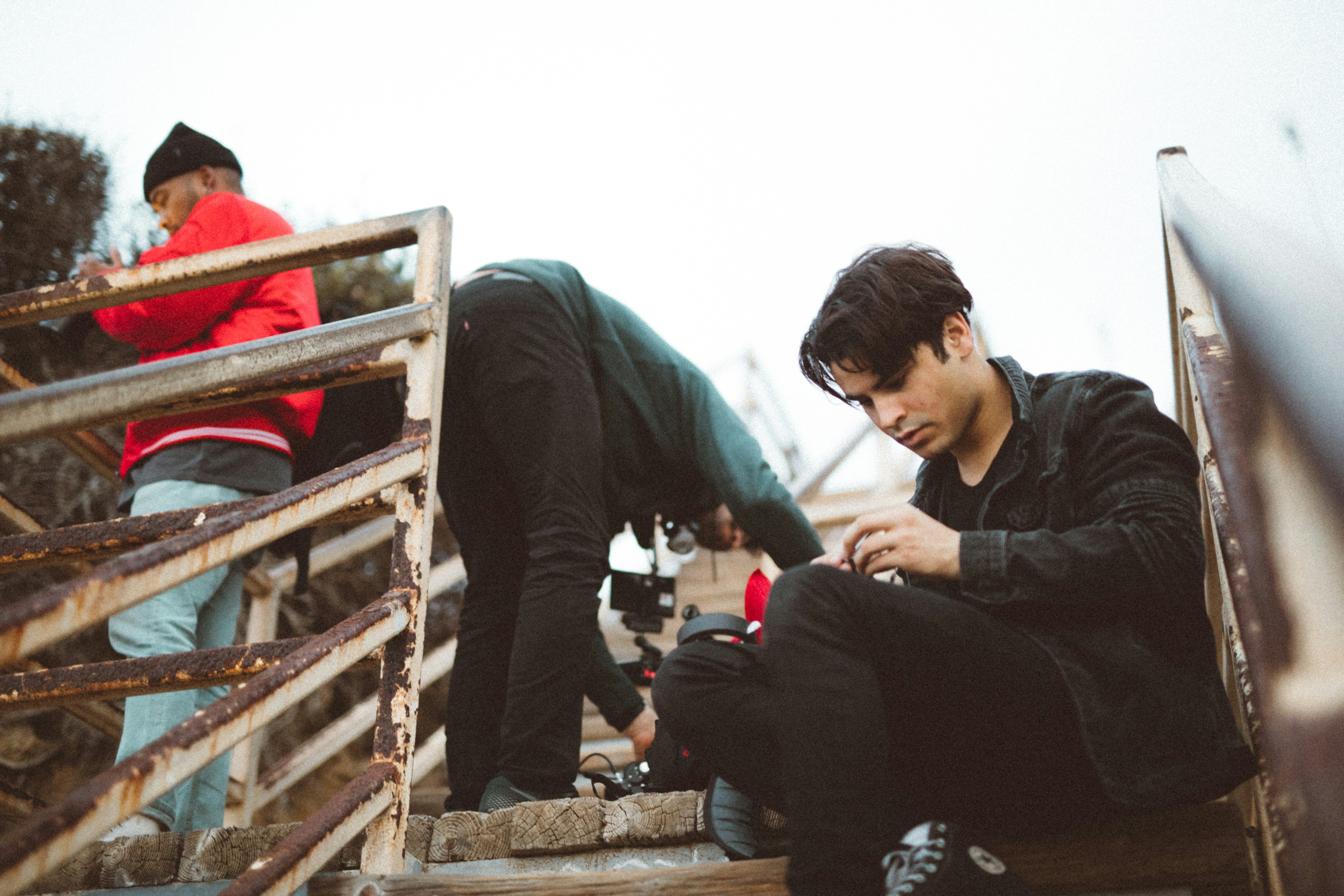
We often look for the obvious signs: bad grades, new "bad" friends, acting out, rebellion. But the "perfect" teen the honor student, the star athlete, the one who never gives you trouble can be hiding the deepest struggles. [17]
The Hidden Struggle: High achievers use substances to turn off the noise of pressure. Quiet teens use them to feel less alone. Popular kids use them to stay popular. If a teen seems fine but is secretly suffering, the substance fills a void no one else can see. [17]
For parents: Don't assume your child is safe just because they're succeeding. Check in with the ones who seem fine, too. Especially them. [17]
A Letter From the Other Side of This Season
Dear you,
I know you're in the middle of it right now. The confusion, the weight, the feeling that no one really gets it. I remember standing exactly where you are wondering if it would ever feel lighter, if you'd ever feel like yourself again.
I'm writing to tell you: it does get lighter. Not because the problems disappear, but because you grow stronger. You learn to hold the hard things differently. You find people who see you. You discover that the parts of you you thought were too much are actually your greatest gifts.
One year from now, you'll look back at this moment with a tenderness you can't yet feel. You'll be proud of yourself for staying. For asking the questions. For not giving up on the person you're becoming.
Keep going. You're closer than you think.
8. The Parent-Teen Disconnect
To a parent, this age feels like a slammed door and one-word answers. To a teen, it feels like parents just don't get it and maybe never will. [18]
Read more: Why Teenagers Push Parents Away: Adolescent Independence A deeper look at the science of separation and how to stay connected.
What parents see: "You used to tell me everything. Now I get nothing. I'm just trying to keep you safe."
What teens feel: "You don't listen. You judge. You don't remember what it was like. I'll handle this myself."
The Gap: Teens push away to become independent, but they still need a soft place to land. When the connection at home weakens, the outside world fills the gap. If a teen feels judged at home, they'll seek comfort elsewhere sometimes in the wrong places. [19]
A scenario to sit with
Your teen comes home smelling of smoke or alcohol. Your heart races. Your mouth opens.
What's your first reaction?
Screaming? Grounding? Taking away the phone? Or...
A deep breath. A glass of water. A quiet: "I'm glad you're home safe. We'll talk tomorrow when we've both slept."
If you choose the latter, you keep the door open for next time. And next time might be when they really need you. [18]
9. The Silent Questions Teens Are Asking
Behind the eye-rolls and the silence and the "I'm fine," most teens are screaming internally for three things:
- 🔍 "See me for who I am not who you want me to be."
- 👂 "Listen to me without fixing me."
- 🤝 "Trust me, so I can trust you."
When these needs aren't met, substances offer a counterfeit version of comfort. They don't deliver any of these things but they numb the ache of not having them. [20]
What's one thing you wish your parents understood?
Anonymous · Only you and the universe know
Before you go...
How did this article make you feel? Your small reaction helps this space grow with more meaningful stories. 💛
10. What Actually Prevents Risk (It's Not Just Rules)
Here's the hard truth: You can't scare a teen into being safe. Fear-based lectures often backfire, making substances seem even more exciting, more forbidden, more adult. [21]
What Research Shows Works:
Dialogue, not Monologue: Ask open-ended questions. "What do you see at parties?" "How do you handle it when a friend offers you something?" "What's the hardest part of staying true to yourself?" [21]
Unconditional Presence: Knowing they have a safe harbor a place where they can say anything without being grounded on the spot is the single strongest protective factor. Even when they mess up. Especially when they mess up. [3]
Modeling Behavior: How do you handle stress? Do you reach for a drink, a cigarette, a screen? Do you numb or do you feel? Teens are watching you closer than you think and they'll do what you do, not what you say. [22]
Emotional Vocabulary: Help them name what they're feeling. "Sounds like you're overwhelmed." "That must have felt humiliating." "I wonder if you're lonely." Words tame the nervous system. [23]
💬 A Closing Letter to Both of You
Substance use risk doesn't peak in adolescence because teens are careless or bad.
It peaks because they are searching for identity, belonging, relief, and understanding often without the tools to find it safely. [24]
The question isn't, "How do we stop them?"
The question is, "How do we walk with them through this stage so they don't have to walk alone?" [18]
For tonight, just sit with this
- What would it feel like to put down the armor just for a moment and tell each other the truth?
- What's one small step toward connection you could take tomorrow?
- Not fixing. Not lecturing. Just being together.
You are not enemies on different sides. You're two people in the same storm, learning to find each other again.
How alone do you feel now?
After reading, has anything shifted?
Your shift:
You moved from 5 to 5.
No changeAbout this article: This educational guide was written by Shobini Padmanapan, an independent wellness writer and editorial researcher at SoulSpace. It synthesizes publicly available research on adolescent brain development, risk factors for substance use, and family protective factors.
Scope: Educational and informational only. Not clinical advice, diagnosis, or treatment. If you or your teen is struggling, please reach out to a licensed professional.
Author profile: soulspaceguide.com/authors/shobini-padmanapan
Answers to Questions You Might Hold
It's a perfect storm: the brain's reward center is in overdrive while impulse control is still developing (like a car with a floored gas pedal but weak brakes). Combined with identity searching, intense peer connection needs, and adult-sized stress with limited coping tools, this age becomes biologically and socially primed for higher risk. [5][7][11]
Beyond the obvious, watch for: changes in friend groups, loss of interest in previously loved activities, secretiveness about whereabouts, extreme mood swings, borrowing money, empty secrecy (locked doors, whispered calls), and the 'perfect kid' who's masking pressure sometimes high achievers hide it best. [17]
Breathe first. Then choose curiosity over accusation. Try: "I've noticed some changes and I'm worried about you not because I'm trying to catch you, but because I love you. Can we talk about what's going on?" If the door slams, leave it a crack open: "I'm here when you're ready." Connection, not confrontation, keeps them safer. [18]
Research shows fear-based lectures often backfire with adolescents they can make substances seem more intriguing or create a 'it won't happen to me' invincibility belief. What works: open dialogue, unconditional presence, helping them build genuine coping skills, and modeling healthy stress management yourself. [21]
The strongest protective factor is a connected, non-judgmental relationship with at least one adult. Teens who feel seen, heard, and trusted even when they mess up are significantly less likely to use substances destructively. Also crucial: helping them build emotional vocabulary, stress management skills, and authentic friendships. [3][23]
References
- Steinberg, L. (2023). Age of Opportunity: Lessons from the New Science of Adolescence. Houghton Mifflin Harcourt.
- Centers for Disease Control and Prevention. (2024). Youth Risk Behavior Survey Data Summary & Trends Report: 2011–2021. cdc.gov
- Newport Academy. (2025). 10 Reasons Why Young People Use Drugs. Newport Academy Editorial Team.
- Mayo Clinic Staff. (2026). Teen drug abuse: Help your teen avoid drugs. Mayo Clinic. mayoclinic.org
- Siegel, D. J. (2013). Brainstorm: The Power and Purpose of the Teenage Brain. TarcherPerigee.
- Whitesell, M., Bachand, A., Peel, J., & Brown, M. (2013). Familial, social, and individual factors contributing to risk for adolescent substance use. Journal of Addiction, 2013, 579310. doi:10.1155/2013/579310
- Erikson, E. H. (1968). Identity: Youth and Crisis. W. W. Norton & Company.
- South Shore Health. (2022). Teen Substance Use and Risks: Establishing Healthy Behaviors Early.
- Steinberg, L., & Monahan, K. C. (2007). Age differences in resistance to peer influence. Developmental Psychology, 43(6), 1531–1543. doi:10.1037/0012-1649.43.6.1531
- Abrams, Z. (2024). New approaches to youth substance misuse. Monitor on Psychology, 55(2). apa.org
- Child Mind Institute. (n.d.). Mental Health Disorders and Substance Use. Miller, C., & Taskiran, S.
- American Psychological Association. (2024). Stress and substance use among adolescents.
- Dumas, T. M., et al. (2019). Perceived peer norms and substance use among adolescents. Addictive Behaviors, 90, 234–240. doi:10.1016/j.addbeh.2018.11.002
- Elkind, D. (1967). Egocentrism in adolescence. Child Development, 38(4), 1025–1034. doi:10.2307/1127100
- National Institute on Drug Abuse. (2023). Adolescent Substance Use.
- Maté, G. (2010). In the Realm of Hungry Ghosts: Close Encounters with Addiction. North Atlantic Books.
- CHOC Children's Hospital. (2022). Why are youths resorting to substance and drug use?
- Ginsburg, K. R., & Jablow, M. M. (2015). Building Resilience in Children and Teens: Giving Kids Roots and Wings. American Academy of Pediatrics.
- Hawkins, J. D., et al. (1992). Risk and protective factors for alcohol and other drug problems in adolescence and early adulthood. Psychological Bulletin, 112(1), 64–105. doi:10.1037/0033-2909.112.1.64
- Hilliker, R. (2025). Teen vs. Adult: Why Is Treatment Different for Teens Than Adults? Ethos Behavioral Health.
- Halpern-Felsher, B. (2022). Safety First: A comprehensive approach to adolescent substance use education. Current Problems in Pediatric and Adolescent Health Care, 52(6), 101218. doi:10.1016/j.cppeds.2022.101218
- Bandura, A. (1977). Social Learning Theory. Prentice Hall.
- Goleman, D. (1995). Emotional Intelligence: Why It Can Matter More Than IQ. Bantam Books.
- Avcı, M. (2025). Adolescent substance use disorder and its association with mental health symptoms. PMC, 12273306. pmc.ncbi.nlm.nih.gov
Citations are for educational and commentary purposes under fair use. All sources are credited for further reading.
Found this helpful? Share it with someone who needs it.
Written by Shobini Padmanapan · SoulSpace
Printable Summary Card
Gas pedal (emotion) on full. Brakes (logic) still building until mid-20s.
Teens try on different masks to find who they are substances can become part of that experiment.
Belonging feels like survival. Social rejection triggers the same brain regions as physical pain.
One connected, non-judgmental adult is the strongest protective factor.
Ask open questions. Listen without fixing. Curiosity builds trust.
Naming feelings tames the nervous system. Help them find the words.
Be the first to share your thoughts anonymously or with a name.