The Teenage Brain on Thin Ice

As you're reading, what's true for you?
Anonymous · real-time counts
You're talking to your 16-year-old a kid who can code, write a persuasive essay, or debate politics with the best of them. They are sharp, articulate, full of potential. Then, they do something that makes you question if aliens have swapped out their brain.
They send that text. Take that car ride. Post that video. And you're left standing there: "What were you thinking?"
A note from Shobini: I've spent years researching developmental psychology and the neuroscience of adolescence. I've also been that teen who made choices that made my parents' jaws drop. This isn't theory, it's life. Let's walk through it together, with compassion.
Your Teen's Brain Right Now:
1. The Brain's "Pedal-to-the-Metal" Phase
With spongy brakes.
Think of the teenage brain like a high-performance sports car. It's got a powerful engine (the limbic system), which feels rewards, excitement, and peer pressure intensely. That engine is roaring and ready to go. [1]
But the brakes? Those are the prefrontal cortex responsible for good judgment, impulse control, and long-term thinking. Here's the kicker: the brakes are the last part of the car to be fully installed. [2]
Science says: The prefrontal cortex isn't fully developed until the mid-20s. Your teen has the horsepower to feel everything intensely but is still learning how to pump the brakes. [3]
Dr. Frances Jensen
Neurologist, author of "The Teenage Brain"
2. The Spotlight Effect: "Everyone Is Watching Me"
Ever done something embarrassing and felt like the whole world was talking about it? For teens, that feeling is their constant reality. Psychologists call this the "imaginary audience." [4]
"When your friend doesn't text back for 3 hours, it's not just annoying, it feels like a public rejection. When you walk into a room, you genuinely believe people are noticing your hair, your clothes, your every move. It's exhausting."
This isn't drama. It's development. The social stakes feel like life and death because, to the teenage brain, belonging is survival. [12]
That feeling of being constantly watched and judged by peers is a hallmark of adolescent social development. For a deeper understanding of how teens navigate their social world, explore How Teens Develop Deep Peer Relationships and Intimacy.
"I'm writing to you from a place you can't quite see yet a year from now, maybe two. The nights that felt endless, the worry that sat like a stone in your chest, the moments you wondered if you were doing any of this right... they're not gone, but they've softened.
You didn't break them. You didn't break yourself. The love you poured in, even when it felt like it was falling on deaf ears it took root. The seeds you planted in their heart, in your own heart, are growing. Not in the way you imagined, but in a way that matters more.
You're still standing. And so are they. And that, right there, is everything."
3. The Allure of "Feeling Alive"
For a teenager, boredom isn't just unpleasant, it can feel like a mini-crisis. They crave novel, intense experiences. This drive for sensation-seeking is biological. [6]
Their brains are wired to get a huge dopamine rush from new and exciting and yes, sometimes risky experiences. When they speed down a dark road or try something against the rules, they aren't just being rebellious. They are chasing a feeling of intensity, a way to break through the mundane and feel something real. [7]
Myth vs. Fact: What's Really Going On
MYTH
"They're being rebellious on purpose."
FACT
They're following a biological drive for reward and social connection. The brain rewards risk before logic can stop it. [8]
MYTH
"They don't understand the consequences."
FACT
They know the risks intellectually. But in the moment, emotions override logic. It's not ignorance, it's hijacking. [11]
MYTH
"They don't care what we think."
FACT
They care deeply. They're just trying on independence. Your opinion still matters even when it doesn't look like it. [13]
4. The "It Won't Happen to Me" Bubble
This one is classic. It's called personal fable the belief that they are special, unique, and not subject to the rules that govern everyone else. [4]
You say: "If you text and drive, you could get into a terrible accident."
They hear (and feel): "That happens to other people. I'm a good driver. I can handle it." [10]
This isn't arrogance, it's a protective shield. To truly accept their own vulnerability is terrifying. Believing they are invincible allows them to step into the world with confidence. [13]
This sense of invincibility is closely tied to adolescent identity formation. To explore how teens develop their sense of self during this critical period, read Erikson's Identity vs. Role Confusion in Adolescent Development.
Prof. Sarah-Jayne Blakemore
Cambridge University, teenage brain researcher
5. Logic Is Easy, Emotions Are a Tsunami
A 16-year-old can have the logic skills of an adult. Ask them for advice on a friend's problem, and they'll give you a perfectly reasoned, sensible answer. But when they are the one facing embarrassment, heartbreak, or social rejection, logic goes out the window. [5]
Giving advice to a friend
Prefrontal
cortex online
In their own crisis
Limbic system
hijacked [8]
Your voice matters here
We've all been there parent or teen. What's your story?
Anonymous · Only you and the universe know
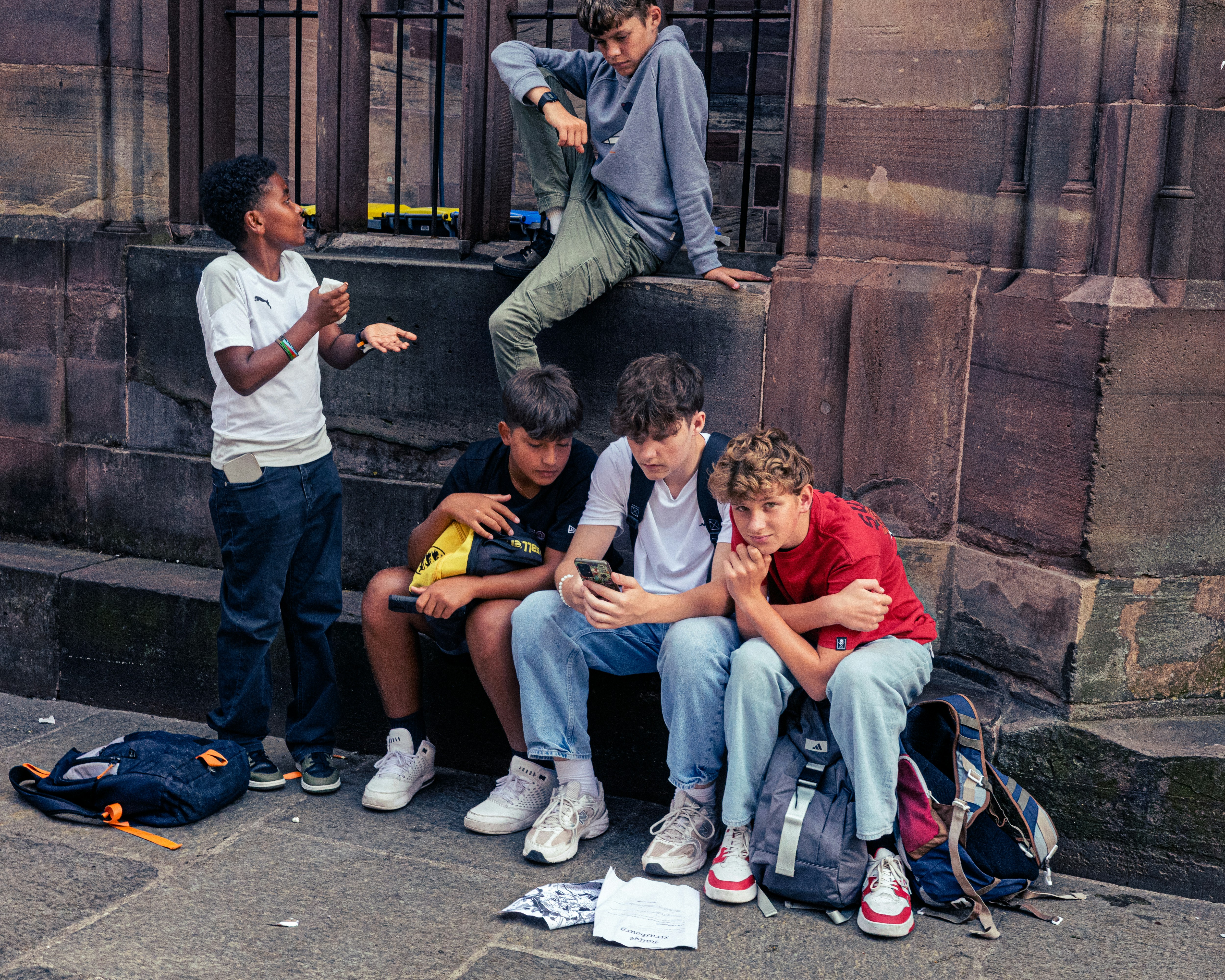
📸 The adolescent brain is a construction site neural pathways are being built, strengthened, and pruned at an extraordinary rate. [3]
6. They Still Need You (Even When Pushing You Away)
This is the hardest part for parents. The pushing away feels so personal, so final. But it's a necessary part of them learning to stand on their own two feet. [14]
Think of it like a rocket ship: it needs to detach from the launchpad (you) to soar. [14]
Your role shifts: From Manager (giving orders) to Consultant (offering wisdom when asked). [15]
The consultant doesn't do the work for them but helps them figure out their own solution. When they mess up (and they will), your job isn't to say "I told you so." Your job is to be the calm in their chaos. [15]
For parents:
- What was ONE risky thing you did as a teen?
- What did you need from adults in that moment?
- How can you offer that now to your teen?
For teens (or remembering):
- When have you felt most misunderstood?
- What would you want adults to know about your world?
- What does support actually look like to you?
For more guidance on supporting your teen through this transitional period, explore Why Teenagers Push Parents Away: Adolescent Independence and Teen Emotional Autonomy and Parental Separation Strategies.
The Bottom Line: Reframing the "Dumb" Decision
We need to change how we talk about this stage.
It's not "my smart kid keeps doing stupid things." It's "my growing kid is learning how to be a person in a world that feels huge, intense, and confusing." [16]
Their mistakes aren't just errors; they're experiments. They are how they learn the boundaries of the world and their own capabilities. [15]
Our job isn't to build a bubble-wrap world where they never get hurt. It's to be a steady, loving, non-judgmental presence as they navigate their own way stumbles, falls, and all. [15]
Because the goal isn't to raise a perfect teenager. It's to raise a resilient, self-aware adult who knows that even when they fall, someone has their back. [15]
— With you on the journey
Before you go...
How did this article make you feel? Your small reaction helps this space grow with more meaningful stories. 💛
About this article: This educational guide was written by Shobini Padmanapan, an independent wellness writer and editorial researcher at SoulSpace. It synthesizes publicly available research on adolescent brain development, impulsivity, and risk-taking.
Scope: Educational and informational only. Not clinical advice, diagnosis, or treatment.
Author profile: soulspaceguide.com/authors/shobini-padmanapan
References
The following sources informed the research and insights shared in this article. Citations are provided for educational and commentary purposes.
- Jensen, F. E., & Nutt, A. E. (2015). The Teenage Brain: A Neuroscientist's Survival Guide to Raising Adolescents and Young Adults. HarperCollins.
- Steinberg, L. (2014). Age of Opportunity: Lessons from the New Science of Adolescence. Houghton Mifflin Harcourt.
- Giedd, J. N. (2008). The teen brain: Insights from neuroimaging. Journal of Adolescent Health, 42(4), 335–343. doi:10.1016/j.jadohealth.2008.01.007
- Elkind, D. (1967). Egocentrism in adolescence. Child Development, 38(4), 1025–1034. doi:10.2307/1127100
- Blakemore, S.-J. (2018). Inventing Ourselves: The Secret Life of the Teenage Brain. PublicAffairs.
- Zuckerman, M. (1994). Behavioral Expressions and Biosocial Bases of Sensation Seeking. Cambridge University Press.
- Steinberg, L., et al. (2018). Around the world, adolescence is a time of heightened sensation seeking and immature self-regulation. Developmental Science, 21(2), e12532. doi:10.1111/desc.12532
- Casey, B. J., et al. (2008). The adolescent brain. Annals of the New York Academy of Sciences, 1124(1), 111–126. doi:10.1196/annals.1440.010
- Damour, L. (2016). Untangled: Guiding Teenage Girls Through the Seven Transitions into Adulthood. Ballantine Books.
- Lapsley, D. K., & Murphy, M. N. (1985). Another look at the theoretical assumptions of adolescent egocentrism. Developmental Review, 5(3), 201–217. doi:10.1016/0273-2297(85)90014-7
- Blakemore, S.-J., & Robbins, T. W. (2012). Decision-making in the adolescent brain. Nature Neuroscience, 15(9), 1184–1191. doi:10.1038/nn.3177
- Crone, E. A., & Dahl, R. E. (2012). Understanding adolescence as a period of social–affective engagement and goal flexibility. Nature Reviews Neuroscience, 13(9), 636–650. doi:10.1038/nrn3313
- Dahl, R. E. (2004). Adolescent brain development: A period of vulnerabilities and opportunities. Annals of the New York Academy of Sciences, 1021(1), 1–22. doi:10.1196/annals.1308.001
- Siegel, D. J. (2013). Brainstorm: The Power and Purpose of the Teenage Brain. TarcherPerigee.
- Ginsburg, K. R., & Jablow, M. M. (2015). Building Resilience in Children and Teens: Giving Kids Roots and Wings. American Academy of Pediatrics.
- Robson, D. (2022, September 7). The secret life of the teenage brain. BBC Future.
- Damour, L. (2017, March 8). Teenagers Do Dumb Things, but There Are Ways to Limit Recklessness. The New York Times.
Fair Use Disclaimer: Citations are provided for educational and commentary purposes only. All quoted material is attributed to its original source and used in accordance with fair use guidelines. This content is not a substitute for professional medical or psychological advice.
Found this helpful? Share it with someone who needs it.
Written by Shobini Padmanapan · SoulSpace
Key Takeaways
Answers to Questions You Might Hold
Smart teens make risky choices because their brain's 'reward center' (limbic system) develops faster than their 'control center' (prefrontal cortex). They feel excitement intensely but haven't fully developed the brakes for impulse control. It's not lack of intelligence, it's a brain still under construction. [2]
The prefrontal cortex responsible for judgment, impulse control, and long-term thinking continues developing until the mid-20s (around age 25). This explains why risk-taking peaks during adolescence and gradually declines in young adulthood. [3]
Shift from 'manager' to 'consultant.' Ask curious questions instead of giving lectures. Use 'I wonder...' statements: "I wonder what felt exciting about that situation?" Listen more than you talk, and validate their feelings before offering perspective. Connection before correction. [15]
Occasional risk-taking is developmentally normal. However, warning signs include: escalating dangerous behavior, complete withdrawal from family, drastic personality changes, self-harm, or substance abuse. Trust your gut if something feels deeply wrong, seek professional support. [15]
Brain imaging shows that social rejection activates the same neural pathways as physical pain. For teens, the stakes of belonging feel biologically urgent their brain literally registers exclusion as painful. This drives the intense focus on social acceptance. [12]
You started at 5 and now feel 5.
You're doing better than you think. So are they.
Be the first to share your thoughts anonymously or with a name.