Beyond "Good Job!"
Value: 5/10
As you're reading, what's true for you?
Anonymous · real-time counts
Let's be honest: parenting a preschooler is a wild ride. One minute, they're a master builder with LEGOs, and the next, they're in tears because their tower took an unexpected tumble. It's an age of big feelings and endless "why?" questions.
In the middle of all this, we all want the same thing: to raise a confident, resilient kid. And our first instinct? To shower them with praise. "Good job!" "You're so smart!" "That's the best picture ever!"
It comes from a place of love, but what if this well-intended praise is actually working against us? According to child development experts, constant, vague praise can actually make children dependent on external approval rather than building genuine internal confidence [1]. They may start performing for the "Good job!" instead of feeling the authentic pride of their own effort. Research by psychologist Carol Dweck has demonstrated consistently that children who receive ability-based praise become more risk-averse over time more reluctant to attempt tasks they might fail at, because failure would threaten the identity that praise has constructed for them [2]. A study published in the Korean Journal of Early Childhood Education confirmed that process praise was more effective than person praise in developing children's prosocial behavior and self-esteem [3].
So, how do we build a rock-solid foundation of self-esteem without turning into a human praise parade?
A note before we begin: Everything below comes from peer-reviewed child development research the work of people like Carol Dweck and John Bowlby, and the guidance of early childhood specialists who've spent decades studying how confidence actually forms. Every source is cited, so you can check the evidence yourself and decide what fits your family.
Zoom In on the Process, Not Just the Product
It's so easy to glance at a painting and say, "Beautiful!" But a preschooler's masterpiece might be a brown scribble. Instead of searching for a compliment, become a curious reporter. Research shows that when we focus our praise on effort rather than outcomes, children develop a stronger sense of internal motivation [4]. This approach, known as "process praise," has been shown in studies to be significantly more effective than person praise in enhancing children's prosocial behavior and self-esteem [3].
Try this: "Wow! You used so much blue! Tell me about this part right here." or "You were really concentrating while you were gluing those pieces down."
🎨 Try it yourself
Your child shows you this drawing 🖍️ and says "Look what I made!" What do you say?
Hand Over the Reins with Tiny, Real Responsibilities
A three-year-old craves a sense of purpose. According to early childhood educators, when children are given meaningful responsibilities, they develop a stronger sense of capability and self-worth [6]. They want to feel like a capable, contributing member of the team (your family). Giving them a small, real job is a massive confidence booster. Research has shown that children whose parents involve them in practical life tasks develop stronger self-esteem and a greater sense of belonging [7].
Related: If you're navigating challenging dynamics with other adults in your child's life, you might find How to Set Boundaries at Family Gatherings and Events helpful for maintaining consistency in your parenting approach.
Become a "Helper from the Sidelines"
When your child struggles to put on their shoes or gets frustrated with a puzzle, your instinct is to rush in and save the day. But child development specialists suggest that if you always fix the problem, you may unintentionally communicate that your child cannot succeed without your intervention [9]. This approach aligns with the concept of "scaffolding" in early childhood education, where adults provide just enough support for children to succeed on their own [10].
Guide with a question: "Hmm, that shoe looks tricky. Your heel is stuck. What happens if you pull the tongue out first?"
"I don't have to chase extraordinary moments to find happiness it's right in front of me if I'm paying attention and practicing gratitude." [11]
Run Your Own Race: Stop the Sneaky Comparisons
Even positive comparisons can be harmful. According to child development research, comparing children to others even positively can create feelings of inadequacy and lower their self-esteem [12]. "Why can't you sit still like your cousin?" or "Look how nicely your friend shares!" These phrases plant a seed that their worth is measured against others. Research suggests that children who are frequently compared to others may develop a more fragile sense of self-worth and become more dependent on external validation [13].
Try this instead: "Yesterday, you needed help buckling your car seat. Today you did it all by yourself! You're getting so strong!" or "I remember when you were sad because your tower fell. Look at how tall you built it this time!"
Related: For more on fostering healthy emotional development, explore How to Stop Ruminating and Overthinking a valuable resource for managing your own emotional patterns as you guide your child.
Build an Emotional Safe House
Self-esteem isn't just about success; it's about feeling worthy, even on the hard days. According to attachment theory research pioneered by John Bowlby, children need a secure emotional base to return to this foundation of safety allows them to explore, take risks, and develop authentic confidence [14]. When your child is melting down because their cookie broke, they don't need a fixer; they need a witness. Developmental psychologist Gordon Neufeld emphasizes that a child's ability to feel for another rests on first being felt by someone themselves [9].
Try this (with a gentle tone): "Oh no! You're so sad your cookie broke. You were really looking forward to that one." (Give a hug). After a moment, you can gently offer a solution. "Would you like help fixing it with a little bit of peanut butter, or would you like a different one?"
Dear you, remember those evenings when you worried you weren't praising enough? I see you. A year later, your child still spills milk, but they also say "I tried my best" without looking for your nod. You kept showing up, listening, trusting the small moments. That was enough. It was always enough. Future you 💛
Offer a "Choose Your Own Adventure" Menu
Preschoolers have very little control over their lives. We tell them when to wake up, what to eat, where to go. Early childhood experts suggest that offering children opportunities to make independent choices helps build decision-making skills and self-confidence [16]. Giving them small, power-filled choices is a game-changer. A study on play-based interventions found that activities involving choice and autonomy significantly contribute to creating a supportive environment for self-esteem development [17].
Good options: "Do you want the red cup or the blue cup?" "Should we play with play-doh first or read a book first?" "Do you want to hop like a bunny to the car or stomp like an elephant?"
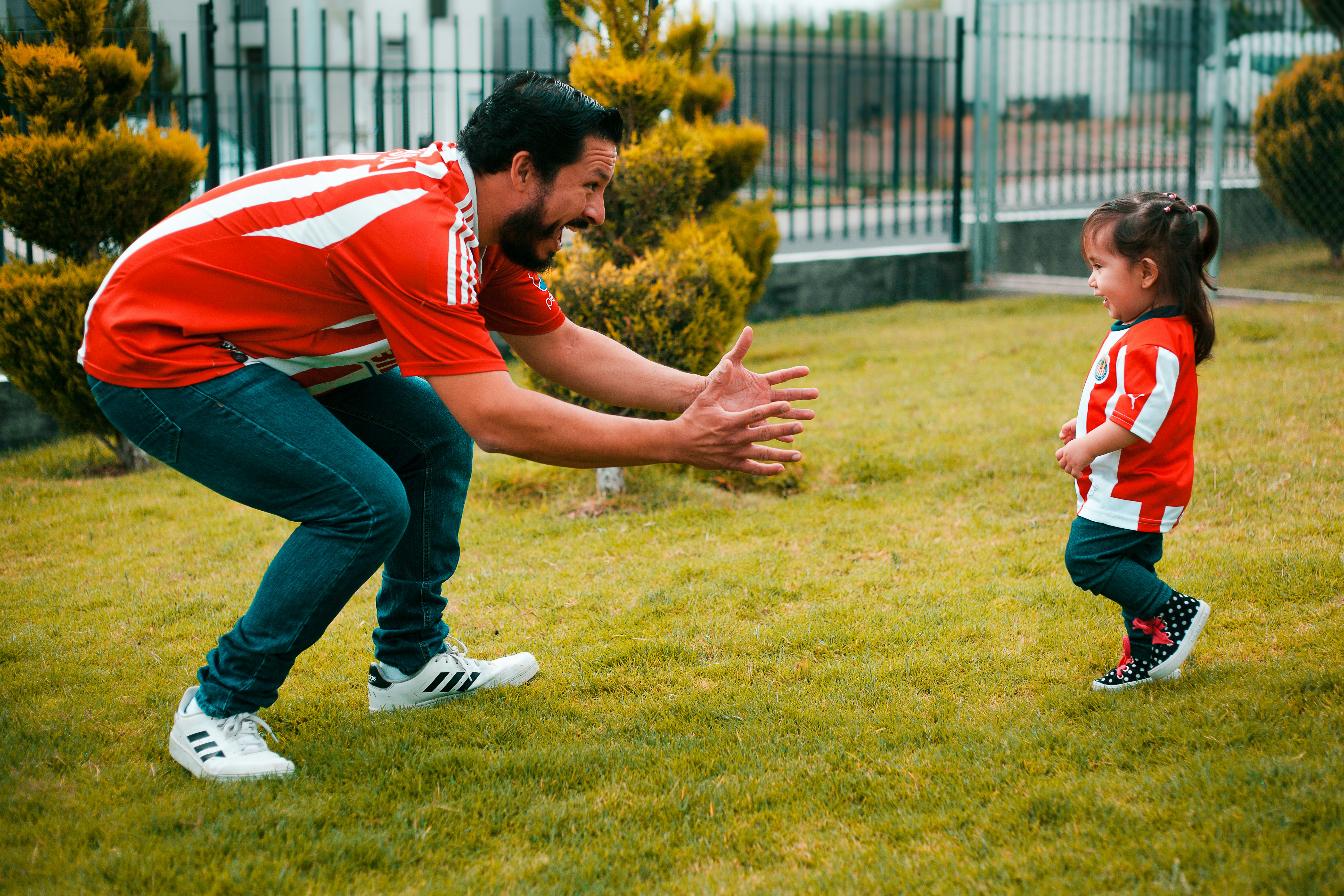
Grit grows when we keep trying, even when it's hard
Celebrate the Grit, Not Just the Glory
We naturally cheer when our child finally masters a skill. But parenting experts note that the real magic happens when we celebrate the struggle and persistence rather than just the successful outcome [18]. According to child psychologist research, praising effort over intelligence helps children develop a growth mindset and greater resilience [19]. Dweck's research shows that it was praising the student's process which could be their effort, strategies, concentration, choices, persistence that helped them remain motivated, confident, and effective [4].
Try this: "You kept trying and trying, even when it was hard! You didn't give up, and you figured it out! How does that feel?"
"The curious paradox is that when I accept myself just as I am, then I can change." [20]
💭 Pause & Reflect
- When was the last time you caught yourself saying "Good job!" on autopilot?
- What's one small responsibility you could give your child tomorrow?
- Think of a time they struggled how did you respond? What might you try differently?
- What's one word you hope your child uses to describe themselves when they're grown?
🌸 Share quietly
What part of this article felt most true for you?
Anonymous · Only you and the universe know
Before you go...
How did this article make you feel? Your small reaction helps this space grow with more meaningful stories. 💛
About this article: This educational guide was written by Shobini Padmanapan, an independent wellness writer and editorial researcher at SoulSpace. It synthesizes publicly available research on process praise, growth mindset, and building authentic self-esteem in preschool-aged children.
Scope: Educational and informational only. Not clinical advice, diagnosis, or treatment.
Author profile: soulspaceguide.com/authors/shobini-padmanapan
Answers to Questions Parents Carry
According to child development experts, praise focuses on the person ("You're so smart!") and can create dependency on external validation. Encouragement focuses on the effort and process ("You worked so hard on that!") and builds internal motivation [18]. Encouragement helps children develop a growth mindset and authentic self-esteem. Research confirms that process praise is more effective than person praise in enhancing children's prosocial behavior and self-esteem [3].
Research suggests starting with small, safe responsibilities and choices. Let them be the "napkin passer" at dinner or choose between two outfits. Always validate their feelings of shyness without pushing them. Create a secure base they can return to when feeling overwhelmed [14]. Studies have found that play-based interventions, including activities like group drawing and cooperative games, can help build confidence in shy children [17].
Parenting experts recommend first validating the feeling ("This is really hard, isn't it?"). Then, model persistence by saying, "Let's try it one more time together." Show that struggle is normal and you're a team. Celebrate the attempt, not just the success [4]. Research on growth mindset shows that praising effort and strategies helps children persist through challenges [19].
Not at all! According to parenting experts, occasional "good job" won't harm your child. The issue is when vague praise becomes our only tool [18]. The goal is to add more specific, process-oriented feedback to your parenting toolkit, not to eliminate all praise. Carol Dweck notes that you can praise the outcome, as long as you also talk about the process that led to that outcome [21].
Research shows that self-esteem begins forming in infancy through responsive care, with a foundation established as early as age five [22]. The preschool years (ages 3-6) are a golden window when children develop their sense of self and are especially receptive to messages about their worth and capability. Studies have found that interventions targeting self-esteem in preschool children can have significant positive effects [17].
Value: 5/10
- ✅ Zoom in on process, not product
- ✅ Give tiny real responsibilities
- ✅ Be a helper from the sidelines
- ✅ Stop comparisons
- ✅ Build emotional safe house
- ✅ Offer small choices
- ✅ Celebrate grit, not just glory
“You are exactly the parent your child needs.”
Found this helpful? Share it with someone who needs it.
Written by Shobini Padmanapan · SoulSpace
References
- Dweck, C. S. (2016). Mindset: The new psychology of success. Ballantine Books. [Foundational work on fixed vs. growth mindset and the effects of praise]
- Hildrew, C. (2025). Language and interaction in a growth mindset school. In Beyond the Classroom (2nd ed.). Routledge. doi.org/10.4324/9781003631491-10 [Chapter exploring Dweck's praise research in educational contexts]
- Kim, Y. H., & Park, S. J. (2026). The effect of praise activity using story books on the self-esteem and prosocial behavior of 4-year-old children. Korean Journal of Early Childhood Education, 46(2), 1-20. KCI Article [Peer-reviewed study on praise activities and self-esteem in preschoolers]
- Dweck, C. S. (2007). Boosting achievement with messages that motivate. Education Canada, 47(2), 6-10. ERIC [Research on process praise and motivation]
- Three Little Bees. (2026, May 19). Beyond "Good Job": Why the way educators talk to young children shapes their confidence for life. https://www.threelittlebees.com.au/ [Early childhood education resource on process-oriented feedback]
- Lee, J. H., & Kim, M. S. (2025). The development of a self-esteem program for young children based on cooperative learning. Journal of Early Childhood Education, 45(3), 45-68. KCI Article [Program development study on cooperative learning and self-esteem]
- Gunderson, E. A., Gripshover, S. J., Romero, C., Dweck, C. S., Goldin-Meadow, S., & Levine, S. C. (2013). Parent praise to 1-to 3-year-olds predicts children's motivational frameworks 5 years later. Child Development, 84(5), 1526-1541. doi.org/10.1111/cdev.12064 [Longitudinal study linking early praise to later motivation]
- Zero to Three. (2026, February 15). Encouraging school readiness from birth to 3. https://www.zerotothree.org/resource/encouraging-school-readiness-from-birth-to-3/ [Early childhood development organization on social-emotional foundations]
- Neufeld, G., & Maté, G. (2019). Hold on to your kids: Why parents need to matter more than peers. Random House. [Book on attachment and emotional development]
- Vygotsky, L. S. (1978). Mind in society: The development of higher psychological processes. Harvard University Press. [Classic work on scaffolding and the zone of proximal development]
- Brown, B. (2010). The gifts of imperfection. Hazelden Publishing. [Book on courage, vulnerability, and authenticity]
- Coopersmith, S. (1967). The antecedents of self-esteem. Consulting Psychologists Press. [Foundational research on the development of self-esteem]
- Marsh, H. W., & Craven, R. G. (2006). Reciprocal effects of self-concept and performance from a multidimensional perspective: Beyond seductive pleasure and unidimensional perspectives. Perspectives on Psychological Science, 1(2), 133-163. [Research on self-concept and external validation]
- Bowlby, J. (1988). A secure base: Parent-child attachment and healthy human development. Basic Books. [Classic work on attachment theory and secure emotional foundations]
- Neufeld, G. (2024). Gordon Neufeld's rant on empathy. Neufeld Institute [Developmental psychologist on empathy and emotional safety]
- Siegler, R. S., & Alibali, M. W. (2020). Children's thinking (5th ed.). Pearson. [Textbook on cognitive development including decision-making skills]
- Aminuddin, A. N., Hussaini Dzulkeflee, A., Zam, A. I. A., Mohamad Yusra, F. A.-Z., Ismail, N. A., Mohd Rasid, N. I. A., Lukman, N. W., & Lourdunathan, P. (2025). The evaluation of a positive psychology-based intervention in enhancing self-esteem among Malaysian preschool children. IIUM Journal of Human Sciences, 7(2), 1-18. doi.org/10.31436/ijohs.v7i2.402 [Study on play-based interventions for preschool self-esteem]
- Haimovitz, K., & Dweck, C. S. (2016). What predicts children's fixed and growth intelligence mind-sets? Not their parents' views of intelligence but their parents' views of failure. Psychological Science, 27(6), 859-869. doi.org/10.1177/0956797616639727 [Research on how parents' views of failure affect children's mindsets]
- Dweck, C. S., & Leggett, E. L. (1988). A social-cognitive approach to motivation and personality. Psychological Review, 95(2), 256-273. doi.org/10.1037/0033-295X.95.2.256 [Classic paper on the effects of praise on motivation and resilience]
- Rogers, C. R. (1961). On becoming a person: A therapist's view of psychotherapy. Houghton Mifflin. [Humanistic psychology classic on unconditional positive regard]
- Dweck, C. S. (2016, March). Mindset 20/20. Educational Leadership. ASCD [Article clarifying mindset misconceptions and praise approaches]
- Harter, S. (1984). The pictorial scale of perceived competence and social acceptance for young children. Child Development, 55(6), 1969-1982. [Foundational research on measuring self-esteem in young children]
Continue Your Preschool Parenting Journey
Curated by Shobini Padmanapan
How Preschoolers Develop Empathy and Prosocial Behavior
Learn how young children naturally develop empathy and how you can nurture this essential social skill.
Managing Sibling Rivalry & Toddler Jealousy with New Baby
Practical strategies to help your preschooler navigate jealousy and rivalry when a new sibling arrives.
How to Respond When Child Uses Negative Self-Talk
Learn gentle, effective ways to help your preschooler reframe negative self-talk and build confidence.
Be the first to share your thoughts anonymously or with a name.