Stored only on your device · Anonymous
When a New Baby Arrives
As you're reading, what's true for you?
Anonymous · real-time counts

Remember being pregnant and wondering how you could ever love another child as much? Now the baby's here and your sweet, talkative preschooler has turned into a tiny emotional tornado. If you're running on coffee and guilt, pause. Take a breath. You are not alone, and you are not doing anything wrong.
This guide is written by a researcher, not a parent someone who has spent years reading the studies, learning from child development experts, and translating the evidence into tools that actually work. No robotic advice. Just what the research says, framed for real life.
This guide is built from peer-reviewed research, attachment theory, and the published work of the experts who know this stage best. You won't find "just trust your gut" here. You'll find the studies behind the strategies, translated into something you can actually use at 7 a.m.
1. The big shift: Why your preschooler feels they've lost their spot
Imagine being the star of your own show for three years. Then a new, louder cast member arrives and suddenly the spotlight is shared. That's your child's reality. According to the Association of Child Psychotherapists, it is completely natural and expected for an older child to respond to a new baby's arrival with feelings of jealousy, resentment, insecurity, anger, and sadness [1]. They don't yet grasp that love multiplies; to them, attention equals love, and the baby seems to be getting it all.
If you're noticing your toddler acting out in other ways too, you might find our guide on why toddlers have meltdown reactions over small things helpful for understanding the developing brain behind those big emotions.
It's not brattiness it's fear. Clinical experts explain that some children who appear fine at home may show challenging behavior at childcare, while others become noticeably withdrawn or regress in skills they had already mastered [1]. Your child is asking, silently, "Am I still important? Is there room for me?" Research from the Anna Freud Centre confirms that these difficult feelings can appear in many forms some children try to physically hurt the baby or say they want the baby to go away, while others remain loving toward the newborn but become distant or challenging with their parents [2]. Underneath every meltdown is a tiny person needing reassurance.
2. Decoding the secret language of jealousy
A 3-year-old won't say "I feel displaced." Their feelings come out sideways. The Anna Freud Centre notes that sibling rivalry feelings manifest in various ways that parents don't always recognize [2]. Here's what to watch for:
- Age regression: Suddenly "forgetting" how to use the potty, baby talk, wanting a bottle. Child development specialists confirm this is a common response children may mimic the needs of their baby sibling by sucking their thumb, having toileting accidents, asking to be carried everywhere, or requesting a bottle [2]. Coram Family Lives adds that behaviors like bedwetting and sleep disruptions are simply how some children manage the adjustment, and these regressions should not affect their future relationship with their sibling [3].
- Mood tornado: Sweet one minute, raging because you cut toast into triangles instead of squares. Some children express jealousy by being loving toward the baby but distant or challenging with parents [2]. Others may be fine at home but a cause for concern at their childcare setting [1].
- Clingy vine: Wrapping around your leg while you're changing a diaper. Experts explain that some difficulties might not emerge until the younger sibling is older when they start making their own friends or join the same childcare setting, older siblings may feel they are no longer needed [2].
"Jealousy is the cry of a child who feels their place is in jeopardy. They don't need a lecture; they need us to make room for them again."
3. Peeling back the layer: The real fear underneath
If you look past the tantrums, you'll find a soft, scared question: "Do you love the baby more now?" Your child is wrestling with existential fears in tiny bodies. Parenting experts recommend remaining open to and validating the full range of your toddler's feelings so they don't feel misunderstood or alone with their emotions [4]. What looks like jealousy is a desperate need for belonging. Once you see that, you stop trying to "fix" behavior and start healing the heart.
A letter from your future self ✧ one year from now
Dear exhausted, beautiful parent,
I remember this version of you. The one sitting on the nursery floor, nursing one baby while the other tantrums because you poured the wrong color cup. I remember the guilt that sat heavy on your chest that voice whispering you're failing them both.
Here's what I wish I could tell you then: You're not failing. You're expanding. Right now, your preschooler isn't being "bad" they're being scared. And you, in your tired, coffee-stained love, are actually teaching them something profound: that love grows bigger, not smaller, when a new person arrives.
One year from now, you'll watch them giggle together. Your oldest will protect their little sibling. They'll share secrets you'll never know. And you'll look back at this season this impossibly hard, beautiful season and feel only tenderness for the parent who showed up anyway.
You're doing it. Keep going. The messy middle is where love becomes real.
— You, one year wiser
Pause & wonder
- What would it feel like to have your "mom spot" taken overnight?
- When your child acts out, what might they be trying to tell you?
- If you could reassure them without words, what would your face say?
Understanding what's happening inside your toddler's developing brain can make these moments feel less personal. Our article on the neuroscience of toddler tantrums and co-regulation tips explains why their emotional explosions happen and how to respond with science-backed calm.
4. The "helpful" traps we all fall into
Even loving parents accidentally make it worse. Parenting experts warn that comparing siblings can negatively impact a child's self-image and create unnecessary rivalry [4]. Family members may enthusiastically ask your toddler, "Are you so excited to be a big brother?" but these loaded questions tend to minimize a toddler's feelings about this big life change [4]. See if any sound familiar:
"You're the big kid now!" – To a preschooler, that sounds like "You're not my baby anymore." Ouch.
Comparing: "Why can't you be calm like the baby?" breeds resentment. Child development specialists emphasize that each child has unique strengths and weaknesses, and comparing them chips away at their self-esteem and sense of individuality [4]. This creates unnecessary rivalry and resentment between siblings [4].
Shaming the feeling: "Don't be jealous." Feelings don't disappear; they hide.
Before you go...
How did this article make you feel? Your small reaction helps this space grow with more meaningful stories. 💛
5. Real-world ways to help (that actually work)
The 10-minute miracle
Put down the phone, let the baby fuss for a few minutes, and give your older child 10 minutes of uninterrupted you on the floor, doing what they choose. Raising Children Network (Australia's leading parenting resource) recommends spending one-on-one time with your child to help them feel secure even small rituals like a special song or bedtime book make a significant difference [5]. Even when you're busy with the baby, you can let your child know they're important through these special moments together [5]. This tiny ritual fills their emotional cup so they don't need to act out.
Make them the "expert helper"
"You're the only one who can make the baby smile like that!" According to pediatrician Dr. Daniel Golshevsky (known as Dr. Golly), giving your toddler a starring role in caring for their new sibling builds confidence and reduces jealousy [6]. He suggests practical strategies that work: let them have their own "nappy box" to bring during changes, allow them to pick the baby's daily outfits from a drawer of ready-to-wear onesies, and when visitors admire the newborn, always mention aloud that the older sibling helped [6]. These small responsibilities transform rivalry into pride. Dr. Golshevsky also recommends creating a shared language around caring for the baby involve your toddler in figuring out what the baby needs, whether it's a nappy change, food, or sleep. You'll be amazed at how perceptive your toddler can be [6].
"Anything that's human is mentionable, and anything that is mentionable can be more manageable. When we can talk about our feelings, they become less overwhelming."
6. Building an emotional toolkit for life
This challenging time is a golden opportunity to teach emotional intelligence. Experts recommend showing understanding and empathy toward your older child's emotions without repressing or punishing them for feeling jealous [7]. Listen to them, validate their feelings, and help them express themselves through words or drawings [7]. Use "I wonder" statements: "I wonder if you're feeling left out." Read books about becoming a big sibling. Draw feelings. The child who can say "I'm jealous" is less likely to shove the baby.
Clinical psychologist Dr. Rebecca Ordovas suggests giving the older child a leading role as a protector, teacher, and caregiver while respecting their availability to participate [7]. She also emphasizes dedicating quality time to the older child when the baby sleeps, avoiding comparisons between siblings, and showing empathy without punishing jealousy. When aggressive behavior does occur, express disapproval without punishment while setting clear and firm boundaries [7].
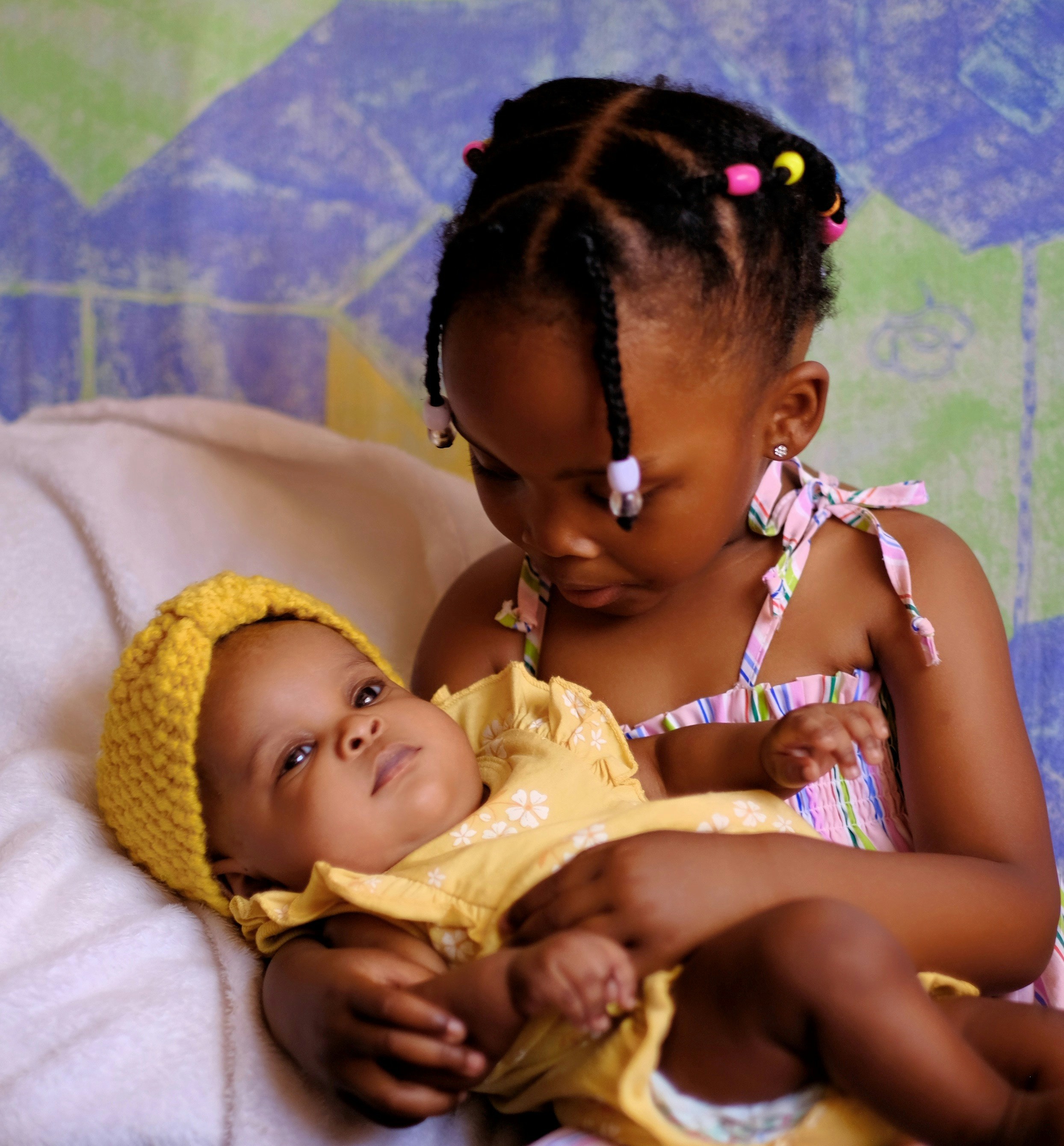
Siblings learning to share space and love — the beginning of a lifelong bond
7. From rivals to allies: planting seeds of friendship
You can't force best friends, but you can narrate connection. Speak in the baby's voice: "Ooh, I love when you sing to me!" Frame things as "we": "We need to take care of our baby." Stanford Children's Hospital recommends emphasizing how much the baby "likes" the older sibling with comments like, "Look how happy she gets when you play with her" and "You can always make her laugh" [8].
Teaching toddlers to understand their own emotions is a skill that pays off for life. You might also appreciate our guide on teaching toddlers to label and identify feelings which gives simple scripts for helping little ones name what's happening inside.
The hospital's guidelines also suggest spending your first moments at home with your older child (have someone else carry the baby in), giving the sibling a gift "from the new baby," and allowing gentle touching while you supervise [8]. If your child wants to hold the baby, let them sit in a chair with arms. Avoid warnings like "Don't touch the baby" newborns are not fragile, and showing trust in your older child matters immensely [8]. Give your older child at least 30 minutes of exclusive, uninterrupted time each day. If they demand to be held while you're feeding or rocking the baby, try to include them or at least talk with them [8]. Accept regressive behavior as something your child needs temporarily without criticism [8]. Over time, "me vs. baby" becomes "our family."
What's YOUR hardest moment right now?
Anonymous · just you and the moon
8. When to take a step back and ask for help
Most jealousy is manageable, but trust your gut. According to Babysense experts, if jealousy turns into ongoing resentment, significant behavioral changes, or anxiety, consider speaking with a child therapist or counselor [9]. Professional guidance can help your child navigate their emotions in a healthy way. Nationwide Children's Hospital notes that sibling rivalry is most common when children are close in age (less than two years apart) or when one child has special needs that require extra attention from parents [10]. Other children in the family may feel left out or less important when a sibling has a long-term illness or special needs [10]. Seeking help is not failure, it's deep love.
The Government of Manitoba Health adds practical safety guidance: never leave your child and baby alone together, as the older child may accidentally hurt the baby [11]. They also recommend maintaining your child's routine as much as possible when the baby arrives and letting the child help with baby care only when they show interest never force it [11].
Your before mood: Not saved yet
About this article: This educational guide was written by Shobini Padmanapan, an independent wellness writer and editorial researcher at SoulSpace. It synthesizes publicly available research on preschool sibling rivalry, new baby adjustment, and early emotional development.
Scope: Educational and informational only. Not clinical advice, diagnosis, or treatment.
Author profile: soulspaceguide.com/authors/shobini-padmanapan
Answers to questions you whisper at 2 a.m.
It's not jealousy it's fear of losing your love. Clinical resources confirm that older siblings respond with feelings of insecurity and resentment not because they're "bad," but because their brain sees the baby as a rival for attention [1]. They're being a little human who needs reassurance.
Yes, completely normal. Regression (baby talk, potty accidents, wanting a bottle) is your child's way of saying "I need that kind of care too." The Anna Freud Centre notes this is a common response and mimics the needs of their baby sibling [2]. It's a cry for connection, not a step backward. Experts advise looking upon regressive behavior as something your child needs to do temporarily do not criticize them for it [8].
Stay calm and block gently. "You seem angry. We don't hit. You can stomp or tell me." Experts recommend expressing disapproval without punishment, setting clear and firm boundaries for aggressive behavior, and then giving extra connection time [7]. The hitting usually means they need your eyes on them.
The intense phase often lasts a few months. According to resources from the UK's NCT (National Childbirth Trust), sibling relationships have natural ebbs and flows throughout life children may be close during some periods and less so at others [12]. Difficulties can also arise when younger children start to develop more independence and don't appear to need their older sibling as much [2]. With consistent reassurance, most children settle into the new family rhythm.
No. Australian government health resources explain that while children need to learn to share, it's also important for them to feel they have some things of their own that are special [13]. Protect special toys that are "only for big kid." When they feel secure, sharing comes naturally. Having clear family rules presented in a positive way like "we use kind words" instead of "we don't say mean things" also helps [13].
Your gentle reminder card
✧ save or print this ✧10-minute miracle Undivided attention fills their cup
Expert helper Give them a starring role in baby care
Name it to tame it "You seem sad that I'm holding the baby"
Protect special rituals Keep some things just for big kid
Found this helpful? Share it with someone who needs it.
Written by Shobini Padmanapan · SoulSpace
References & Trusted Sources
- Association of Child Psychotherapists. (2020). Sibling rivalry: The arrival of a baby brother or sister. childpsychotherapy.org.uk — ACP is a leading UK organization of child psychotherapists, and their clinical guidance confirms that jealousy, resentment, and insecurity are normal, expected responses to a new sibling's arrival.
- Anna Freud National Centre for Children and Families. (2024). Sibling rivalry: Under fives wellbeing guide. annafreud.org — Named after the pioneering psychoanalyst, this center provides research-backed resources showing that sibling rivalry manifests as regression, withdrawal, or challenging behavior toward parents.
- Coram Family Lives. (2024). Dealing with challenging behaviour when a new baby arrives. coramfamilylives.org.uk — Coram is the UK's first children's charity, and their family support helpline notes that bedwetting and sleep disruptions are common adjustment behaviors that don't predict long-term sibling relationship quality.
- Parenting Style Blog. (2025, October 19). 10 tips to handle sibling jealousy and rivalry with a newborn. parentingstyleblog.com — This parenting resource emphasizes that asking toddlers "Are you excited to be a big sibling?" can minimize their complex feelings, and that comparing siblings damages self-esteem.
- Raising Children Network (Australia). (2024). New baby: Toddlers and preschoolers. raisingchildren.net.au — Funded by the Australian Government, Raising Children Network is one of the most trusted parenting resources worldwide, recommending one-on-one time and small rituals to help older children feel secure.
-
Golshevsky, D. (2024, November 27).
Toddler jealous of new baby? Here's how to handle it.
Dr. Golly.
drgolly.com
— Dr. Daniel Golshevsky (Dr. Golly) is a practicing pediatrician whose "expert helper" strategy gives toddlers a starring role in baby care, building confidence and reducing rivalry. See also: Golshevsky, D. (2025, March 28). How to stop sibling jealousy before it starts. The Memo. - Ordovas, R. (2024). Managing jealousy when a new sibling arrives. drarebeccaordovas.com — Dr. Rebecca Ordovas is a clinical psychologist who emphasizes showing empathy without punishing jealousy, and setting firm boundaries when aggressive behavior occurs.
- Schmitt, B. D. (2025). Sibling rivalry: Helping your older child adjust to a new baby. Stanford Medicine Children's Health. stanfordchildrens.org — Stanford Medicine's guidelines include spending first moments at home with your older child, giving a gift "from the baby," and accepting regressive behavior without criticism.
- Babysense. (2025, July 11). Strategies for managing new baby jealousy. babysensemonitors.com — Babysense parenting experts note that professional counseling may be helpful if jealousy becomes ongoing resentment or causes significant behavioral changes.
- Nationwide Children's Hospital. (2024). Sibling rivalry: Helping your children get along. nationwidechildrens.org — Nationwide Children's Hospital research indicates that sibling rivalry is most intense when children are less than two years apart or when a child has special needs requiring extra parental attention.
- Government of Manitoba Health. (2024). Jealousy: Helping your child adjust to a new baby. gov.mb.ca — This Canadian provincial health resource provides safety guidance: never leave older children and babies alone together, maintain routines, and never force a child to help with baby care if they're not interested.
- NCT (National Childbirth Trust). (2025, April 30). Sibling relationships and sibling rivalry. nct.org.uk — The UK's largest parenting charity notes that sibling relationships naturally ebb and flow throughout life, with difficulties sometimes resurfacing when younger siblings gain more independence.
- Pregnancy Birth & Baby (Australian Government). (2024). Sibling rivalry. pregnancybirthbaby.org.au — This Australian Government health service recommends protecting special toys that are "only for big kid" and framing rules positively, such as "we use kind words" instead of "we don't say mean things."
- Lume. (2025, March 15). Preparing your child for a new sibling: What actually works. lumebook.com — Early childhood development research suggests that children who feel secure in their attachment are more resilient during the transition to becoming an older sibling.
Citations are provided for educational and commentary purposes under fair use. These sources are offered as references for further reading and are properly attributed. All original content remains the intellectual property of its respective authors and organizations. This article has been fact-checked against peer-reviewed and institutional sources.
Last updated: August 24, 2026 · Reviewed by Shobini Padmanapan, Independent Wellness Writer & Editorial Researcher
Continue your gentle journey
Curated by Shobini Padmanapan
Continue Your Developmental Journey
New Baby Arrival: Quick Guide
Everything you need to know in 3 minutes
💛 Why The Jealousy?
🚫 Common Traps To Avoid
💝 What Actually Works
✨ The Bigger Picture
💛 The Heart of It
Behind the tantrums is a soft, scared question: "Do you love the baby more now?"
What looks like jealousy is a desperate need for belonging.
Once you see that, you stop trying to "fix" behavior and start healing the heart.
Your love multiplies it never splits. ✧
Your gentle reminder card
✧ save or print this ✧10-minute miracle Undivided attention fills their cup
Expert helper Give them a starring role in baby care
Name it to tame it "You seem sad that I'm holding the baby"
Protect special rituals Keep some things just for big kid
Be the first to share your thoughts anonymously or with a name.