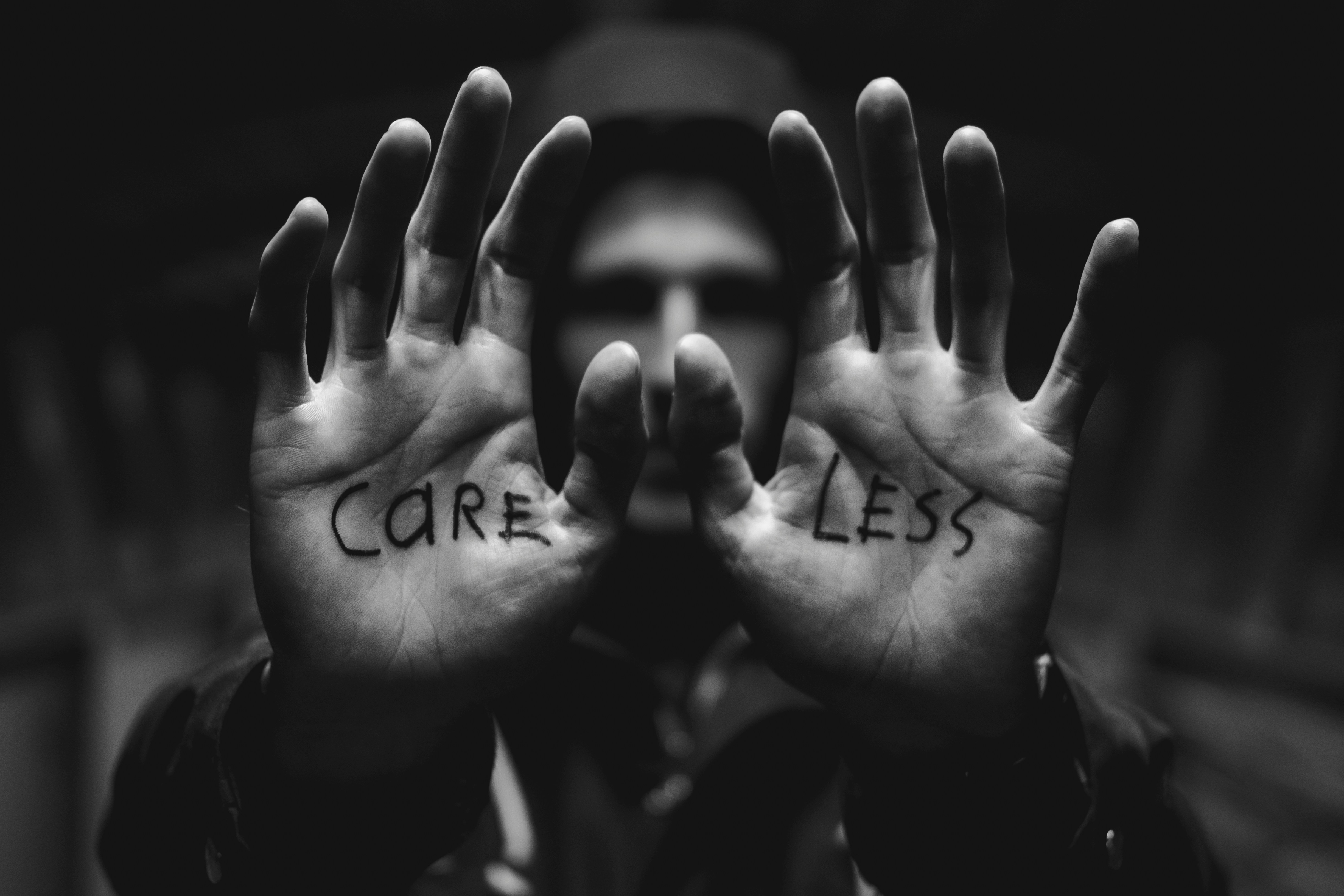
There's a moment that often catches people off guard somewhere between their 40s and 60s. It doesn't come with a warning. One day, you're checking off all the boxes you thought you were supposed to: career, family, responsibilities. And then a quiet question starts to echo: "Is this it?" If that question has crossed your mind, take a breath. You haven't done anything wrong. You're not broken. You're not having a breakdown. You're just waking up to a new chapter of your emotional life.
What People Get Wrong About Mid-Life
When we hear "mid-life crisis," most of us picture the same tired stereotypes: a shiny red sports car, a sudden dramatic career exit, impulsive decisions. That's the movie version. The reality is much quieter, much deeper. A mid-life crisis isn't about losing your mind.
It's about finally finding your truth. Research in adult development suggests that the turbulence often associated with midlife is frequently a misinterpretation what many label a "crisis" may actually be a meaningful period of self-discovery and transformation. It's that internal nudge that says, "You've been living for expectations long enough. Now it's time to live for you."
For a deeper understanding of how resentment can accumulate during this phase, explore How Unresolved Resentment and Grudges Impact Midlife Health .
What's one role (parent, partner, professional) that feels heavier than it used to? Just notice it, no fixing required.
Is It a Crisis or Just Clarity?
For many, what feels like a "crisis" is actually a slow, powerful shift in awareness. You might notice: a restlessness you can't explain, old goals feeling hollow, caring less about what others think and more about what you feel, time becoming more precious than money. This shift can feel unsettling, but it's a sign you're growing moving from building a life to feeling your life. As researcher Brené Brown describes it, this period is less about crisis and more of an "unraveling" a time when individuals feel pulled toward living a life that truly reflects who they are, rather than one defined by external expectations.
Studies on resilience and well-being also indicate that both psychological resilience and a sense of well-being are negatively correlated with midlife crisis symptoms, suggesting that those who cultivate these qualities may navigate this stage more smoothly.
If you're also navigating feelings of learned helplessness, you might find value in Overcoming Learned Helplessness and Apathy in Midlife .
Why This Happens Now: The Psychology of the Middle Years
Think about what you know at 50 that you didn't at 25. You've learned what drains you, what lights you up. You've survived heartbreaks. In your 40s and 50s, something biological and emotional shifts you start looking inward. You begin asking: "Have I been living my life or someone else's?" "What do I still want to experience?" These aren't mid-life crisis questions; they're human questions. They just arrive with more urgency now because you realize you've got enough time left to actually do something about them. Renowned psychiatrist Carl Jung reflected on the richness of this phase, suggesting that life truly begins at forty that the years before are a period of preparation and gathering insight.
This perspective frames the middle years not as a decline, but as the beginning of a more meaningful chapter. A comprehensive review of midlife research highlights that development during this period involves the intertwining of physical, cognitive, social, and emotional growth, making it a uniquely transformative stage.
What It Feels Like: Common Stories
The Over-Achiever's Letdown: "I did everything I
was supposed to. Good job. Good family. So why do I feel so
empty?"
The Identity Shift: "I spent 20 years being 'Mom'
or 'The Boss.' Now I'm not sure who I am without those labels."
The Quiet Longing: "I don't want to burn anything
down, but I keep wondering if there's more to life than this
routine."
If any of these sound familiar, you're not alone. And you're not having a crisis you're having a realization. Research into midlife narratives demonstrates that when individuals gain self-awareness and resonate with their inherent values, what is often dismissed as a crisis can become a journey of deep personal epiphany.
You Learned to Hide Parts of Yourself
Over the years, many of us learn to tuck away the parts of ourselves that don't fit the roles we've been given. The dreamer, the rebel, the one who wanted to paint instead of climb the corporate ladder. These parts don't disappear; they wait. And in midlife, they start knocking. The question is whether you're ready to open the door.
One year from now, you've already begun the journey. This is what you want to tell yourself today...
"I know it feels heavy right now. The questions that keep you awake, the restlessness that follows you through your day I remember all of it. But I'm writing to tell you something you can't yet see: this is the beginning of your most authentic chapter."
"You will look back on this moment not as a crisis, but as a gentle awakening. The parts of yourself you thought you had to hide? They're not flaws; they're the very things that will set you free. You don't have to have all the answers today. You just have to keep showing up for yourself, with compassion and patience."
"I'm grateful for the courage you're finding right now, even when it doesn't feel like courage. It is. And I'm so proud of who you're becoming."
The Two Paths: Reflection vs. Reaction
Path of Reflection (Healthy growth): You pause
before acting, ask honest questions, make small thoughtful
changes, reconnect with old loves, learn to say no.
Path of Reaction (The "crisis" cliché): You make
big decisions in a hurry, chase excitement to avoid discomfort,
expect one change to fix everything.
The difference isn't how you feel; it's whether you're running away from yourself or finally turning toward yourself. A 2024 study of middle-aged office workers found that psychological resources like gratitude and self-esteem can serve as protective factors, buffering the effects of anxiety and reducing feelings of crisis. This suggests that how we approach this period whether with reflection or reaction can significantly shape our experience.
What part of your life feels most out of sync lately? (Write it in your mind.)

How to Move Through This Stage Without Losing Yourself
1. Don't make big decisions in the middle of a big
feeling.
Restlessness is a signal, not a deadline. Sit with it for a few
weeks before changing anything major.
2. Find your younger self and ask them a question.
Before you became "responsible," what did you love? What parts of
yourself did you tuck away?
3. Redefine success on your terms. At mid-life,
success often looks less like achievement and more like
alignment.
4. Say it out loud. Tell a trusted friend or
therapist: "I'm not sure this is the life I want anymore." Naming
it takes away its power.
5. Make one small shift this week. Leave work at
work, say no to a draining commitment, pick up an old hobby for 20
minutes. Small changes build momentum.
Relationships in Mid-Life: The People Factor
You may find yourself craving deeper conversations, feeling distant from friends who only knew the "old" you, or looking at long-term relationships and wondering: "Are we growing together or just comfortable?" This doesn't mean ending things. But it might mean starting a new kind of conversation: "I'm changing. I'm not sure how yet, but I want you to know." The people who can meet you in that honesty grow with you. The study of midlife development emphasizes that social relationships and kinkeeping play a crucial role during this stage, making the quality of our connections a central part of the midlife experience.
What's stirring for you?
Anonymous · held with care
Before you go...
How did this article make you feel? Your small reaction helps this space grow with more meaningful stories. 💛
Answers to questions you might carry
Not at all. Restlessness often signals you're ready for the next layer of growth. It's a normal psychological shift toward meaning.
Burnout is exhaustion; mid-life restlessness is about meaning. If you're questioning whether your roles even fit, you're in a deeper identity shift.
Not impulsively. Give yourself 3-6 months of reflection and small experiments before any major overhaul. Clarity will come.
How alone do you feel now?
🌙 After readingKey Takeaways
Is not a crisis but a signal of growth. It's your inner self asking for more authenticity.
Pause before making big changes. Sit with feelings for 3-6 months before acting impulsively.
The discomfort you feel is a sign of emotional growth, not failure. It's a natural developmental stage.
One small change this week—saying no, picking up an old hobby can build meaningful momentum.
Honest conversations about change can deepen connections rather than end them.
Millions of people navigate this shift. Your feelings are valid, and help is available.
Found this helpful? Share it with someone who needs it.
Written by Shobini Padmanapan · SoulSpace
Further Reading
The ideas in this article draw on the following published works. They are offered as further reading, not as direct citations.
- John, G., & Wani, M. A. (2026). Navigating the midlife crisis: A bibliometric exploration of peer-reviewed articles from 2000 to 2023. Working with Older People, 30(2), 152-176. Journal
- Brown, B. (2018, May 24). The Midlife Unraveling. BrenéBrown.com. Read article
- John, G., & Wani, M. A. (2025). Exploring resilience, psychological well-being and midlife crisis among middle-aged people: A descriptive study from Punjab. Working with Older People.
- Jung, C. G. (1964). Man and His Symbols. Dell Publishing.
- Lachman, M. E. (Ed.). (2004). Handbook of Midlife Development. Wiley.
- Niehaus, L., & Papaikonomou, M. (2025). Changing midlife tropes: A transcendence into epiphany. Indo-Pacific Journal of Phenomenology, 25(1), 1-11. doi.org/10.1080/20797222.2025.2594865
- Kim, J., & Lee, S. (2024). The effect of retirement anxiety of middle-aged office workers on the midlife crisis: The mediating effect of gratitude and moderated mediating effect of self-esteem. Industry Promotion Research, 9(2), 153-162. doi.org/10.21186/IPR.2024.9.2.153
- Crăciun, I. C. (2023). Fostering Development in Midlife and Older Age: A Positive Psychology Perspective. Springer. doi.org/10.1007/978-3-031-24449-0
Citations are for educational/commentary purposes under fair use. Sources are provided for further reading.
About this article: This educational guide was written by Shobini Padmanapan, an independent wellness writer and editorial researcher at SoulSpace. It synthesizes publicly available research on the psychology of midlife crisis, identity shifts, and reflection vs. reaction.
Scope: Educational and informational only. Not clinical advice, diagnosis, or treatment.
Author profile: soulspaceguide.com/authors/shobini-padmanapan
Be the first to share your thoughts anonymously or with a name.