Why Your Baby's "Mine!" Phase is Actually a Good Thing
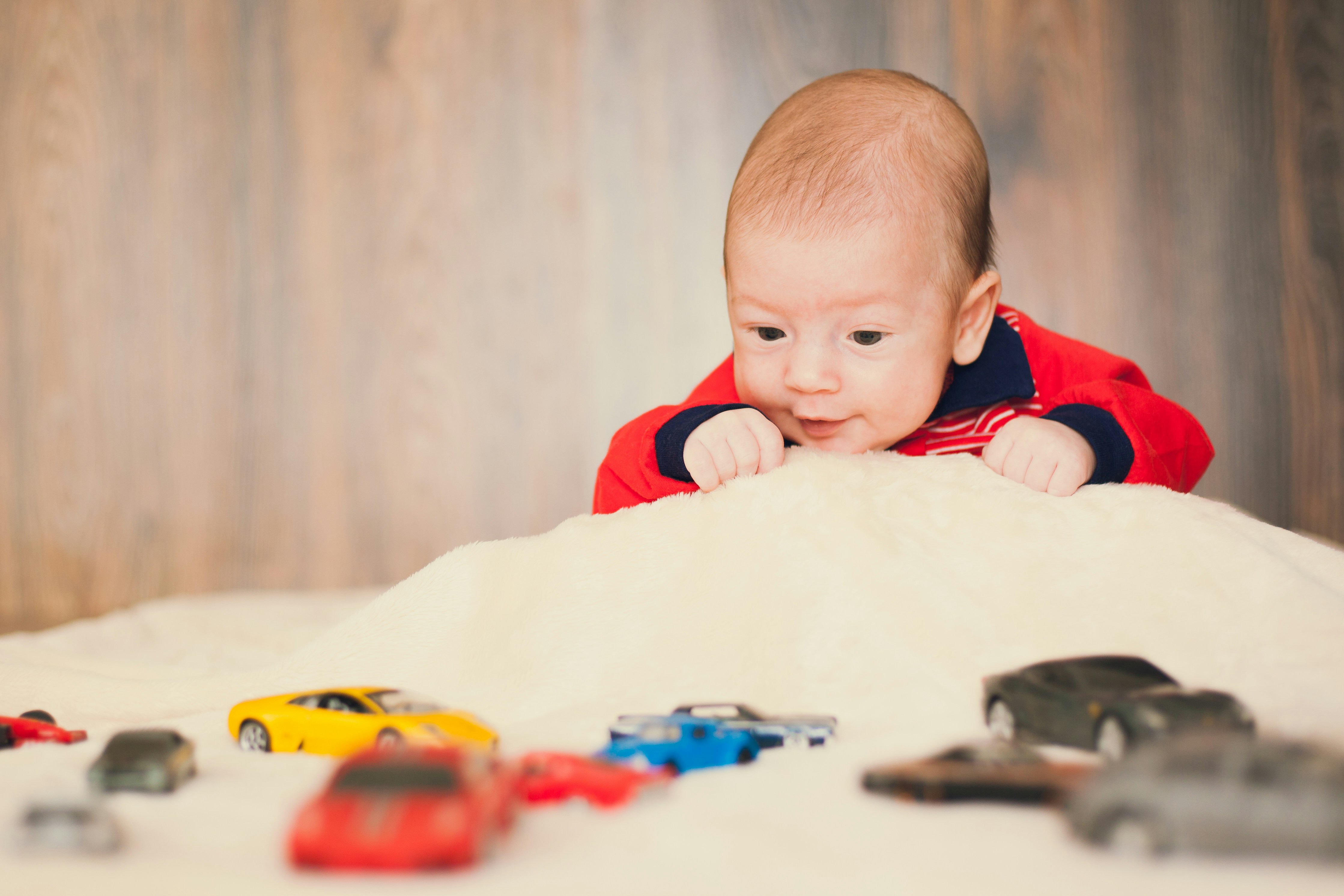
As you're reading, what's true for you?
Anonymous · real-time counts
The first time my daughter screamed "MINE!" at a playdate, I wanted to crawl under the sofa. There she was, all two feet of her, clutching a plastic giraffe like it was the last water in the desert. The other mom smiled tightly. I mumbled, "We're working on sharing."
But here's what I didn't know then: She wasn't being selfish. She was being born. Not physically she'd done that two years ago. But emotionally? That fierce little grip was the first stirrings of identity. Of "me." Of "I exist, and this matters to me." 1
If you've ever peeled a screaming toddler off a toy and wondered, "Where did I go wrong?" pull up a cushion. You haven't gone wrong. You're watching a miracle.
Where's YOUR little one?
Slide to see what's happening beneath the behavior
Discovery 12-18 mo
"Mine!" 18-24 mo
Protecting 2-3 yrs
Seeds of sharing
👶 8-12 months: Discovery
Baby realizes objects exist even when out of sight. They reach, grab, hold tight. This isn't possessiveness, it's object permanence dawning. They're learning "things continue to exist," and by extension, "I continue to exist." 2
1. More Than a Toy: The Birth of "Me"
You might think of "mine" as a word about things. But for a baby, it's a word about self. Around 8-18 months, something shifts behind those curious eyes. 3 Your baby realizes: "I am my own person. Separate from Mom. Separate from Dad." This is called individuation and it's a massive psychological leap. 4
Understanding how your baby develops a sense of self connects directly to when infants develop self-awareness milestones the journey from "we" to "me" follows a beautiful, predictable pattern.
Baby + Parent = One
Baby + Toy = "Me"
When they cling to a blanket or fight over a stuffed bear, they aren't being greedy. They're drawing a line in the sand. They're using that object to answer the question, "Where do I end and the rest of the world begin?" 5
"I watched my 14-month-old clutch a board book so tightly his knuckles went white. Another child approached, and he growled actually growled. I wanted to correct him. But then I thought: That book is his anchor in a world he didn't ask to be dropped into. Of course he protects it."
— A mom's observation
Try this tonight
Before bed, watch your child with their favorite object.
- How do they hold it?
- Do they look for it when they're tired or scared?
- What would it feel like if someone took it without asking?
This isn't just a toy. It's their first "me."
"Attachment is not just about people. It extends to things that provide a sense of security when the primary caregiver is absent."
2. The "Lovey" Isn't Just Fluff, It's an Emotional Anchor
Remember Linus from Peanuts? That blanket wasn't a crutch. It was a bridge. Psychologists call these items "transitional objects." 7
What they really do
A soft toy or worn blanket becomes a portable piece of "home." When you leave the room, that object whispers: "You're safe. This smells like comfort. This feels like love." 8
Allowing your baby to bond with these objects isn't creating a bad habit. It's giving them a tool to manage their own big feelings when you're not there to do it for them.
This emotional anchoring connects to the broader framework of internal working models in attachment theory how early relationships shape a child's expectations of safety and security.
3. You Can't Learn to Share Until You Understand "Mine"
This is the biggest "aha!" moment for parents. We rush to teach sharing, worried our child will become selfish. But development doesn't work that way. 9
I understand this belongs to me. This is safe. This is mine.
I see that belongs to you. I respect your ownership.
I feel safe enough to share because I know my things come back.
You cannot give something away if you never felt it was truly yours. By letting your child fully experience ownership, you're actually building the foundation for true, voluntary generosity. 10
4. Respecting "Mine" Builds Confidence
Imagine you're working hard on a puzzle. Someone scoops it up and hands it to someone else. You'd feel disrespected, right? Babies feel that too.
When you acknowledge their attachment: "I see you really love that red truck. It's your turn."
You're teaching them:
- Confidence: "I can influence my world. My feelings matter." 11
- Boundaries: "It's okay to say I'm not ready to give this up."
Dear exhausted, wonderful you,
I'm writing from one year ahead. From the other side of the "mine" wars, the playdate standoffs, and the moments you felt like the only parent whose child couldn't share.
Here's what I need you to know: That little person clutching their toy like treasure? They're becoming someone who knows their worth. Who understands boundaries. Who will one day offer their last cookie to a friend not because they were forced, but because their cup is full.
You're not failing. You're building. And in the quiet moments when you wondered if you were doing enough you actually were doing everything.
Keep going. I'm so proud of you.
— You, one year from now
Before you go...
How did this article make you feel? Your small reaction helps this space grow with more meaningful stories. 💛
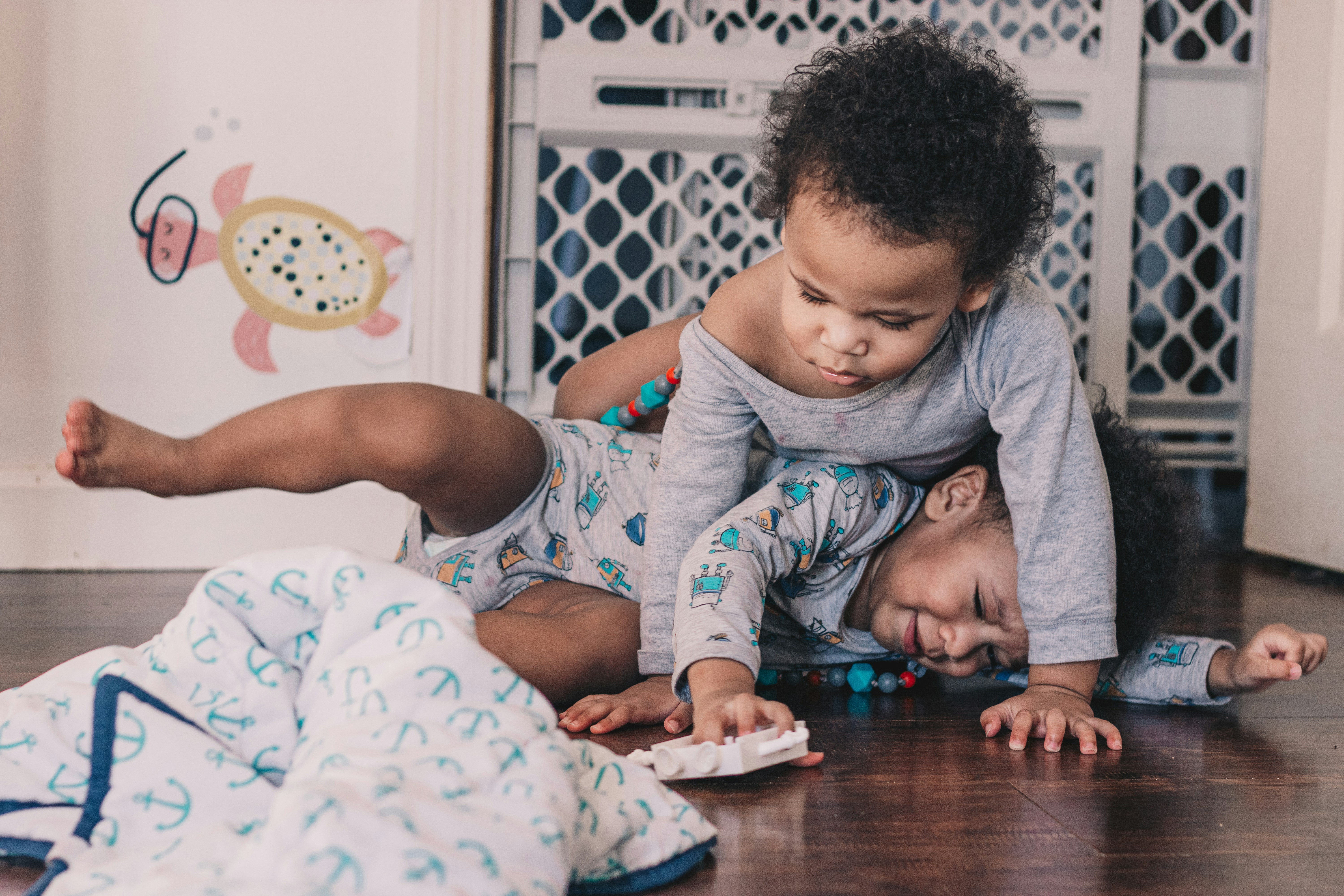
That moment when two little hands want the same toy completely normal.
5. How to Handle Toy Wars (Real Scripts)
So, how do we handle playdates when the "mine" phase is in full swing? Ditch the old-school command to "share!" and try this instead:
Instead of:
"Share with your friend! You have to take turns!"
Try this:
"You're playing with the red truck. It's your turn. When you're done, it'll be her turn." 12
The Play-by-Play Script:
- Acknowledge the feeling: Get low. "You really love that red truck. It's your turn right now."
- Gentle boundary for other child: (To the other child) "He's playing with it now. As soon as he's all done, it will be your turn."
- Follow through: When they put it down, point it out. "Oh, you're done now! Let's give it to your friend for his turn."
What's YOUR "mine" moment?
Anonymous · Only you and the universe know
Quick Quiz: Is Your Baby Ready for "Mine"?
Check all that sound like your little one:
About this article: This educational guide was written by Shobini Padmanapan, an independent wellness writer and editorial researcher at SoulSpace. It synthesizes publicly available research on toddler possessiveness, the sense of self, and early emotional development.
Scope: Educational and informational only. Not clinical advice, diagnosis, or treatment.
Author profile: soulspaceguide.com/authors/shobini-padmanapan
Answers to Questions You're Too Tired to Google
Around 8-18 months, babies realize they're separate individuals. "Mine" isn't about things, it's about defining "me." They're asking, "Where do I end and the world begin?" That toy is their answer. 13
Please don't. Forcing sharing can backfire. Children need to feel secure in ownership before they can willingly give. First comes "mine," then "yours," then "ours." Respecting their possessiveness actually builds generosity. 14
Classic toddler behavior! They're learning desire by watching others. Try: "You really want that truck. She's playing with it now. Let's find something equally awesome while we wait." Then help them wait with patience and connection.
True sharing usually emerges around 3-4 years old, after they've firmly established a sense of ownership. Before that, they're still building the foundation. You're not behind you're right on time. 15
Found this helpful? Share it with someone who needs it.
Written by Shobini Padmanapan · SoulSpace
🧠 Key insight
"Mine" isn't selfishness it's the birth of identity. Your child needs to feel ownership before they can truly share.
💬 What to say
"That's your toy. You're playing with it. When you're done, it'll be their turn."
❤️ What NOT to say
"Share right now!" (This skips the necessary step of feeling secure in ownership.)
🧸 Remember
Loveys are emotional anchors, not bad habits. They help children self-soothe.
⚡ 3-Minute Essentials
Here are the key insights from this article—quick, clear, and actionable.
🧠 The Core Insight
When your baby screams "MINE!", they're not being selfish—they're discovering who they are. This possessiveness is actually the birth of identity and a crucial developmental milestone.
🔑 3 Key Takeaways
- Identity begins with "mine": Babies use objects to define where they end and the world begins.
- Loveys are emotional anchors: Transitional objects help children self-soothe and feel secure.
- You can't share until you own: Children need to feel secure in ownership before they can willingly give.
💬 What to Say Instead of "Share!"
"You're playing with the red truck. It's your turn. When you're done, it'll be her turn."
This respects their ownership while gently introducing the idea of turn-taking.
🧸 Remember This
That fierce little grip isn't a problem to fix it's a miracle to witness. Your child is learning to be a confident, boundary-aware human being.
References & Further Reading
The information above is based on trusted developmental research. These sources are provided for reference and further reading.
-
Mahler, M. S., Pine, F., & Bergman, A. (1975).
The Psychological Birth of the Human Infant: Symbiosis and
Individuation.
Basic Books.
Mahler's groundbreaking work describes the process of separation-individuation, during which infants develop a sense of self separate from their primary caregiver. This research established that possessiveness is a normal developmental milestone, not a behavioral problem.
-
Piaget, J. (1954).
The Construction of Reality in the Child.
Basic Books.
Piaget's theory of cognitive development explains how infants develop object permanence during the sensorimotor stage. This foundational understanding enables children to recognize that objects continue to exist even when not visible, which parallels their emerging sense of self as a distinct entity.
-
Khor, D. (2025).
Tracking Your Baby's First Milestones (0-18 Months).
Little Haven Family Clinic.
littlehavenfamilyclinic.sg
By 18 months, most toddlers are more confident in movement and communication. Expected skills include walking independently, stacking blocks, understanding simple instructions, using 10+ words, showing affection, imitating adults, and asserting preferences through declarations like "mine!" This possessiveness is a normal milestone, not a behavioral problem.
-
National Childbirth Trust (NCT).
How and when do babies develop social skills?
nct.org.uk
During this phase, children fiercely protect their toys from siblings or playmates and may show signs of jealousy. Babies at this age tend to play side by side rather than interactively, which is entirely normal. These behaviors occur alongside emerging empathy, a desire to help, and cooperation.
-
Winnicott, D. W. (1953).
Transitional objects and transitional phenomena.
International Journal of Psychoanalysis, 34, 89-97.
Winnicott introduced the concept of "transitional objects" as essential tools for emotional development. These objects serve as bridges between the infant's internal world and external reality, providing comfort and security during separation from caregivers.
-
Bowlby, J. (1969).
Attachment and Loss, Vol. 1: Attachment.
Basic Books.
Bowlby's attachment theory explains how children form emotional bonds with caregivers and, by extension, with objects that provide comfort and security. This work established the foundation for understanding why children become attached to transitional objects as "secondary attachment figures."
-
Brownell, C. A., Iesue, S. S., Nichols, S. R., & Svetlova, M.
(2012).
Mine or Yours? Development of Sharing in Toddlers in Relation
to Ownership Understanding.
Child Development, 84(3), 906–920.
PubMed Central / PMC3578097
This landmark study examined 18- and 24-month-olds during the period when prosocial behavior first emerges. Researchers found that children's failure to share often stemmed from possessiveness about their own toys rather than a lack of understanding or caring. The study revealed that feeling secure in ownership is a prerequisite for voluntary sharing, not a sign of selfishness.
Fair Use Notice: Citations are provided for educational and commentary purposes only.
That tiny voice declaring "Mine!"?
It's not a battle cry of selfishness.
It's the sound of a little human discovering themselves. It's the first, brave whisper of identity saying, "I am here, and this matters to me."
And that is definitely something worth holding on to.
Be the first to share your thoughts.