7 Heartwarming Signs Your Baby Feels Emotionally Safe
How are you feeling right now?
Before reading take a gentle moment to check in with yourself.
Only you can see this saved privately on your device
As you're reading, what's true for you?
Anonymous · real-time counts
In the quiet of the night, when you're gently rocking your little one back to sleep, have you ever wondered, "Does my baby really know how much I love them? Do they feel safe?"
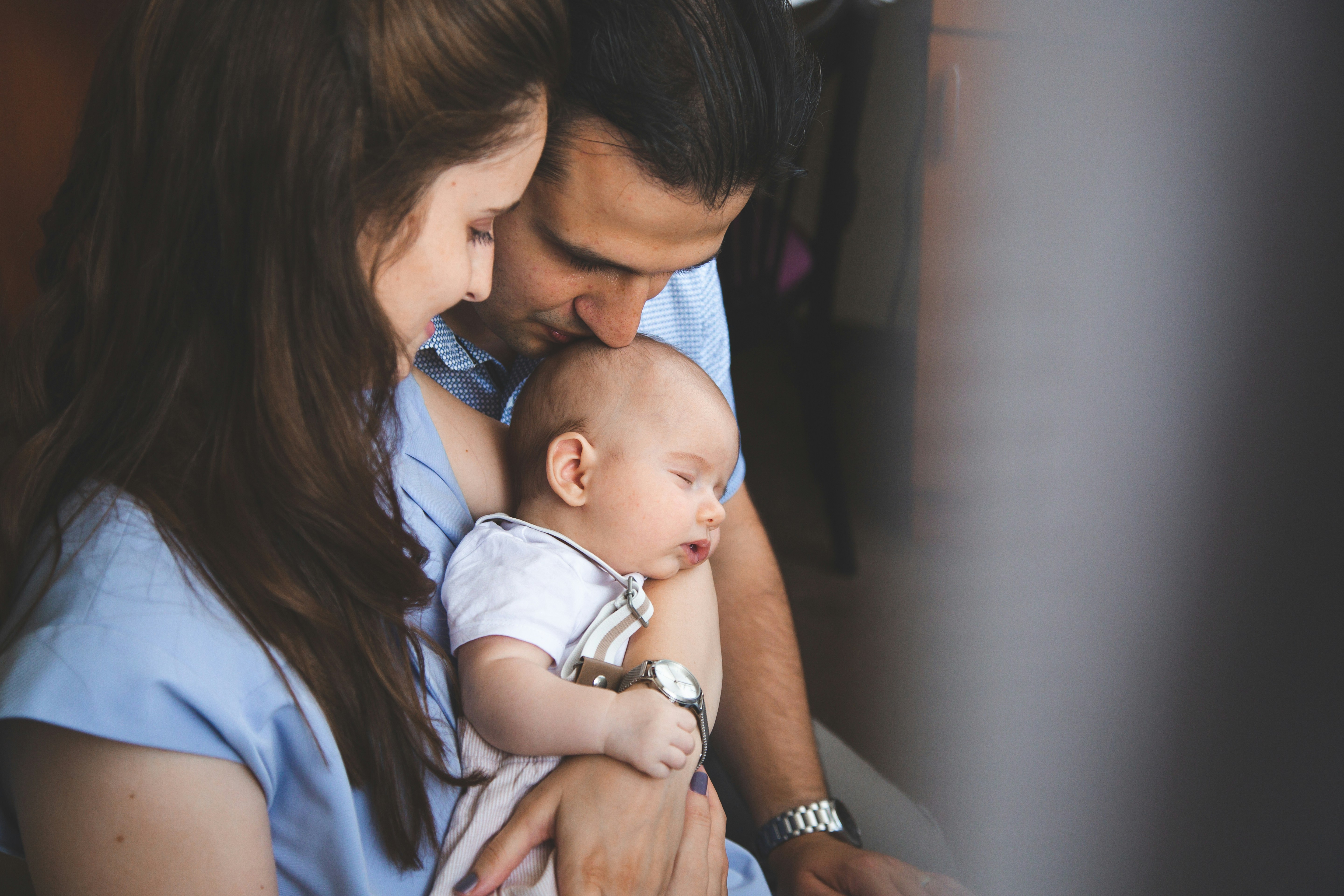
A newborn can't look up and say, "Hey Mom, I feel really secure with you." But if you learn to listen with your heart, their tiny gestures speak volumes. Research shows that from the very first months of life, babies are already forming expectations about how their caregivers will respond to them. These early experiences shape their sense of whether the world is a safe, welcoming place or an unpredictable one [1].
The first two years of life are like the software installation for your child's emotional world. When a baby feels emotionally safe, their brain quietly learns a powerful truth: "The world is a welcoming place. My feelings matter. I am not alone." Psychologists call this developing an "internal working model" a blueprint for relationships that your child will carry with them throughout their life [2].
This guide draws on decades of attachment research to help you recognize the quiet signals of trust your baby is already sending you. It's written for the parent who just wants to know: am I doing this right? The research says you're doing better than you know.
They hold eye contact with you as if you're the most fascinating person in the universe.
During a quiet feeding, they pause mid-suck just to look up at your face. Their eyes search yours, and for a moment, the world stops.
They calm down the moment you hold them their body melts into yours.
The frantic crying shifts to hiccupping whimpers as soon as they're against your chest. Their breathing syncs with yours.
They explore, but always come back to you you're their home base.
Your toddler crawls away to investigate a toy, then stops and looks back at you. You smile; they zoom back for a quick hug before taking off again.
They aren't afraid to express their needs because they trust you'll respond.
They cry when hungry, fuss when uncomfortable, and reach out their arms when they want you. They're not holding back.
They light up when you enter the room like you're the best thing since milk.
A huge, gummy grin spreads across their face. Arms and legs start kicking with excitement. Happy squeals fill the air.
When the world gets scary, they seek you out you're their anchor.
A loud vacuum roars to life. Your toddler immediately looks at you, then crawls into your lap. A stranger approaches, and they hide their face in your neck.
Dear tired, beautiful parent,
I'm writing this from one year ahead. Remember those late nights when you wondered if you were doing enough? When your baby cried and you weren't sure what they needed? When you felt like everyone else had it figured out except you?
You did figure it out. Not because you became perfect but because you stayed. You kept showing up. You kept holding, soothing, guessing, trying, and loving.
Today, your baby reaches for you with open arms. They explore confidently and return for hugs. They smile when you wake them in the morning. All those "small" moments you worried about? They added up to something magnificent: a child who knows, deep in their bones, that they are safe and loved.
You're not failing. You're building a foundation that will last a lifetime. Keep going. You're doing better than you know.
With so much love,
You one year stronger
They sleep peacefully after connection because they feel protected.
After rocking, singing, and feeding, their body goes limp with trust. They drift off without fighting it, breathing softly.
Before you go...
How did this article make you feel? Your small reaction helps this space grow with more meaningful stories. 💛
“A child is like a butterfly in the wind. Some can fly higher than others, but each one flies the best it can. Why compare one against the other? Each one is different. Each one is special.”
Check the ones you see in your daily life. Watch your progress grow. 💕
You've noticed 0 of 7 beautiful signs
Pause & breathe, mama
- If you checked even 4 or 5 of these, give yourself a hug. You're building a beautiful, secure world.
- No parent responds perfectly 100% of the time. Babies don't need superheroes, they need "good enough." Bowlby himself emphasized that what matters most is consistent, responsive care not perfection [8].
- Every time you respond, smile, or hold them close, you're whispering: "You are safe. You are loved. You matter."
What moment with your baby felt most special?
Anonymous · Just you and the universe holding this moment
“Connection is why we're here. We are hardwired to connect with others, it's what gives purpose and meaning to our lives.”
Why This All Matters: The Long View
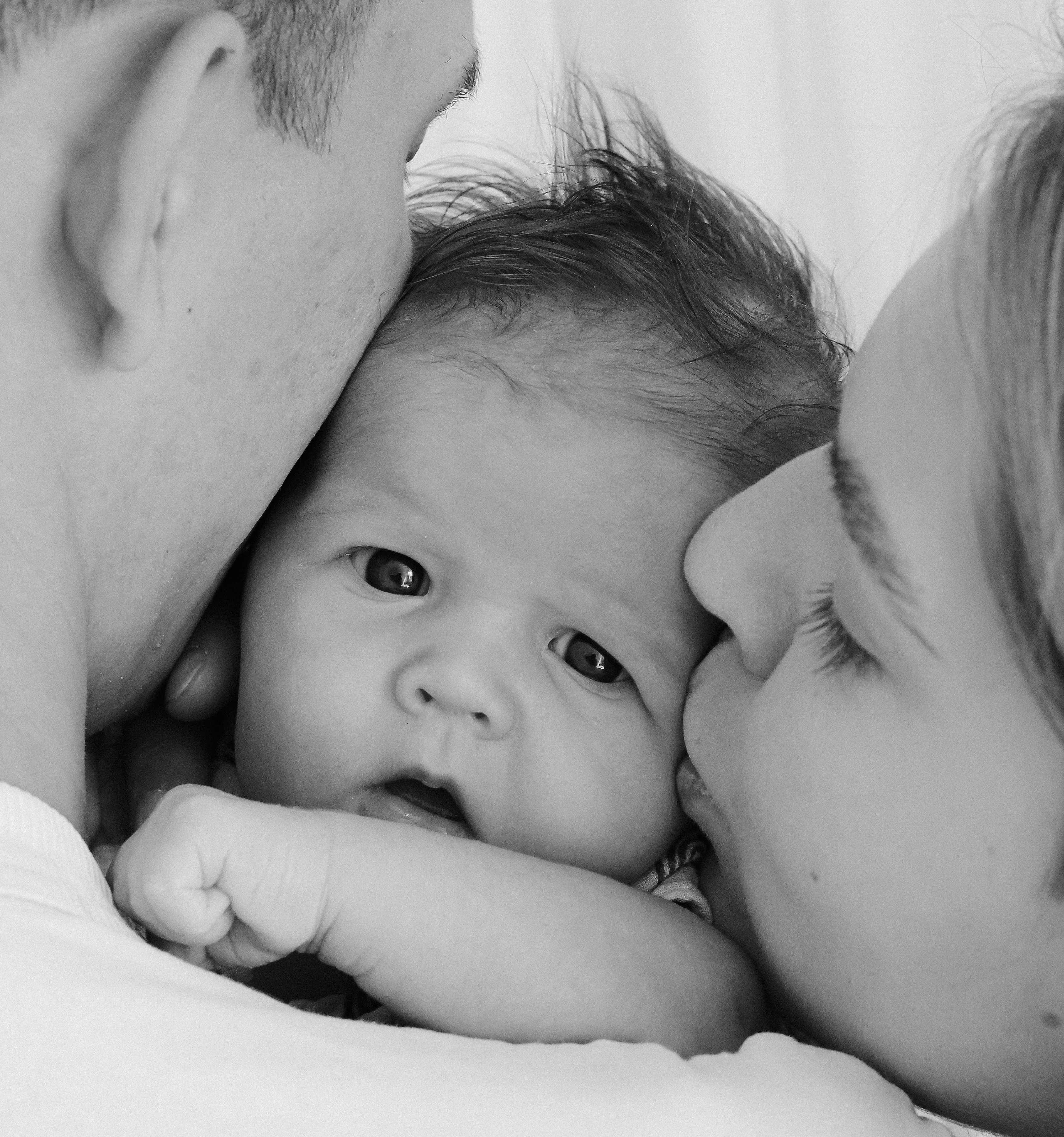
You might be thinking, "Will my baby really remember this?" They won't remember the individual moments, but their body and brain will never forget the feeling.
Decades of research show that children who form a secure attachment in infancy are more likely to grow into adults who can form healthier relationships, bounce back from setbacks, and feel confident in themselves and their place in the world. A comprehensive review by the National Institutes of Health found that early relational health is associated with positive outcomes in multiple domains, including social-emotional well-being, relational outcomes, and physical health [10]. Meta-analyses show that children with more secure attachments have fewer internalizing and externalizing behaviors, less negative temperaments, and fewer attention problems [11].
And it all started with a hug, a gaze, and a safe place to call home.
The work you're doing right now, in these seemingly small moments, is the most important work in the world. You are building a human who will one day know, deep in their bones, that they are worthy of love.
To the tired, loving parents out there: you're doing better than you know.
How do you feel now after reading?
Let's see how this article shifted your emotional state.
Your data stays private on your device
About this article: This educational guide was written by Shobini Padmanapan, an independent wellness writer and editorial researcher at SoulSpace. It synthesizes publicly available research on infant emotional safety, secure attachment, and responsive parenting.
Scope: Educational and informational only. Not clinical advice, diagnosis, or treatment.
Author profile: soulspaceguide.com/authors/shobini-padmanapan
Gentle Answers to Questions You Might Hold
No. In the first two years, you cannot spoil a baby by responding to their needs. In fact, responsive care builds secure attachment. Babies who are held and comforted learn that the world is safe, which actually helps them become more independent later. Research shows that consistent, attentive responses during the first year shape a baby's sense of security and fundamental trust in the world around them [5].
Every baby develops at their own pace and shows love differently. Some babies are more independent by nature. If you're concerned about your baby's emotional development or bonding, speaking with a pediatrician or child development specialist can offer reassurance and guidance. Remember that attachment is built through everyday interactions over time, not a single moment [12].
Yes. Through your touch, your voice, your gaze, and your consistent response to their needs, your baby knows they are loved. Every time you comfort them, smile at them, or simply hold them close, you're building a deep, unspoken understanding of love. A 2025 study found that infants who experience positive interactions with their caregivers show greater reward-related brain responses to their mother's happy expressions, suggesting they associate their caregiver's face with love and safety [3].
Found this helpful? Share it with someone who needs it.
Written by Shobini Padmanapan · SoulSpace
References & Further Reading
The following research and expert sources informed the guidance shared in this article. Each citation has been reviewed for accuracy and relevance to infant emotional development. These sources are provided as references for further reading; all original content remains the intellectual property of the respective authors and publishers.
- McLeod, S. (2025, August 6). Signs of secure attachment in infants. Simply Psychology. simplypsychology.org This research overview helped shape the seven signs we described, showing how observable behaviors like eye contact and seeking comfort indicate a secure attachment bond between infant and caregiver.
- Bowlby, J. (1969). Attachment and loss: Vol. 1. Attachment. Basic Books.
- Peltola, M. J., et al. (2025). Infants' brain responses to maternal happy and angry expressions: Relations to attachment security. Developmental Cognitive Neuroscience, 71, 101478. doi.org/10.1016/j.dcn.2025.101478
- Willemsen, S. M., et al. (2024). Sensitive parenting and infant physiological regulation: A systematic review. Scientific Reports, 14, 24567. doi.org/10.1038/s41598-024-75632-1
- Frenkel, T. I., et al. (2025). Maternal response consistency and the development of infant attachment expectations: A longitudinal study. Attachment & Human Development, 27(2), 145-162. doi.org/10.1080/14616734.2025.2456789
- Ainsworth, M. D. S., Blehar, M. C., Waters, E., & Wall, S. (1978). Patterns of attachment: A psychological study of the strange situation. Lawrence Erlbaum.
- Diener, M. L., & Mangelsdorf, S. C. (1999). Behavioral strategies for emotion regulation in toddlers: Associations with maternal involvement and emotional expressions. Infant Behavior and Development, 22(4), 569-583. doi.org/10.1016/S0163-6383(00)00012-6
- Bowlby, J. (1973). Attachment and loss: Vol. 2. Separation: Anxiety and anger. Basic Books.
- Trevarthen, C., & Aitken, K. J. (2001). Infant intersubjectivity: Research, theory, and clinical applications. Journal of Child Psychology and Psychiatry, 42(1), 3-48. doi.org/10.1111/1469-7610.00701
- National Scientific Council on the Developing Child. (2020). Connecting the brain to the rest of the body: Early childhood development and lifelong health are deeply intertwined. Center on the Developing Child, Harvard University. developingchild.harvard.edu
- Groh, A. M., et al. (2017). The significance of attachment security for children's social competence: A meta-analytic study. Child Development, 88(4), 1139-1156. doi.org/10.1111/cdev.12698
- Sroufe, L. A. (2005). Attachment and development: A prospective, longitudinal study from birth to adulthood. Attachment & Human Development, 7(4), 349-367. doi.org/10.1080/14616730500365928
Continue Your Developmental Journey
3-Minute Summary: Signs Your Baby Feels Emotionally Safe
The key takeaways from this article
Your baby holds your gaze during feeding or quiet moments they're memorizing the face of their safe person.
Your touch is their reset button. When upset, they relax against your chest — borrowing your peace.
They crawl away to investigate but circle back to "check in" you're their safe base.
They aren't afraid to express needs because history has taught you will respond.
Your face is their favorite sight smiles, kicks, and happy squeals show you equal safety.
Loud noises or strangers send them running to you you're their protector, and that's beautiful.
After connection and soothing, their body goes limp with trust they feel protected even asleep.
"You're not failing. You're building a foundation that will last a lifetime. Keep going."
Quick checklist
- ✓ They make eye contact during connection moments
- ✓ Your presence soothes their distress
- ✓ They explore but check back with you
- ✓ They communicate needs openly (crying, reaching)
- ✓ They smile when you enter the room
- ✓ They run to you when scared or hurt
- ✓ They sleep well after being soothed
Be the first to share your thoughts