Behind the Brave Face
As you're reading, what's true for you?
Anonymous · real-time counts
You ask, "How was your day?"
And there it is. That one-word shrug. "Fine." The door that used
to swing wide open now has a lock, and you're standing outside,
knocking.
If you've ever watched your once-bubbly 8-year-old walk through the door with a carefully neutral face, you know this ache. The feeling that something is happening inside them that you can't reach.
1. The Birth of the "Inner Critic"
When self-consciousness walks through the door
Remember when your 4-year-old would sing off-key at the grocery store, proud as a peacock? That beautiful freedom begins to fade around age 6 or 7.
This is the age when social awareness truly blossoms. Children become hyper-aware of their audience. They start scanning the room, wondering:
"Is my laugh weird?"
Self-consciousness takes root
"Will they think I'm a baby?"
Fear of being seen as immature
"What if everyone stares?"
Spotlight effect amplifies
"Safer to say nothing"
Self-preservation mode
This new lens changes everything. They realize that emotions are public, and the public can be judgmental. Hiding a feeling suddenly feels like the safest way to avoid embarrassment. It's not about being deceitful, it's about self-preservation in their newly complex social world. [1] This is the birth of what psychologists call the "inner critic" a self-monitoring voice that judges and evaluates one's own actions and feelings against perceived social standards. [2]
"The most important thing a child needs is the feeling that they matter to someone. That they are collected, gathered, and held in someone's heart." [3]
2. Playground Politics
When peer approval becomes everything
In the grade school years, a parent's approval takes a backseat to peer acceptance. Fitting in is the name of the game, and showing the "wrong" feeling can get you benched. [3][13]
The Quick Cover
Crying after a fall leads to "crybaby" labels, so tears become toughness
The Brave Face
Showing fear might make you a target, so fear becomes flat indifference
The Cool Kid
Excitement about "uncool" things = social exile, so passion becomes apathy
The desire for connection is so strong that they will suppress their authentic selves to maintain their spot in the group. They learn to laugh along when they're hurt, or pretend they don't care when they're left out, simply to survive the social dynamics of the lunch table. [3] When children become more oriented toward their peers than their parents, they often stifle their true feelings to avoid standing out or being rejected. [13]
Pause & remember
Dear One,
Imagine yourself a year from now. The silence at the dinner
table no longer feels like rejection. You've learned to sit
beside your child's closed door without knocking. Just being
present, breathing, trusting that they'll open it when they're
ready.
Here's what that version of you knows: their brave face isn't a
wall against you. It's a bridge they're still learning how to
cross. And you'll be there, steady and safe, when they're ready
to meet you halfway.
The worry you feel right now? It's the beginning of your deepest
wisdom. You're not failing. You're arriving.
— From the you who kept showing up
3. The "Big Kid" Trap
Words we say with love, and what they might hear
We say these things to comfort them and to encourage resilience. But here's the hidden message a child might hear: "My feelings are too big, and they're a problem." When we consistently tell them to stop feeling sad, angry, or scared, we unintentionally teach them that those emotions are unacceptable. They learn that to be a "good" kid or a "big" kid, they need to pack those messy feelings away where no one can see them. [4] This process of emotional masking learning to hide one's true feelings is something children begin to understand and practice as early as grade school. [1][6]
This pattern of hiding emotions often connects to a child's developing sense of identity. Understanding how Erikson's industry vs. inferiority stage shapes your child's self-perception can help you see why they might be so sensitive to perceived failure or judgment.
4. The Comparison Game
Grade school is the great arena of comparison. It starts subtly who has the coolest backpack, who's the fastest runner and grows into something more internal: who is the smartest, the most popular, the best artist.
For a child who feels they're falling short, hiding the resulting emotions jealousy, insecurity, shame becomes a reflex. [5]
They don't want to admit they're jealous of a friend's new bike or disappointed in their own test score. Admitting it would make the feeling real. So, they bury it, pretending everything is fine to protect their fragile, developing self-esteem. Research on emotion socialization shows that children learn from their families and culture which feelings are acceptable to show and which must be hidden. [11]
"Shame needs three things to grow: secrecy, silence, and judgment. If we can cultivate enough courage to share our story with someone who responds with empathy, shame can't survive." [5]
5. Reading the Room
Children are masterful observers of their parents. They watch how we react not just to them, but to the world. They learn the emotional rules of the house. Research shows that children as young as first grade understand that they may need to hide their feelings in certain social situations, especially to protect others' feelings. [1][6]
...they quickly learn that bringing these feelings to the table is risky. They adapt. They stop bringing them at all. The child isn't being manipulative; they are simply trying to navigate a world where their emotions don't seem to have a safe place to land. [6] The ability to mask emotions becomes more sophisticated with age, as children learn not only to hide feelings but also to manage the social consequences of doing so. [6]
Understanding how peer dynamics shape your child's emotional world is crucial. Research on childhood social status shows that children who feel rejected are more likely to hide their true feelings as a protective mechanism.
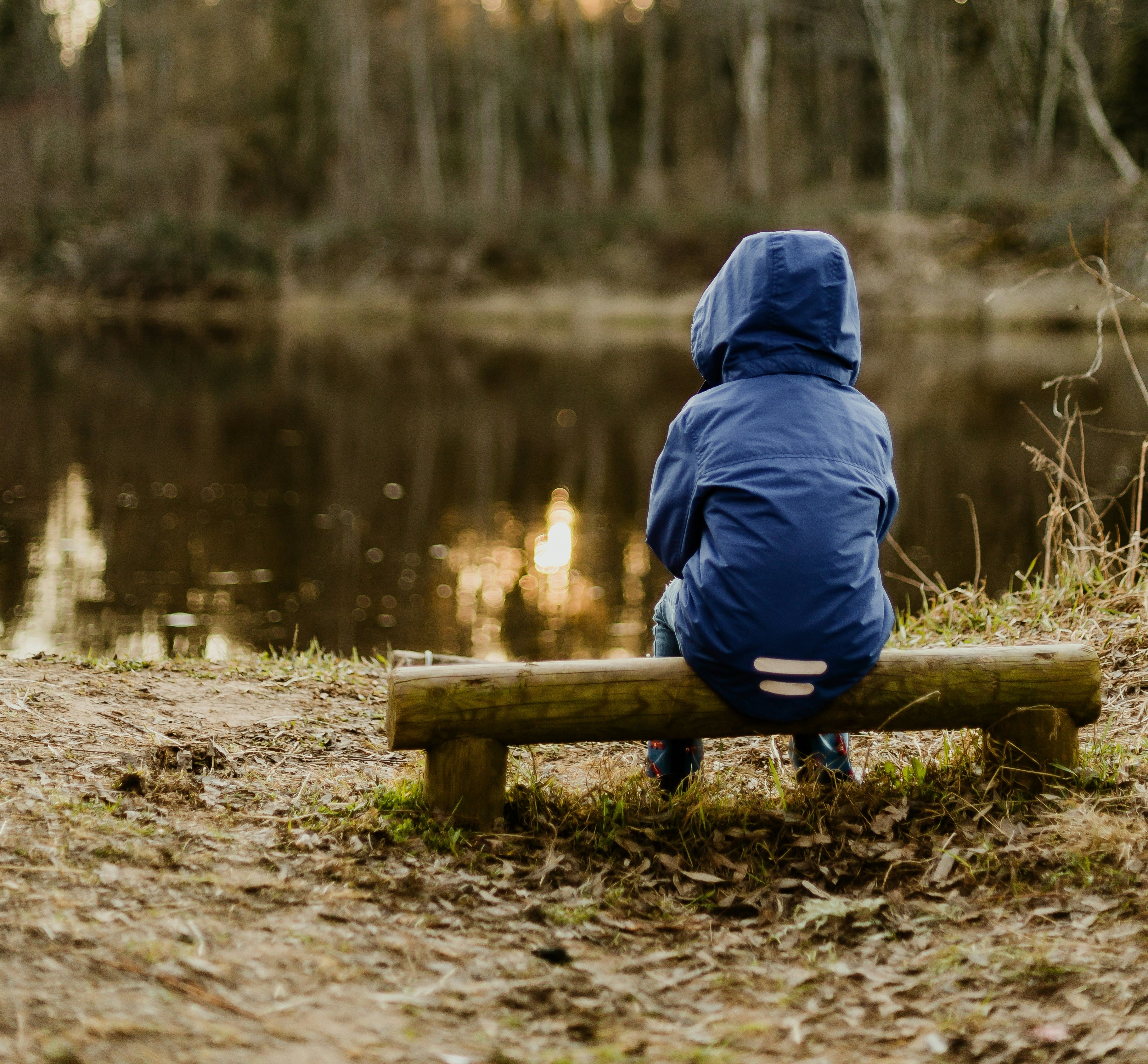
Behind every quiet moment is a child processing feelings they don't yet have words for
6. The Mask Maker
By the later years of this stage, many children become adept mask-makers. They craft a social persona that is acceptable, likable, and safe. [8]
The Class Clown
Uses humor to deflect from deeper sadness or insecurity. "If I make them laugh, they won't see the real me." [1]
The People-Pleaser
Hides any disagreement or frustration to keep everyone happy. "If I'm perfect, maybe I'll belong."
The Tough Kid
Puts up a wall of indifference to hide being hurt or scared. "Nothing bothers me. Nothing." [1]
These masks are exhausting for a child to maintain. They allow them to function socially, but the real, vulnerable self stays hidden underneath, waiting for a safe moment to emerge. [8] Children who mask their emotions often do so because they have learned that showing their true feelings is unsafe or unwelcome. [2]
7. The Unspoken Rulebook
Society hands our children an unspoken rulebook about feelings, and it's often divided by gender. [3]
Boys hear:
"Man up. Don't cry. Be strong."
Strength = Stoicism
Girls hear:
"Be nice. Don't be bossy. Smile."
Nice = No anger
These messages are powerful. A boy who cries learns he's weak. A girl who gets angry learns she's "bossy" or "difficult." They learn to edit their emotional truth to fit into these narrow boxes, hiding the parts of themselves that don't conform. [3] This internalization of shame about certain feelings is how the inner critic gains its power it uses the voices of those who judged us as children. [2][12]
8. The Pressure Cooker
School isn't just about academics; it's a 30-hour-a-week job with constant performance reviews. The pressure to get good grades, please the teacher, and avoid failure is immense.
Instead of expressing their stress "I'm overwhelmed," "I'm scared of this test" children often internalize it. [9]
🤕 → 😶
A sudden headache or stomach ache before school is often the body's way of speaking the words they can't. [10] This is a form of emotional regulation children learn to manage their feelings by suppressing them, often at the cost of physical symptoms. [6]
🔍 Spotting the Signs
How hidden feelings show up
💖 Your Playbook: Creating Safety
You cannot force a child to open up, but you can build a fortress of safety where they want to. Here's how:
Become a Feelings Detective
Instead of "How was your day?" try:
- "What was the funniest moment?"
- "Rate your day 1-10 why?"
- "Movie title for your day?"
Validate First, Fix Later
Instead of "Next time you should..."
"That sounds so tough. It makes sense you'd feel sad." [11]
Name It to Tame It
Build emotional vocabulary naturally:
- Talk about characters' feelings [4][9]
- Share your own: "I felt frustrated in traffic"
- Feelings chart on the fridge
Connection Rituals
The best talks happen in the margins:
- Bedtime whispers in the dark
- Car conversations (no eye contact)
- 10 minutes of "Special Time"
"Connect and redirect. First we need to connect with the child's internal state let them feel felt before we can redirect their behavior." [4]
Before you go...
How did this article make you feel? Your small reaction helps this space grow with more meaningful stories. 💛
What did you learn to hide?
Anonymous · Only you and this moment know
📋 Key Takeaways
Why They Hide
Social awareness, peer pressure, and the birth of the inner critic
The Masks
Class clown, people-pleaser, tough kid all protecting something tender
Signs to Watch
Silence, short fuse, tummy aches, regression, robotic "I'm fine"
Your Playbook
Validate first, name emotions, create connection rituals
Click the button above or use Ctrl+P / Cmd+P to print
About this article: This educational guide was written by Shobini Padmanapan, an independent wellness writer and editorial researcher at SoulSpace. It synthesizes publicly available research on childhood emotional development, emotional masking, and the inner critic in middle childhood.
Scope: Educational and informational only. Not clinical advice, diagnosis, or treatment.
Author profile: soulspaceguide.com/authors/shobini-padmanapan
Answers to Questions You Carry
📌 Why Kids Hide Their Feelings (6-12)
- The Inner Critic: Around age 6-7, children develop self-consciousness and become aware of how others might judge them. They start hiding feelings to avoid embarrassment. [1][2]
- Peer Pressure: In grade school, fitting in becomes everything. Children suppress authentic feelings to maintain social acceptance. [3][13]
- The Masks: Children create social personas like the class clown, people-pleaser, or tough kid to hide vulnerable feelings. [8]
- Gender Stereotypes: Boys learn "don't cry" while girls learn "don't be angry." These unspoken rules teach children to edit their emotional truth. [3]
- Academic Pressure: School performance anxiety often shows up as tummy aches or headaches the body speaking when words can't. [9][10]
💖 What You Can Do
- Be a Detective: Replace "How was your day?" with "What was the funniest moment?" or "Rate your day 1-10."
- Validate First: Before offering solutions, say "That sounds so tough. It makes sense you'd feel that way." [11]
- Name It: Build emotional vocabulary by talking about characters' feelings and sharing your own emotions. [4][9]
- Connection Rituals: Use low-pressure moments bedtime whispers, car conversations, or 10 minutes of "special time." [14]
🚨 Signs Your Child Is Hiding Feelings
- The Silent Treatment normally chatty child clams up
- The Short Fuse—irritability at home where the mask slips
- "I'm Fine" on repeat flat, robotic, a wall not an answer
- The Tummy Ache frequent physical complaints [10]
- Regression suddenly wanting the nightlight again
Found this helpful? Share it with someone who needs it.
Written by Shobini Padmanapan · SoulSpace
References
- Hess, D. L. (1984). Children's understanding of display rules for emotionally expressive behavior [Master's thesis, Northern Illinois University]. huskiecommons.lib.niu.edu
- Leszczynski, L. (2008). The inner critic and the creative process [Master's thesis, Simon Fraser University]. summit.sfu.ca
- Neufeld, G., & Maté, G. (2019). Hold on to your kids: Why parents need to matter more than peers. Vintage Canada. Neufeld Institute
- Siegel, D. J., & Bryson, T. P. (2011). The whole-brain child: 12 revolutionary strategies to nurture your child's developing mind. Bantam Books. Dr. Dan Siegel
- Brown, B. (2012). Daring greatly: How the courage to be vulnerable transforms the way we live, love, parent, and lead. Gotham Books.
- Saarni, C. (1979). Children's understanding of display rules for expressive behavior. Developmental Psychology, 15(4), 424–429. ERIC
- American Psychological Association. (2023, April 21). Emotion regulation for kids: Science-tested strategies parents can use. apa.org
- Edwards, N. (2022, October 11). Master masking: Why children hide their emotions. Dandelion Training & Development. dandeliontraininganddevelopment.com
- Kazdin, A. E. (2008). The Kazdin method for parenting the defiant child. Houghton Mifflin Harcourt.
- Dr. Zia. (2025, March 29). Nurturing emotional expression in kids: Physical symptoms of emotional suppression. FFEW.ca. ffew.ca
- Cole, P. M., & Tan, P. Z. (2007). Emotion socialization from a cultural perspective. In J. E. Grusec & P. D. Hastings (Eds.), Handbook of socialization: Theory and research (pp. 516–542). The Guilford Press. Mendeley
- Gillespie, L. (2023). Understanding shame: The role of introjection and gender socialization [Master's thesis, University of British Columbia]. bac-lac.gc.ca
- Neufeld, G., & Maté, G. (2024). Hold on to your kids: Why parents need to matter more than peers (4th ed.). Vintage Canada. Neufeld Institute
- Greater Good Magazine. (2012, February 14). A guide to your child's brain. greatergood.berkeley.edu
Citations are for educational and commentary purposes under fair use. All referenced works remain the property of their respective authors and publishers.
Be the first to share your thoughts anonymously or with a name.