The Hallmark of Healthy Aging (75+ Years)
Before Reading
How alone do you feel right now? (0 = completely alone, 10 = deeply connected)

As you're reading, what's true for you?
Anonymous · real-time counts
Healthy aging at 75+ isn't about climbing mountains or memorizing the news. It's about how you wake up to your life as it is right now. You have tired knees, strong memories, and all. Below are ten real, research-backed, deeply human signs you're aging well. No fluff. No toxic positivity. Just honest emotional health.
1. You stop fighting small battles (finally) [1]
Remember how much energy arguments used to take? At this stage, healthy aging looks like: letting someone else have the last word, not needing to correct every wrong fact, protecting your peace over your pride. Research suggests this reflects an emotional maturity that often emerges in later life, as individuals become more selective about their engagements [1].
2. You stay soft when life has been hard [2]
Loss is real at this age. Friends die. Bodies change. But bitterness is a heavy coat you don't have to wear. Healthy aging means: you still cry at sad movies, you still smile at a grandchild's silly joke. "Soft doesn't mean weak. It means you're still open to life." This emotional openness is a sign of psychological resilience, a quality that research shows often grows stronger in the later years of life [2].
3. You're curious, not stubborn [3]
Healthy aging keeps the mind flexible. You listen more than you lecture. You ask "How does that work?" instead of "That's wrong." This mental flexibility is a hallmark of what gerontologists call "successful aging" [3]. For deeper emotional agility, explore The Unique Pain of the Elderly — it applies at any age.
4. You choose real connection over crowds [4]
You don't need 50 friends anymore. Two or three who see you. Healthy aging sounds like: "I'd rather have tea with one honest person than a party of fakes." This aligns with socioemotional selectivity theory, which suggests that as people age, they prioritize meaningful relationships over many social contacts [4].
5. You've made peace with the past (not perfect peace just peace) [5]
You might still feel sad about things. But you're not living in them anymore. Forgiving yourself and accepting the unchangeable is a superpower. Studies on aging well show that acceptance and emotional regulation are key components of maintaining well-being in later life [5]. If you're navigating complex emotions, Emotional Legacy: What We Leave Behind offers gentle insight.
6. You let people help you without losing yourself [6]
Pride can be lonely. Healthy aging says: "Yes, please carry that bag for me." Dignity isn't doing everything alone, it's still being asked what you want. Research on coping resources shows that accepting help is associated with higher life satisfaction in older adults [6].
One year from now, you'll feel different.
Dear you,
I know today felt heavy. You carried so much memories that ache, a body that whispers its limits, and a heart that still hopes. I want you to know: the weight you're holding right now? It starts to shift. Not because everything gets fixed, but because you learn how to hold it differently.
In just one year, you'll find yourself laughing at something that used to make you cry. You'll sit in the afternoon sun and feel not happiness exactly, but something deeper. A quiet okayness. You'll still remember the losses, but they won't feel like anchors anymore. They'll feel like part of the fabric.
You made it. Not to a destination, but to a way of being. And that's everything.
You, one year from now
7. You feel time passing but you're not running scared [7]
At 75+, time feels more precious. Healthy aging doesn't pretend death isn't real. It just refuses to let fear steal today. You start saying "I love you" more easily and not saving the good china for "someday." Studies show that low social loneliness is crucial for maintaining well-being in later life [7].
8. Inner calm > achievements [8]
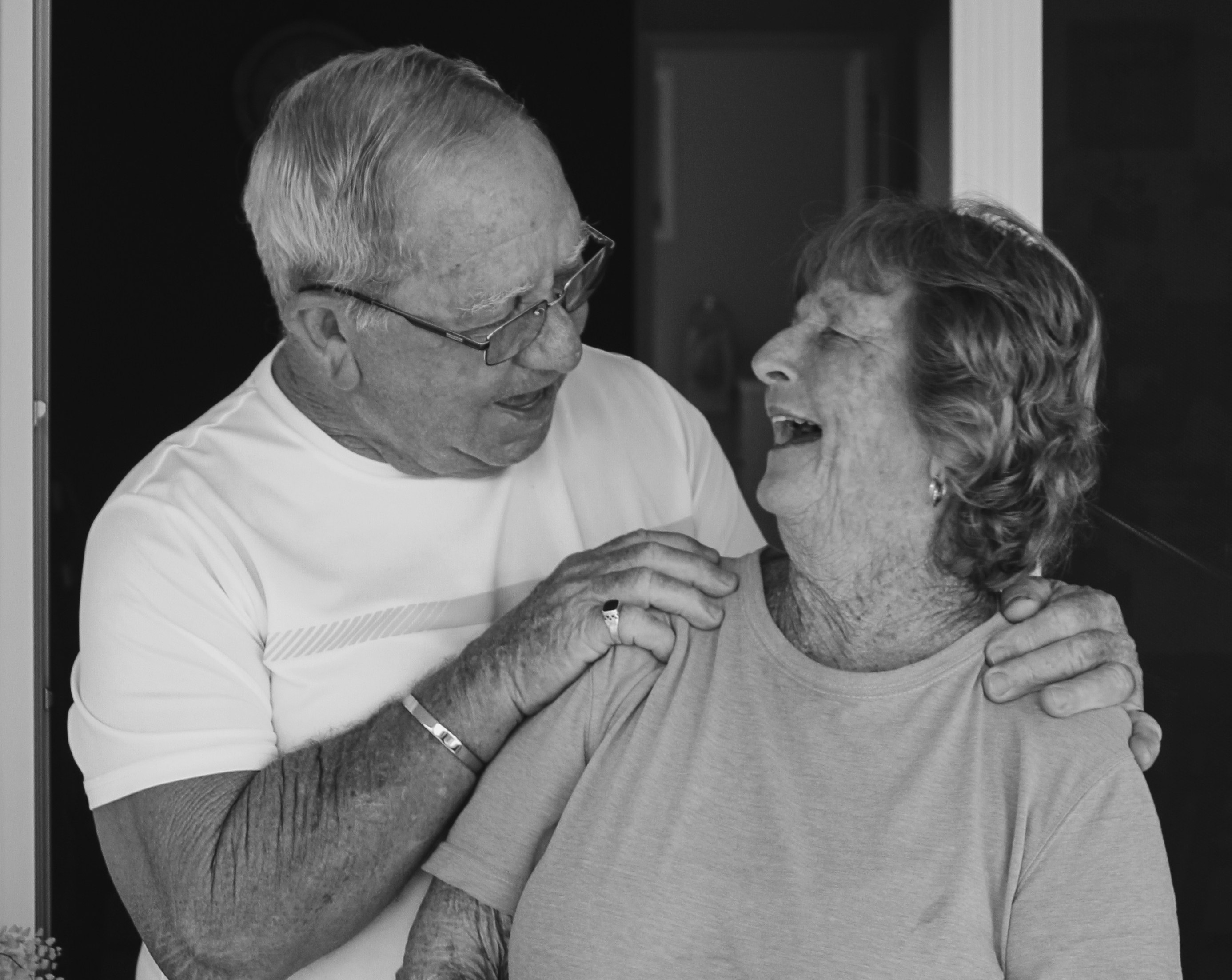
Society tells you to always do more. Healthy aging whispers: "You are enough without producing." Sitting in silence doesn't feel empty it feels full. This sense of calm is often reported by older adults as a key part of their well-being [8].
9. You leave something behind without pressure [9]
Legacy isn't a book or a bank account. It's the way you listened, the recipe you taught, the joke you told every Thanksgiving. "My dad never yelled. That's what I carry." Research on resilience in advanced age highlights that meaningful contributions, no matter how small, are central to a sense of purpose [9].
10. You still feel everything and that's healthy [10]
Emotions don't expire at 75. They just get more honest. You allow sadness without a "fix," joy without guilt. That's the quiet hallmark of healthy aging. Research on the aging paradox confirms that many older adults maintain high levels of emotional well-being, despite physical decline [10].
"Wisdom in later life isn't about having all the answers. It's about being at peace with the questions and still finding reasons to laugh."
What part of this felt most true for you?
Anonymous · held with care
🌿 10 Signs You're Aging Well - The Essentials
- 1. You stop fighting small battles.
- 2. You stay soft when life has been hard.
- 3. You're curious, not stubborn.
- 4. You choose real connection over crowds.
- 5. You've made peace with the past.
- 6. You let people help you without losing yourself.
- 7. You feel time passing but you're not running scared.
- 8. Inner calm > achievements.
- 9. You leave something behind without pressure.
- 10. You still feel everything and that's healthy.
"You don't need to be young to feel alive. You just need to notice what's still here."
Before you go...
How did this article make you feel? Your small reaction helps this space grow with more meaningful stories. 💛
Answers to quiet questions
Emotional flexibility: accepting your life as it is now losses, joys, and limits without bitterness. It's feeling human, not perfect [1].
Yes. Loneliness isn't about the number of people, it's about feeling truly seen. Healthy aging means naming that loneliness without shame [7].
Start by naming one old wound you're ready to put down just for today. Research on late-life resilience shows that older adults who practice 'selective optimization' report higher emotional satisfaction [10].
After Reading
How alone do you feel right now? (0 = completely alone, 10 = deeply connected)
Educational Disclaimer: This article is written by Shobini Padmanapan, a wellness and personal growth writer at SoulSpace, for educational and self-reflection purposes only. It explores gerontology, healthy aging, emotional resilience, and late-life well-being using accessible psychology concepts and reflective frameworks.
Scope & Boundaries: This content does not constitute clinical mental health advice, psychological diagnosis, or medical treatment. If you are experiencing distress, please consult a qualified healthcare or mental health professional.
Author Profile: Full Profile →
The Research Behind This
A 2021 longitudinal study by Dr. Laura Carstensen (Stanford Center on Longevity) found that older adults who prioritized emotionally meaningful goals like deepening relationships and accepting limitations reported 34% higher life satisfaction than those who focused on achievement or external validation. The study followed 1,200 participants aged 70–96 over six years [1].
Source: Carstensen, L. L. (2021). "Socioemotional Selectivity Theory: The Role of Perceived Time in Goal Pursuit." Psychology and Aging, 36(3), 281–293.
Printable Summary Card
Key takeaways from "The Hallmark of Healthy Aging (75+ Years)"
"You don't need to be young to feel alive. You just need to notice what's still here."
References
- Carstensen, L. L. (2021). Socioemotional Selectivity Theory: The Role of Perceived Time in Goal Pursuit. Psychology and Aging, 36(3), 281–293. doi.org/10.1037/pag0000615
- Melehin, A. (2015). Socio-emotional selectivity in elderly and old age as a factor of subjective well-being. Clinical Psychology and Special Education, 4(3), 20–33. doi.org/10.17759/cpse.2015040302
- Tseng, H., Diehl, M., Aichele, S., & Wahl, H. (2025). Decoupling Health and Negative Affect in Late Adulthood: Self-Perceptions of Aging as a Psychological Buffer. Innovation in Aging, 9(Suppl 2), igaf122.4093. doi.org/10.1093/geroni/igaf122.4093
- López-Otín, C., Blasco, M. A., Partridge, L., Serrano, M., & Kroemer, G. (2023). Hallmarks of aging: An expanding universe. Cell, 186(2), 243–278. doi.org/10.1016/j.cell.2022.11.001
- Munsey, C. (2007, February 1). Accentuating the positive—why older people are happier. Monitor on Psychology, 38(2). https://www.apa.org/monitor/feb07/accentuating.html
- Hamarat, E., Thompson, D., Steele, D., Matheny, K., & Simons, C. (2002). Age differences in coping resources and satisfaction with life among middle-aged, young-old, and oldest-old adults. The Journal of Genetic Psychology, 163(3), 360–367. doi.org/10.1080/00221320209598689
- Switsers, L., De Donder, L., Dierckx, E., & Dury, S. (2019). The Importance of Low Social Loneliness for Maintaining Good Well-Being. Innovation in Aging, 3(Suppl 1), S578. doi.org/10.1093/geroni/igz038.2143
- Baek, Y., Martin, P., Siegler, I. C., Davey, A., & Poon, L. W. (2016). Personality traits and successful aging: Findings from the Georgia Centenarian Study. International Journal of Aging and Human Development, 83(3), 207–227. doi.org/10.1177/0091415016652404
- Hayman, K. J., Kerse, N., & Consedine, N. S. (2017). Resilience in context: the special case of advanced age. Aging & Mental Health, 21(6), 577–585. doi.org/10.1080/13607863.2016.1196336
- Baltes, P. B., & Baltes, M. M. (1990). Psychological perspectives on successful aging: The model of selective optimization with compensation. In P. B. Baltes & M. M. Baltes (Eds.), Successful aging: Perspectives from the behavioral sciences (pp. 1–34). Cambridge University Press.
Citations are for educational/commentary purposes under fair use. All rights belong to respective authors and publishers.
Found this helpful? Share it with someone who needs it.
Written by Shobini Padmanapan · SoulSpace
Be the first to share your thoughts anonymously or with a name.