The Middle School Self-Esteem Dip
How are you feeling right now?
Before you read, take a moment to check in with yourself.
As you're reading, what's true for you?
Anonymous · real-time counts
Remember when your child moved through the world with unshakeable confidence? They'd raise their hand for any question, wear mismatched socks with pride, and strike up a conversation with anyone at the playground.
Then, somewhere between the last day of elementary school and the first day of 7th grade, something shifted. The confident kid was replaced by someone who second-guesses every text message, stands in front of the closet for an hour feeling like they have "nothing to wear," and interprets a friend's sideways glance as proof that everyone hates them.
1. The Birth of the Inner Critic
"Who am I becoming?" the question that keeps them awake at night.
In elementary school, a child's identity is simple: I am a son, a sister, a soccer player, a good student. But around ages 12 to 14, the brain starts a new, complex project: building a personal identity. [1]
For the first time, your child is comparing their "Real Self" (the person they believe they are) with their "Ideal Self" (the person they think they should be). The ideal self might be funnier, skinnier, more popular, or better at math. This gap between who they are and who they think they should be is the breeding ground for self-doubt. [2]
This identity exploration is a normal part of adolescence, closely tied to what psychologist Erik Erikson described as the identity vs. role confusion stage, where teens experiment with different roles and beliefs to discover who they truly are.
Researchers have found that young adolescents often describe themselves in contradictory ways outgoing yet withdrawn, happy yet moody, smart yet completely clueless. These contradictions, combined with their growing recognition that their behavior shifts depending on who they're with, can leave them feeling like a fraud. [3]
"I'm good at drawing. I'm a fast runner. My mom says I'm kind." Identity is based on concrete actions and family feedback. Self-esteem is naturally high because self-awareness is limited.
Social comparison begins. "Why did she get invited and not me?" "He's better at math." The inner critic whispers for the first time.
Full-blown identity exploration. "Who am I really?" They try on personalities like outfits. Self-esteem fluctuates wildly. This is normal and exhausting.
Research indicates that self-esteem often drops when children transition from elementary to middle school, though these decreases are typically temporary unless compounded by additional stressors like family disruption or parental conflict. [4]
"We cannot selectively numb emotion. When we numb the dark, we numb the light."
2. The Spotlight Effect
You're on camera, always.
Psychologists call it the "Imaginary Audience." To a young teen, life feels like a live performance where they are the main character and everyone else is a harsh critic. That pimple? It feels like a flashing neon sign. That slightly awkward laugh in social studies? They're convinced everyone is still talking about it at dinner. [6]
This heightened self-consciousness is a hallmark of adolescent egocentrism, where teens believe they are constantly being watched and judged by an "imaginary audience."
This isn't narcissism; it's a developmental stage. Their brain is now sophisticated enough to understand that others have thoughts about them, but not mature enough to realize that those thoughts are usually brief and self-centered.
Adolescent egocentrism contributes powerfully to this feeling that the whole world is watching them. [7] This heightened self-consciousness intensifies during early adolescence and helps explain why small social slights can feel catastrophic.
The Ferrari Brain with Bicycle Brakes
The amygdala the brain's emotional center matures much earlier than the prefrontal cortex, which handles rational thinking and impulse control. [8] This developmental mismatch means teens are literally wired to feel emotions more intensely than they can regulate them.
💌 A Letter From Those Who've Walked This Road
One year from now, after the dust begins to settle...
We know you're reading this and feeling the weight of it all. The worry that you're doing it wrong. The fear that your child will always feel this way. The exhaustion of trying to hold it together.
We're here to tell you: you're doing better than you think. The fact that you're reading this, that you care enough to understand what's happening inside your child's developing brain that already makes you the parent they need.
In the year ahead, you'll learn to listen more and fix less. You'll discover that your presence is more powerful than your solutions. And you'll see your child emerge on the other side not the same as before, but deeper, more thoughtful, more themselves.
The self-esteem dip isn't a failure. It's the beginning of something real. And you, right now, are laying the foundation for their resilience.
With warmth from those who've walked this road,
❤️ The parents who've been there
3. The Comparison Trap
Everyone else is winning.
Social comparison is the thief of joy, and in middle school, the thief moves in and sets up shop. [9]
- Academics: "Why did I get a B when Sarah got an A?"
- Athletics: "I'm still on JV, but Chloe made varsity."
- Social life: "Look at that story from the party I wasn't invited to."
This is amplified by social media, where teens scroll through "highlight reels" of everyone else's best moments while comparing them to their own messy, behind-the-scenes reality.
According to the American Psychological Association, up to 45% of teens feel "overwhelmed" by social media, with many reporting negative effects on their self-esteem. [10] The constant exposure to curated images of "perfect lives" can distort reality, making teens feel their own lives are less exciting or fulfilling.
The impact of social media on teen self-worth is well-documented. Research on the impact of social media validation on the teen brain shows how likes and comments can trigger dopamine release, creating a cycle of seeking external approval.
A 2023 study by the Dove Self-Esteem Project found that nearly 70% of girls felt pressured to look a certain way, with over 50% admitting they use filters or edit their photos to appear more attractive. [11] One in three boys under 18 also report wishing they looked differently and worrying about what people think of them.
"The curious paradox is that when I accept myself just as I am, then I can change."
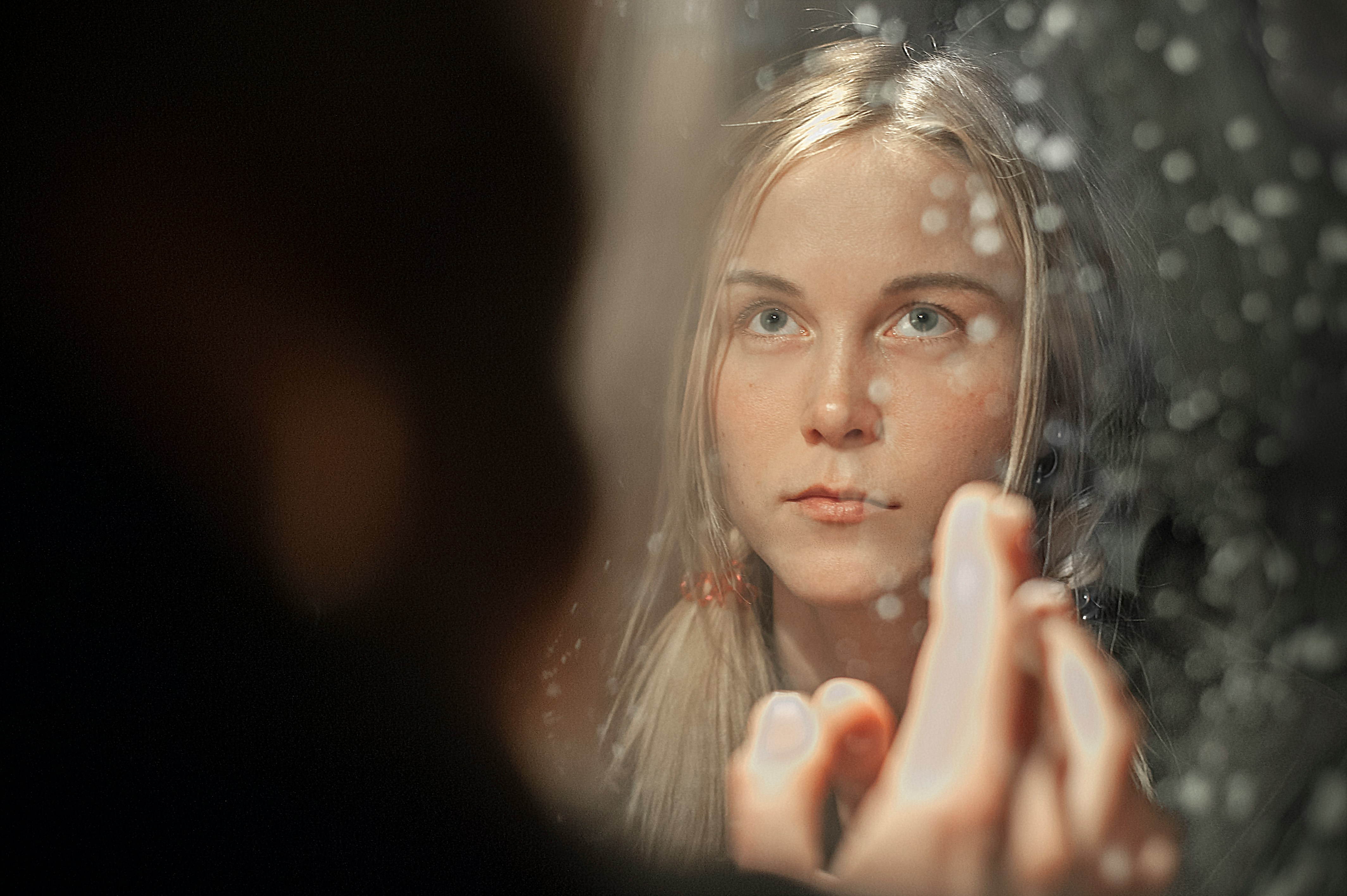
4. The Stranger in the Mirror
Puberty hits like a wave uneven and often confusing. One day, their body is familiar; the next, it's taller, rounder, or breaking out in ways they can't control. Body image isn't just about weight; it's about feeling alien in your own skin. [13]
Acne, growth spurts, voice changes, and developing curves make them hyper-aware of how they look. Feeling "different" can quickly spiral into feeling "wrong." This is a time when a simple comment like "You look tired" can be interpreted as "You look ugly."
For adolescent girls, physical appearance has been consistently shown to be one of the biggest predictors of self-esteem. [14] Adolescent females report greater dissatisfaction with their bodies than males do and this gender gap emerges during early adolescence.
Early-maturing girls face particular challenges. Research indicates they are more likely to experience depression, lack self-confidence, and show behavior problems. [15] They may be more attractive to older boys, who may push them into early sexual encounters before they are emotionally ready.
Before you go...
How did this article make you feel? Your small reaction helps this space grow with more meaningful stories. 💛
What do you remember feeling at this age?
Share anonymously your words might help another parent understand.
Anonymous · Only you and the universe know

5. The Friendship Reckoning
Childhood friendships are often based on proximity. You're friends because you sit next to each other or your parents are friends. In early adolescence, friendship becomes about loyalty, vulnerability, and shared identity and it gets messy. [16]
Suddenly, alliances shift. Inside jokes form. FOMO becomes a real psychological force. The need for peer approval becomes a primary drive, often overshadowing family validation. Belonging isn't just a nice thing to have; it feels like a survival need.
As adolescents spend more time with peers and less with family, friendships become a powerful source of self-evaluation. [17] Supportive peer relationships reduce loneliness, boost self-esteem, and even improve academic performance.
According to research published in Frontiers in Psychology, positive peer relationships foster self-efficacy and academic resilience in adolescents, which in turn increases their engagement with learning. [18]
On the flip side, peer rejection, bullying, and social exclusion can be devastating. A survey by Common Sense Media found that over 50% of teens feel excluded at times on social media, with 35% reporting that this exclusion significantly affects their self-esteem. [19] Two-thirds have experienced friendship fallout or relationship breakdown that has led to feeling rejected or misplaced.
A Parenting Toolkit
Click each tool for scripts and strategies
The National Association of Self-Esteem defines self-esteem as "strongly connected to a sense of competence and worthiness and the relationship between the two as one lives life." [20] Worthiness involves living up to fundamental human values that foster growth, while competence involves having confidence in one's ability to think and make appropriate choices.
Research consistently shows that strong family bonds have protective benefits for a teen's self-esteem. [21] When teens feel secure and loved within their family unit, they are better equipped to weather the storms of adolescence.
According to parenting experts at ReachOut, effective praise for teens should be sincere, specific, and focused on actions rather than outcomes. [22] Regular feedback reassures teens they're on the right track and reinforces the parent-teen bond.
Questions You're Probably Asking
Yes, completely normal. Rapid physical changes make them feel like strangers in their own bodies. Combined with heightened social awareness, small imperfections feel catastrophic. Research shows that adolescent females, in particular, have greater dissatisfaction with their bodies than males. [14]
Watch for duration and intensity. If low self-esteem persists for weeks, is accompanied by withdrawal from friends and activities, changes in sleep/eating, or talk of hopelessness, it may signal depression. Trust your gut. Longitudinal research has shown that low self-esteem significantly increases the risk of developing depressive symptoms, with this risk persisting even after accounting for personality traits and prior mental health issues. [4]
Try side-by-side conversations rather than face-to-face. Talk while driving, cooking, or walking. This reduces pressure. And when they do share, resist the urge to problem-solve just validate: "That sounds really hard." Research shows that creating a safe harbor at home where teens can be themselves without performance pressure is one of the most powerful protective factors for adolescent self-esteem. [21]
How are you feeling now?
After reading, check in with yourself again. See if anything has shifted.
Your mood shift: You moved from 5 to 5
This article helped you feel more hopeful. 🌱
That awkward, self-conscious 13-year-old standing in front of the mirror? They aren't just losing their confidence.
They are, for the very first time, trying to see themselves.
The self-esteem dip isn't a fall from grace. It's the difficult, messy, and beautiful process of building a more complex, authentic self. [2]
Your job isn't to build that self for them.
It's to hold the mirror steady and say:
"I see you. You are safe. And you are so much more than you can see right now."
📋 Key Takeaways - Save & Print
Self-esteem drops because teens compare their "Real Self" to their "Ideal Self."
Teens feel like everyone is watching and judging them. It's developmental, not narcissism.
Social media highlight reels make teens feel their own lives don't measure up.
Puberty makes teens feel alien in their own bodies. Body image is deeply tied to self-worth.
Peer approval becomes a survival need. Belonging feels essential.
Listen, validate, narrate your struggles, praise effort, create a safe harbor.
About this article: This educational guide was written by Shobini Padmanapan, an independent wellness writer and editorial researcher at SoulSpace. It synthesizes publicly available research on middle school self-esteem, early adolescent development, and identity formation.
Scope: Educational and informational only. Not clinical advice, diagnosis, or treatment.
Author profile: soulspaceguide.com/authors/shobini-padmanapan
Found this helpful? Share it with someone who needs it.
Written by Shobini Padmanapan · SoulSpace
References
The following sources informed the research and insights shared in this article. Citations are provided for educational and commentary purposes under fair use.
- Lumen Learning. (n.d.). Self-concept and self-esteem in adolescence. Lifespan Development. courses.lumenlearning.com
- Białecka-Pikul, M., Stępień-Nycz, M., Sikorska, I., Topolewska-Siedzik, E., & Cieciuch, J. (2019). Change and stability of self-esteem in early adolescence. Journal of Youth and Adolescence, 48, 1703-1715. doi.org/10.1007/s10964-019-01041-y
- Harter, S. (2012). The construction of the self: Developmental and sociocultural foundations (2nd ed.). Guilford Press.
- Baldwin, S. A., & Hoffman, J. P. (2002). The dynamics of self-esteem: A growth-curve analysis. Journal of Youth and Adolescence, 31(2), 101-113. doi.org/10.1023/A:1014065825590
- Brown, B. (2010). The gifts of imperfection: Let go of who you think you're supposed to be and embrace who you are. Hazelden Publishing.
- Elkind, D. (1967). Egocentrism in adolescence. Child Development, 38(4), 1025-1034. doi.org/10.2307/1127100
- Norris, S. J. (2023). Middle school girls: Self-esteem and academic issues. Children's Resource Group. childrensresourcegroup.com
- Steinberg, L. (2014). Age of opportunity: Lessons from the new science of adolescence. Houghton Mifflin Harcourt.
- Festinger, L. (1954). A theory of social comparison processes. Human Relations, 7(2), 117-140. doi.org/10.1177/001872675400700202
- American Psychological Association. (2023). Social media and teen mental health. APA Monitor on Psychology. apa.org
- Dove Self-Esteem Project. (2023). The real state of beauty: A global report on girls' self-esteem. dove.com
- Rogers, C. R. (1961). On becoming a person: A therapist's view of psychotherapy. Houghton Mifflin.
- Beresin, E. (2022, June 3). Low self-esteem in adolescents: What are the root causes? Psychology Today. psychologytoday.com
- Understanding Teenagers. (n.d.). Teenagers and self-esteem: Key factors. understandingteenagers.com.au
- Graber, J. A., & Brooks-Gunn, J. (1996). Transitions and turning points: Navigating the passage from childhood through adolescence. Developmental Psychology, 32(4), 768-776. doi.org/10.1037/0012-1649.32.4.768
- Brown, B. B., & Larson, J. (2009). Peer relationships in adolescence. In R. M. Lerner & L. Steinberg (Eds.), Handbook of adolescent psychology (3rd ed., pp. 74-103). Wiley.
- Psychology Town. (2025, October 14). Healthy self-esteem in the teenage years. psychology.town
- Wentzel, K. R., Russell, S., & Baker, S. (2016). Peer relationships and positive adjustment at school. Frontiers in Psychology, 7, 1539. doi.org/10.3389/fpsyg.2016.01539
- Common Sense Media. (2023). Teens and social media: A survey of adolescent well-being. commonsensemedia.org
- National Association for Self-Esteem. (2014). What is self-esteem? scholar.dominican.edu
- Rhodes, J., Roffman, J., Reddy, R., & Fredriksen, K. (2004). Changes in self-esteem during the middle school years: A growth curve analysis. Journal of School Psychology, 42(3), 197-217. doi.org/10.1016/j.jsp.2004.04.001
- ReachOut Australia. (2025, December 12). Low self-esteem in teenagers. parents.au.reachout.com
- Orth, U., & Robins, R. W. (2014). The development of self-esteem. Current Directions in Psychological Science, 23(5), 381-387. doi.org/10.1177/0963721414547414
- Moksnes, U. K., & Espnes, G. A. (2013). Self-esteem and life satisfaction in adolescents—gender and age as potential moderators. Quality of Life Research, 22(10), 2921-2928. doi.org/10.1007/s11136-013-0427-4
- Twenge, J. M., & Campbell, W. K. (2001). Age and birth cohort differences in self-esteem: A meta-analysis. Personality and Social Psychology Review, 5(4), 321-344. doi.org/10.1207/S15327957PSPR0504_3
- Erikson, E. H. (1968). Identity: Youth and crisis. W. W. Norton & Company.
Fair Use Disclaimer: Citations and references provided in this article are for educational and commentary purposes only. All sourced material is properly attributed to its original authors and publishers. This constitutes fair use under Section 107 of the U.S. Copyright Act.
Be the first to share your thoughts anonymously or with a name.